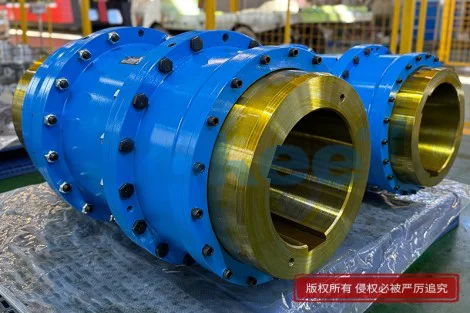
Teeth Coupling Optimizes Polyurethane Sandwich Panel Production Line And Reduces Operation And Maintenance Costs
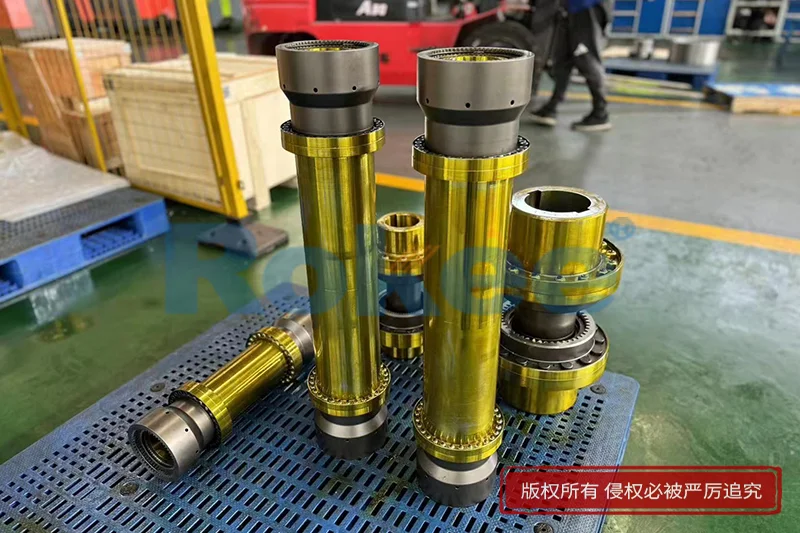
The continuous production of polyurethane sandwich panels relies on highly coordinated mechanical transmission systems, where the stability, durability and operational accuracy of connecting components directly determine the overall production efficiency and long-term operational cost of the entire line. In traditional polyurethane sandwich panel production layouts, ordinary connecting transmission parts often face prominent operational drawbacks during long-term continuous operation, including unstable torque transmission, excessive mechanical friction, easy loosening under high-load operation, and rapid wear under frequent start-stop working conditions. These subtle mechanical defects will gradually evolve into large-scale equipment jitter, transmission speed deviation, asynchronous operation of front and rear process units, and even unexpected production line shutdowns, bringing invisible operational losses and continuous high maintenance investment to manufacturing enterprises. As a core optimized transmission component, teeth coupling has gradually become a key upgrade solution for modern polyurethane sandwich panel production lines, effectively solving the pain points of traditional transmission structures, stabilizing the full-process production operation, and realizing systematic reduction of equipment operation and maintenance costs through structural optimization and performance upgrading.
Polyurethane sandwich panel production is a continuous and integrated manufacturing process covering sheet unwinding, surface pretreatment, polyurethane foaming and filling, composite pressing, curing molding, fixed-length cutting and finished product conveying. Each process link is closely connected through mechanical transmission systems, and the synchronization of transmission speed and the stability of torque output are the core guarantees for consistent product quality and uninterrupted production. Traditional transmission connecting structures adopted in early production lines mostly rely on simple rigid connecting parts or ordinary flexible couplings, which have limited adaptive capacity to the complex working conditions of polyurethane panel production. In the actual production process, the production line needs to maintain long-term high-speed operation, and will inevitably bear alternating load impact generated by foaming pressure fluctuation, pressing mechanical vibration and intermittent cutting action. Under such complex load conditions, traditional connecting parts are prone to elastic deformation, structural loosening and local wear, leading to inconsistent transmission accuracy between different functional modules. Once the transmission synchronization is deviated, the matching degree between sheet feeding speed and polyurethane foaming filling speed will be disordered, resulting in uneven foaming density, inconsistent panel thickness and local hollowing of finished products, which not only reduces the yield of finished products, but also forces enterprises to invest more manpower and material resources in product inspection and defective product rework, indirectly increasing the comprehensive operational cost of production.
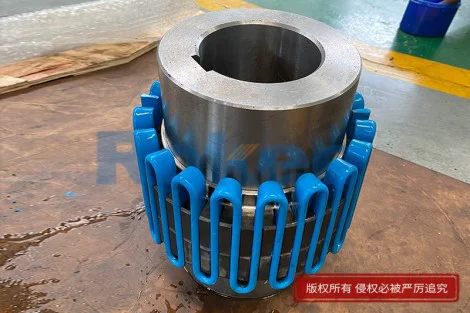
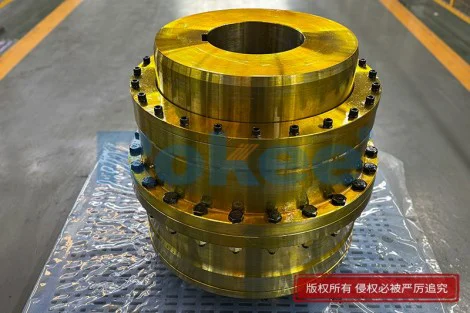
The structural design of teeth coupling fundamentally makes up for the performance defects of traditional transmission connecting components, and realizes high-precision and high-stability power transmission for polyurethane sandwich panel production line. Different from ordinary connecting structures, the internal tooth meshing structure of teeth coupling can realize uniform distribution of transmission torque in all directions, avoid local stress concentration caused by unbalanced force during power transmission, and greatly improve the overall rigidity and impact resistance of the transmission system. In the continuous pressing and foaming molding stage of polyurethane sandwich panels, the production line is in a state of alternating vibration and variable load for a long time. The precise meshing fit between the internal and external teeth of teeth coupling can effectively buffer the mechanical vibration and load impact generated in the production process, maintain stable and consistent transmission speed and torque output, and ensure the precise coordination of sheet feeding, material spraying, composite pressing and subsequent conveying processes. This stable transmission state eliminates the production quality fluctuation caused by transmission deviation, reduces the generation of defective products in the production process, and avoids the operational waste of raw materials, energy and labor caused by unstable equipment operation.
In terms of equipment operation stability improvement, teeth coupling shows excellent environmental adaptability and fatigue resistance, which is very suitable for the long-term continuous operation characteristics of polyurethane sandwich panel production lines. The production environment of polyurethane panels is accompanied by tiny foam dust, raw material volatile substances and continuous mechanical vibration, which puts forward high requirements for the wear resistance, corrosion resistance and structural stability of transmission components. Ordinary couplings are easy to be corroded and worn by environmental impurities after long-term operation, resulting in increased transmission clearance and reduced operation accuracy, requiring frequent equipment inspection and part replacement. In contrast, teeth coupling adopts optimized overall structural design and high-strength wear-resistant mechanical structure, which can resist the erosion of tiny dust and volatile medium in the production environment, maintain stable meshing accuracy for a long time, and will not produce excessive wear and structural loosening under long-term high-load and vibration working conditions. This durable operational performance greatly reduces the probability of sudden equipment failure in the production process, ensures the continuous and uninterrupted operation of the production line, and avoids the production efficiency loss caused by frequent equipment shutdown and debugging.
The optimization advantage of teeth coupling is more prominent in the reduction of production line operation and maintenance costs, which is reflected in multiple dimensions of spare parts consumption, labor maintenance investment and equipment downtime loss. In the traditional production line operation mode, due to the poor wear resistance and low structural stability of ordinary transmission parts, the replacement cycle of key connecting components is short, and it is also necessary to regularly inspect and adjust the loose transmission structure every week. Frequent replacement of wearing parts increases the consumption cost of production line spare parts year-round, and daily inspection and regular maintenance also occupy a large amount of manual working hours, increasing the labor cost of equipment operation. At the same time, each replacement and debugging of transmission components requires production line shutdown operation, and frequent shutdown and restart will not only affect the continuous production rhythm, but also easily cause equipment parameter deviation, requiring repeated parameter calibration, further increasing the time cost of equipment operation.
After adopting teeth coupling to upgrade the transmission system of polyurethane sandwich panel production line, the service life of core transmission connecting components is significantly extended, and the component replacement frequency is greatly reduced. The precise tooth meshing structure reduces mechanical friction loss in the power transmission process, avoids rapid wear of parts caused by dry friction and eccentric transmission, and maintains the long-term intact state of the transmission structure. The standardized and integrated structural design of teeth coupling also simplifies the equipment maintenance process. Unlike traditional couplings that require overall disassembly and complex debugging during maintenance, teeth coupling has a compact and reasonable structural layout, which is convenient for daily inspection and local maintenance. Daily equipment maintenance only needs to complete conventional cleaning and lubrication maintenance, without frequent disassembly and parameter calibration, greatly reducing the workload of manual maintenance and shortening the single maintenance time of equipment. This efficient maintenance mode directly reduces the labor investment in equipment operation and maintenance, and cuts down the annual spare parts replacement cost of the production line.
In addition to the direct reduction of maintenance labor and spare parts costs, teeth coupling optimizes the overall operational energy consumption of the production line and realizes indirect cost saving for enterprise production. The inefficient transmission of traditional couplings will produce large mechanical friction loss and power loss in the operation process. Part of the motor power is consumed in the friction and vibration of the transmission structure, resulting in increased energy consumption of equipment operation. The efficient meshing transmission mode of teeth coupling has high power transmission efficiency, which can maximize the output power of the motor to each production process unit, reduce invalid power loss caused by transmission friction and mechanical vibration, and make the operation of the production line more energy-saving and efficient. Long-term stable energy-saving operation can effectively reduce the comprehensive energy consumption cost of production line operation, bringing continuous economic benefits for manufacturing enterprises.
The stable transmission performance brought by teeth coupling also optimizes the product processing accuracy and raw material utilization rate of polyurethane sandwich panel production lines, further expanding the cost optimization space of production and operation. Polyurethane sandwich panel manufacturing has high requirements for raw material ratio and foaming uniformity. Stable transmission speed ensures the uniformity of sheet conveying and material spraying, making the polyurethane foaming material fill the interlayer evenly and stably, avoiding raw material waste caused by uneven feeding and unstable foaming. At the same time, the stable operation of the pressing and curing system ensures the consistent molding thickness and structural compactness of finished panels, reduces the defective rate of products caused by equipment transmission errors, and avoids the waste of raw materials, water and electricity resources and labor costs caused by defective product processing. The improvement of finished product yield also improves the overall operational efficiency of the production line, enabling enterprises to complete more production tasks under the same equipment operation time and resource input, and significantly optimize the unit production cost of products.
In the long-term equipment operation cycle, the application of teeth coupling also helps reduce the aging speed of the overall mechanical structure of the production line and extend the service life of the whole equipment. The mechanical vibration and impact generated by unstable transmission of traditional couplings will be transmitted to the whole production line equipment for a long time, resulting in accelerated aging of mechanical structures such as conveying rollers, pressing devices and transmission bearings, and increased failure rate of peripheral matching parts. The buffering and vibration reduction performance of teeth coupling can effectively absorb the alternating vibration and load impact in the production process, reduce the vibration amplitude of the whole equipment operation, avoid structural fatigue and local damage of mechanical parts caused by long-term vibration, and protect the stable operation of each functional module of the production line. The delayed aging of equipment structures reduces the overall failure rate of the production line, avoids large-scale equipment maintenance and component replacement caused by structural aging, and greatly reduces the long-term equipment renewal and maintenance costs of enterprises.
From the perspective of production line operation management, the high stability and low maintenance characteristics of teeth coupling also simplify the daily equipment management work of enterprises. Traditional polyurethane sandwich panel production lines need to arrange special personnel to conduct daily inspection, debugging and maintenance of transmission parts, and the uncertain failure cycle of vulnerable parts will also bring unpredictable risks to production arrangement. After the upgrade of teeth coupling, the failure rate of the transmission system is greatly reduced, the equipment operation state is more stable and controllable, and the daily maintenance work is more standardized and simplified. Enterprises do not need to invest excessive management energy in equipment fault prevention and emergency maintenance, which can optimize the enterprise's equipment operation management system, reduce the hidden labor and management costs brought by equipment operation risks, and make the production operation arrangement more stable and efficient.
With the continuous upgrading of the polyurethane sandwich panel manufacturing industry towards high efficiency, energy saving and low consumption, the fine optimization of production line mechanical transmission systems has become an important way for manufacturing enterprises to reduce operational costs and improve core competitiveness. As a key optimized component in the transmission system, teeth coupling does not rely on complex technological transformation, but through targeted optimization of the core transmission link, it solves many long-standing pain points in the operation of traditional production lines, including unstable transmission, frequent failure, high maintenance consumption and serious energy loss. Its application value is reflected in the whole life cycle of production line operation, from stabilizing production quality and improving production efficiency to reducing spare parts consumption, saving labor maintenance costs and optimizing energy consumption, realizing all-round cost reduction and efficiency improvement of production line operation.
In actual industrial production applications, the production line equipped with teeth coupling shows more stable continuous operation capability, lower equipment failure shutdown rate and more economical daily maintenance investment compared with the traditional production line configuration. The long-term stable operation of the transmission system ensures the consistency of product quality, helps enterprises reduce the hidden loss caused by quality fluctuation and equipment failure, and creates stable production benefits for enterprises. At the same time, the low-wear and long-life operational characteristics of teeth coupling greatly reduce the frequency of equipment maintenance and component replacement, effectively saving the annual operational and maintenance expenditure of enterprises, and providing a reliable and economical technical optimization scheme for the efficient and low-cost operation of polyurethane sandwich panel production lines. In the future, with the continuous improvement of mechanical component optimization technology, teeth coupling will be further popularized in the field of polyurethane sandwich panel production equipment, becoming a basic guarantee for the intelligent, efficient and low-consumption development of the industry.