Detailed Characteristics Of Membrane Coupling As Core Transmission Of Insulated Board Production Line
In the modern construction industry, energy conservation and environmental protection have become the core driving forces for technological innovation and industrial upgrading, and insulated boards, as key materials to improve building energy efficiency, thermal insulation and sound insulation performance, have been widely used in various construction projects. The insulated board production line, as the core equipment for mass production of these high-performance insulation materials, integrates multiple technological processes such as raw material processing, mixing, molding, curing and cutting. Among all the components of the production line, the transmission system is the "nerve center" that ensures the continuous and stable operation of the entire line, and the membrane coupling, as the core component of the transmission system, undertakes the important task of transmitting power and compensating for shaft misalignment, directly affecting the production efficiency, product quality and service life of the entire production line. Different from traditional couplings, the membrane coupling has unique structural design and excellent performance characteristics, which can perfectly adapt to the complex working environment and strict operation requirements of the insulated board production line, and has gradually become an indispensable core transmission component in the modern insulated board production industry.
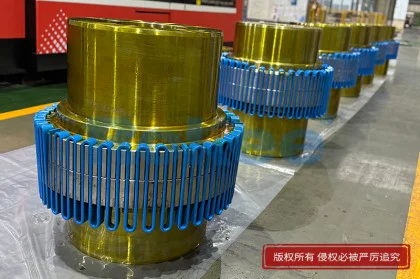
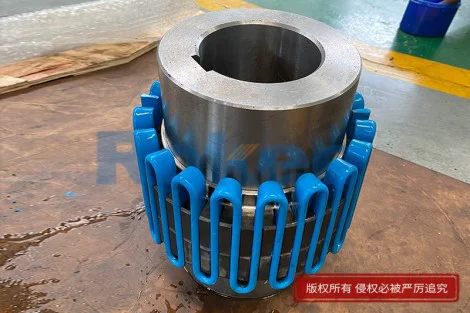
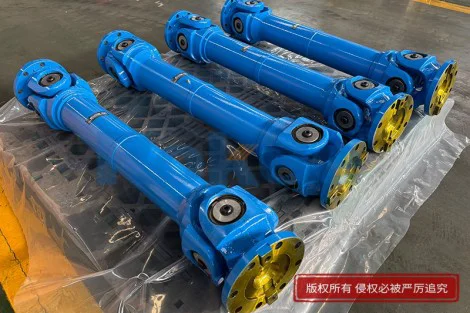
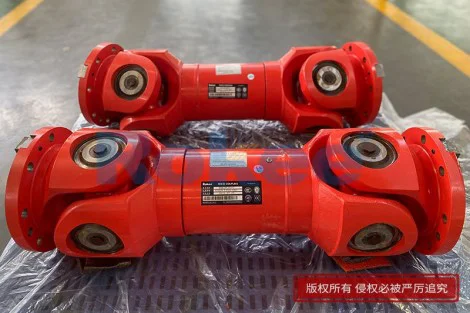
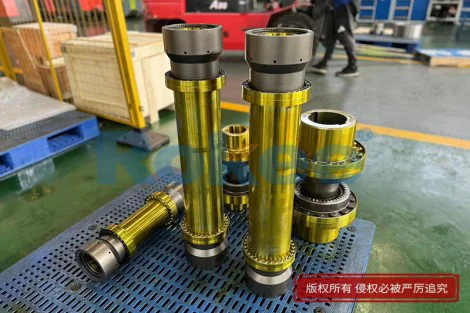
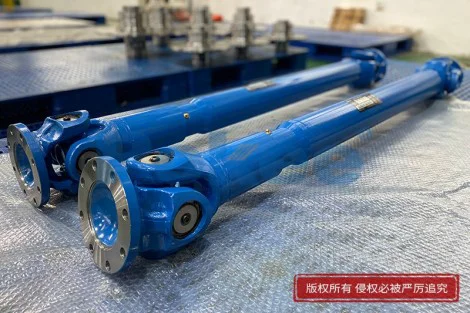
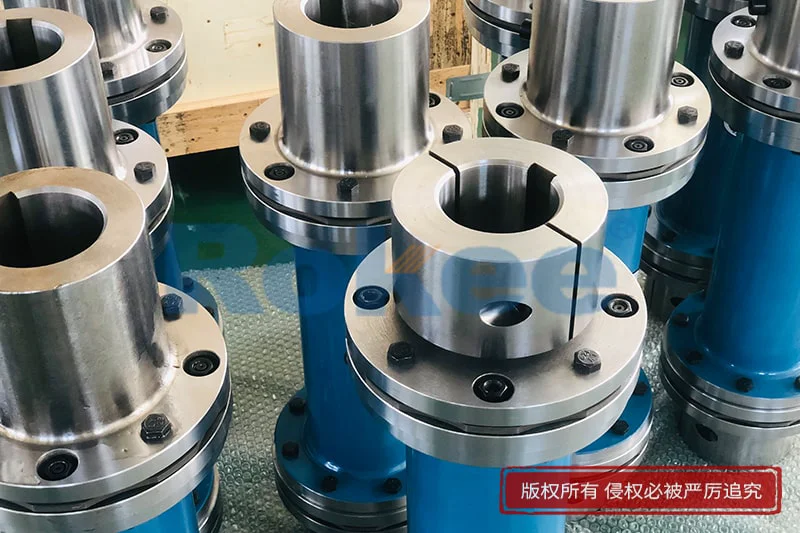
The membrane coupling is a high-performance metal elastic flexible coupling, which realizes power transmission and deviation compensation through the elastic deformation of precision-designed metal diaphragms, and its structural composition is relatively compact and reasonable, which lays a solid foundation for its stable operation in the insulated board production line. The basic structure of the membrane coupling mainly includes three parts: two hubs (or half couplings) respectively installed on the driving shaft and the driven shaft, and a diaphragm group connecting the two hubs. The hubs are usually made of high-strength alloy steel, which has excellent mechanical properties and wear resistance, and can firmly connect with the driving shaft and driven shaft of the production line equipment, ensuring that there is no relative slip during the torque transmission process. The diaphragm group is the core functional component of the membrane coupling, which is usually composed of multiple layers of ultra-thin high-strength stainless steel thin plates stacked together. These stainless steel thin plates are processed with precision machining technology, and are equipped with bolt holes and special stress relief grooves to reduce stress concentration and improve the service life of the diaphragm. According to the different design requirements of the insulated board production line, the diaphragm can be divided into two basic forms: integral type and link type. The integral diaphragm adopts a continuous integral ring structure, which has high torsional stiffness and can transmit large torque, which is suitable for the high-load transmission scenario of the insulated board production line; the link type diaphragm is connected to the inner and outer rings through multiple separate link arms, which has better flexibility and can better compensate for the misalignment between the shafts, which is suitable for the occasions where the equipment in the production line has large installation errors or working deformation. The connection between the diaphragm group and the hub is realized through high-strength bolts, and a special elastic gasket is usually installed at the connection to further reduce the stress concentration at the edge of the bolt hole, avoid the tear damage of the diaphragm, and ensure the reliability of the connection.
The working principle of the membrane coupling is based on the theory of metal elastic deformation, which is fundamentally different from the traditional coupling that relies on friction or elastomer deformation for power transmission. When the insulated board production line is in operation, the driving shaft (usually connected to the motor) rotates, and the torque is transmitted to the diaphragm group through the bolt connection between the hub and the diaphragm. Under the action of torque, the diaphragm undergoes slight elastic deformation, and this deformation will not cause permanent damage to the diaphragm due to the excellent elastic performance of the stainless steel material. Through this elastic deformation, the diaphragm transmits the rotational motion and torque to the driven shaft (connected to the working equipment such as mixer, conveyor and cutting machine) smoothly, realizing the power transmission between the motor and the working equipment. What is more important is that during the torque transmission process, if there are axial, radial or angular misalignments between the driving shaft and the driven shaft, the diaphragm can absorb these misalignments through its own flexible deformation, avoiding the stress concentration caused by rigid connection and the damage to the equipment bearings, shafts and other components. This kind of misalignment compensation capability is particularly important in the insulated board production line, because the production line is composed of multiple sets of equipment connected in series, and due to factors such as installation errors, equipment operation deformation, and temperature changes during operation, it is difficult to avoid the misalignment between the shafts of each equipment. The membrane coupling can effectively solve this problem, ensure the smooth transmission of power, and reduce the failure rate of the production line.
High transmission efficiency is one of the most prominent characteristics of the membrane coupling, which is closely related to the production efficiency of the insulated board production line. Unlike the traditional tooth coupling which has sliding friction between the tooth surfaces and requires regular lubrication, the membrane coupling has no sliding parts in its structure, and the torque transmission is realized through the elastic deformation of the diaphragm, which eliminates the power loss caused by friction. According to relevant tests and practical applications, the transmission efficiency of the membrane coupling can reach up to 99.86%, which is much higher than that of traditional couplings. In the insulated board production line, which requires continuous and high-efficiency operation, the high transmission efficiency of the membrane coupling can ensure that the power output by the motor is transmitted to the working equipment to the greatest extent, avoiding the waste of energy, and at the same time improving the operation speed of each equipment in the production line, thereby increasing the overall production efficiency of the insulated board. For example, in the mixing process of the insulated board production line, the mixer needs to maintain a stable and high-speed rotation to ensure the uniform mixing of raw materials. The membrane coupling can transmit the torque of the motor to the mixer shaft efficiently and stably, ensuring that the mixer operates at the set speed, improving the mixing quality and efficiency of raw materials, and laying a good foundation for the subsequent molding and curing of the insulated board.
The torque transmission capacity of the membrane coupling is another important characteristic that adapts to the insulated board production line. The insulated board production line involves multiple processes such as raw material mixing, high-pressure molding and precision cutting, and each process requires the working equipment to output a certain amount of torque to complete the corresponding operation. For example, the mixer needs to overcome the resistance of raw materials during the mixing process, and the molding equipment needs to apply a certain pressure to the raw materials to form them, which all require the transmission system to have strong torque transmission capacity. The membrane coupling uses high-strength stainless steel diaphragms and alloy steel hubs, which have excellent load-bearing capacity and can transmit large torques without excessive volume. The torque transmission capacity of the membrane coupling can be adjusted according to the design requirements, which can be adapted to the transmission needs of different equipment in the insulated board production line, from small torque transmission of the conveyor to large torque transmission of the mixer and molding machine. At the same time, the membrane coupling has excellent torsional stiffness, which can minimize the angular deflection under load, ensure the accurate transmission of torque and speed, and avoid the unstable operation of the equipment caused by torque fluctuation, which is crucial for the precision control of the insulated board production process. For example, in the cutting process of the insulated board, the cutting machine needs to maintain a stable speed and torque to ensure the flatness and accuracy of the cutting surface. The membrane coupling can transmit the torque stably, ensuring that the cutting machine operates at a constant speed, improving the cutting quality of the insulated board and reducing the waste of finished products.
The maintenance-free performance of the membrane coupling is particularly suitable for the long-term continuous operation needs of the insulated board production line. The traditional coupling (such as tooth coupling) needs regular lubrication and maintenance during use, which not only consumes a lot of manpower and material resources, but also needs to stop the production line during maintenance, affecting the production progress. The membrane coupling has no sliding parts and no need for lubrication, which fundamentally eliminates the maintenance work such as lubricating oil replacement and lubrication system inspection. The stainless steel diaphragm used in the membrane coupling has excellent corrosion resistance, fatigue resistance and wear resistance, and can maintain stable performance under long-term operation, without frequent replacement of components. In addition, the structure of the membrane coupling is simple and compact, and the assembly and disassembly are convenient. When it is necessary to maintain or replace the coupling, it can be disassembled without moving the main equipment of the production line, which greatly shortens the maintenance time and reduces the impact of maintenance on the production line. For the insulated board production line which pursues continuous and efficient production, the maintenance-free performance of the membrane coupling can effectively reduce the production cost and improve the operation rate of the production line.
The excellent environmental adaptability of the membrane coupling enables it to work stably in the complex working environment of the insulated board production line. The production process of insulated boards usually involves the use of various raw materials, including inorganic materials such as cement, sand and fly ash, and organic materials such as polystyrene foam and polyurethane. These raw materials may produce dust, corrosive gas or chemical residues during processing, which will have a certain impact on the transmission components. At the same time, the production line may have temperature changes during operation. For example, the curing process of the insulated board needs to be carried out at a certain temperature, which will cause thermal expansion and contraction of the equipment shaft, resulting in shaft misalignment. The membrane coupling is made of high-strength stainless steel, which has excellent corrosion resistance, acid and alkali resistance and high temperature resistance, and can operate stably in the environment of -80°C to +300°C. It is not easy to be corroded by dust, corrosive gas and chemical residues, and can maintain good performance for a long time. In addition, the membrane coupling has obvious damping effect, no noise and no wear during operation, which can reduce the noise pollution of the production line and create a better working environment. At the same time, the damping effect can absorb the vibration generated during the operation of the equipment, reduce the impact of vibration on the transmission system and other components of the production line, and extend the service life of the entire production line equipment.
The precision transmission performance of the membrane coupling plays an important role in ensuring the quality of the insulated board. The production of insulated boards has strict requirements on the thickness, flatness and density of the products, which requires the each equipment in the production line to operate with high precision, and the transmission system to ensure the accurate transmission of speed and torque. The membrane coupling has zero backlash, which can ensure that there is no relative displacement between the driving shaft and the driven shaft during the torque transmission process, and the speed transmission is free of slip, realizing the precise transmission of speed and torque. This kind of precision transmission performance can ensure that each equipment in the production line operates according to the set parameters, avoiding the product quality problems caused by the unstable operation of the equipment. For example, in the molding process of the insulated board, the molding equipment needs to maintain a stable pressure and speed to ensure that the thickness and density of the insulated board meet the requirements. The membrane coupling can transmit the torque and speed accurately, ensuring that the molding equipment operates stably, improving the consistency of the product quality. In addition, the membrane coupling can compensate for the slight misalignment between the shafts, avoiding the vibration and noise caused by misalignment, which also helps to improve the precision of the equipment operation and the quality of the insulated board.
The compact structure and light weight of the membrane coupling make it suitable for the layout of the insulated board production line. The insulated board production line usually has a compact layout, and the space between each equipment is limited. The traditional coupling has a large volume and heavy weight, which will occupy more installation space and affect the layout of the production line. The membrane coupling has a compact structure, small volume and light weight, which can be installed in a limited space, reducing the space occupation of the transmission system, and facilitating the layout and optimization of the entire production line. At the same time, the light weight of the membrane coupling can reduce the moment of inertia during operation, reduce the load of the motor and the equipment shaft, and improve the response speed of the transmission system. This is particularly important for the start-up and stop process of the production line, which can reduce the impact of the transmission system on the motor and equipment, and extend the service life of the motor and equipment. In addition, the compact structure of the membrane coupling also reduces the possibility of collision with other components during operation, improving the safety and reliability of the production line.
In practical application, the membrane coupling can be flexibly matched with various equipment in the insulated board production line, showing strong compatibility. The insulated board production line includes multiple types of equipment, such as raw material feeding equipment, mixing equipment, molding equipment, curing equipment, cutting equipment and conveying equipment. The power requirements and installation conditions of different equipment are different, and the membrane coupling can be customized according to the specific requirements of each equipment, such as adjusting the size of the hub, the number of diaphragm layers, and the type of diaphragm, to adapt to the transmission needs of different equipment. For example, for the conveying equipment with small torque and high speed, the membrane coupling with small volume and light weight can be selected; for the mixing equipment and molding equipment with large torque and heavy load, the membrane coupling with thick diaphragm and strong torque transmission capacity can be selected. In addition, the membrane coupling can be matched with various types of motors, reducers and other power equipment, realizing the seamless connection between the power system and the working equipment, ensuring the stable operation of the entire production line. With the continuous development of the insulated board production industry, the production line is gradually developing towards automation and intelligence, and the membrane coupling can also be well integrated with the automatic control system of the production line. Through the connection with the sensor and the control system, the operation status of the membrane coupling can be monitored in real time, such as torque, speed and vibration, so as to find potential faults in time and ensure the safe and stable operation of the production line.
The long service life of the membrane coupling is another important advantage that reduces the production cost of the insulated board. The membrane coupling is made of high-quality materials and processed by precision machining technology, which has excellent fatigue resistance and wear resistance. The stainless steel diaphragm can withstand repeated elastic deformation without permanent damage, and the service life can reach tens of thousands of hours under normal use conditions, which is much longer than that of traditional couplings. The long service life of the membrane coupling can reduce the frequency of component replacement, reduce the cost of spare parts and maintenance, and at the same time avoid the production loss caused by the failure of the coupling. For the insulated board production enterprises, reducing the failure rate and maintenance cost of the production line is crucial to improving the economic benefits. The membrane coupling can effectively achieve this goal, providing a reliable guarantee for the long-term stable operation of the production line.
In conclusion, the membrane coupling, as the core transmission component of the insulated board production line, has a series of excellent detailed characteristics, including compact and reasonable structure, high transmission efficiency, strong torque transmission capacity, maintenance-free performance, excellent environmental adaptability, precise transmission performance, compact structure and light weight, strong compatibility and long service life. These characteristics make the membrane coupling can perfectly adapt to the complex working environment and strict operation requirements of the insulated board production line, effectively solve the problems of power transmission and shaft misalignment in the production line, improve the production efficiency and product quality of the insulated board, reduce the production cost and failure rate of the production line, and promote the sustainable development of the insulated board production industry. With the continuous progress of industrial technology, the design and manufacturing technology of the membrane coupling will also be continuously improved, and its application in the insulated board production line will be more extensive and in-depth, bringing more benefits to the insulated board production enterprises. In the future, with the increasing demand for energy conservation and environmental protection, the insulated board production line will develop towards higher efficiency, higher precision and more intelligence, and the membrane coupling, as the core transmission component, will play a more important role in this process, contributing to the development of the green construction industry.