High Efficiency Cardan Shaft Coupling Optimizes Transmission Energy Consumption Of Sandwich Panel Machinery

The continuous development of the construction and insulation material industry has driven the iterative upgrading of sandwich panel production machinery, where transmission stability and energy utilization efficiency have become core indicators restricting the overall operating performance of production lines. Sandwich panel manufacturing involves multiple continuous processes including material feeding, rolling molding, composite bonding, and fixed-length cutting, all of which rely on stable mechanical transmission systems to maintain synchronous operation of various equipment components. In long-term industrial production, traditional transmission connection structures often suffer from energy loss caused by axis deviation, mechanical friction, vibration impact, and motion lag, leading to increased overall energy consumption of the equipment, unstable operating status, and even shortened service life of mechanical components. The high-efficiency cardan coupling, with its unique structural design and flexible transmission performance, effectively solves the common transmission pain points of sandwich panel machinery, significantly reduces invalid energy consumption in the power transmission process, and realizes energy-saving and efficient operation of the entire production equipment.
Sandwich panel machinery belongs to continuous operating industrial equipment, which runs for a long time with high load and high continuity, and its transmission system needs to adapt to complex and changeable operating conditions. During the installation and long-term operation of sandwich panel production lines, affected by equipment assembly errors, foundation settlement, mechanical thermal deformation, and load fluctuation, the driving shaft and driven shaft of transmission components are prone to angular deviation, radial displacement, and axial displacement. Traditional rigid coupling structures cannot adapt to such axis misalignment, which will generate huge additional mechanical friction and torsional resistance during power transmission. Most of the electric energy converted into mechanical power is consumed in overcoming abnormal friction and structural extrusion, resulting in low effective power utilization rate of the equipment. In addition, the rigid transmission mode will cause periodic vibration and impact during high-speed operation, which not only leads to energy dissipation in the form of heat and vibration, but also causes abnormal wear of gears, bearings and other core components, increases equipment failure rate and maintenance frequency, and further increases indirect energy consumption and production cost of the production line.
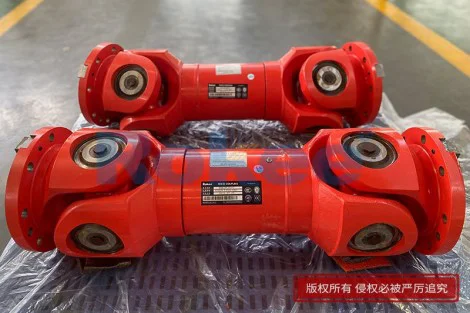
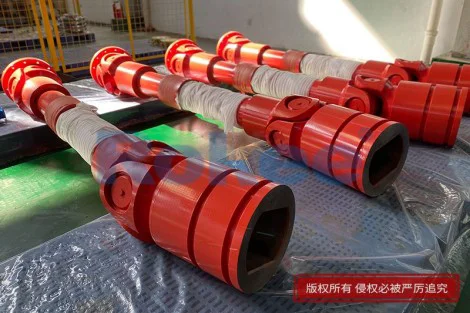
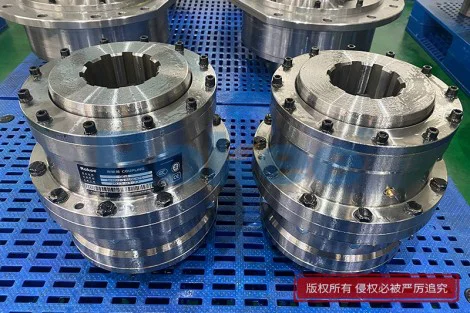
The high-efficiency cardan shaft coupling adopts a classic cross-shaft hinge structure composed of double fork joints and an intermediate cross spider, forming a flexible transmission mechanism with multi-directional rotational freedom. Different from rigid transmission parts, this structural design enables the coupling to compensate for multi-dimensional axis deviation in real time during operation, ensuring continuous and stable torque and rotational motion transmission between the driving shaft and the driven shaft within a certain deflection range. Based on spatial kinematics and multi-body dynamics principles, the cross spider can flexibly pivot between the two fork joints, realizing independent rotation and angle adaptation of the input and output ends. This working mechanism fundamentally eliminates the additional friction and structural resistance caused by shaft misalignment, avoiding the invalid energy loss generated by forced correction of rigid structures during power transmission. For sandwich panel machinery that requires long-term continuous and synchronous operation, this stable and flexible transmission mode greatly improves the effective conversion rate of mechanical energy, reducing the overall energy consumption level of the equipment from the source.
In the actual operation scenario of sandwich panel machinery, the advantages of high-efficiency cardan shaft couplings in energy consumption optimization are reflected in every link of power transmission. The rolling and composite forming link is the core energy-consuming section of sandwich panel machinery, which requires stable and uniform torque output to ensure flat forming and firm bonding of core materials and surface materials. Traditional transmission structures are prone to torque fluctuation and speed jitter due to small axis offset, which makes the equipment need to consume extra electric energy to maintain stable operating parameters, and unstable transmission will also cause inconsistent material forming quality, resulting in material waste and secondary energy consumption. The high-efficiency cardan shaft coupling can always maintain constant torque transmission under slight angle deflection and displacement changes, eliminate periodic angular velocity fluctuation in the transmission process, ensure the synchronization and stability of the operating speed of each roller and composite component, avoid repeated power adjustment of the driving motor, and effectively reduce the ineffective power consumption of the motor in variable-load operation.
Moreover, the optimized internal friction structure of the high-efficiency cardan shaft coupling further reduces kinetic energy loss during operation. The trunnion of the cross spider is equipped with precision rolling bearing structures, which can convert sliding friction into rolling friction in the rotating hinge process, greatly reducing the friction coefficient between moving parts. Compared with traditional couplings with simple contact structures, this optimized design minimizes friction heat generation and mechanical wear in high-speed and long-term operation. In the closed transmission system of sandwich panel machinery, friction heat is one of the main forms of energy loss, and long-term accumulated heat will also cause thermal deformation of transmission parts, further aggravating shaft misalignment and forming a vicious cycle of energy consumption increase. The low-friction operation performance of the high-efficiency cardan shaft coupling effectively cuts off this cycle, maintains the long-term dimensional stability of the transmission system, and ensures that the mechanical energy output by the motor is maximally applied to material processing and production operations.
Vibration and shock absorption performance is another key factor for the cardan shaft coupling to optimize transmission energy consumption of sandwich panel machinery. The production process of sandwich panels involves frequent load changes such as material feeding, pressing and cutting, which will produce instantaneous impact force on the transmission system. Rigid transmission structures directly transmit impact vibration to the whole equipment, resulting in discrete energy loss, and frequent vibration will also loosen equipment connection parts, increase operating resistance, and lead to rising energy consumption. The flexible hinge structure of the high-efficiency cardan shaft coupling has excellent buffering and damping effects, which can absorb and weaken instantaneous impact vibration generated by load fluctuation, isolate vibration transmission between adjacent mechanical components, and keep the overall operating state of the equipment stable. While reducing vibration energy loss, it avoids additional energy consumption caused by equipment vibration displacement and component loosening, and extends the stable operation cycle of the transmission system.
The long-term energy-saving effect of high-efficiency cardan shaft couplings is also reflected in reducing equipment maintenance energy consumption and idle loss. Traditional transmission parts are severely worn due to poor adaptability to shaft misalignment and large friction loss, requiring frequent shutdown maintenance, part replacement and equipment debugging. Frequent startup and shutdown of industrial equipment will produce large startup power consumption, and discontinuous production will reduce the overall energy utilization efficiency of the production line. The high structural stability and low wear characteristics of high-efficiency cardan shaft couplings greatly reduce the failure rate of the transmission system, extend the service cycle of parts, reduce the frequency of equipment shutdown maintenance and debugging, avoid repeated startup energy consumption, and ensure the continuous and efficient operation of the sandwich panel production line. At the same time, the stable transmission state reduces the idle running energy consumption of the equipment in no-load and transition working conditions, realizing full-working-condition energy consumption optimization.
From the perspective of overall system energy efficiency improvement, the application of high-efficiency cardan shaft couplings drives the optimization of the whole transmission system of sandwich panel machinery. The stable torque and speed transmission makes the matching relationship between the motor and the load more reasonable, avoids the low-efficiency operation state of the motor caused by transmission resistance and power loss, and improves the overall operation efficiency of the motor. In the traditional transmission system, due to various invalid resistances, the motor often needs to operate at higher power to meet the production load demand, resulting in long-term overload low-efficiency operation. After adopting the high-efficiency cardan shaft coupling, the transmission resistance is significantly reduced, the effective power output of the motor is accurately matched with the production demand, the no-load and light-load power loss of the equipment is reduced, and the overall energy utilization rate of the production line is comprehensively improved. For large-scale continuous sandwich panel production equipment, this systematic energy-saving optimization can form considerable cumulative energy-saving benefits in long-term industrial operation.
In addition to direct energy consumption optimization, the high-efficiency transmission performance of cardan shaft couplings also indirectly reduces the comprehensive energy consumption of production operations. Stable mechanical transmission ensures the consistency of sandwich panel processing accuracy, reduces defective products and rework caused by unstable equipment operation, and avoids additional energy and resource consumption generated by reprocessing. At the same time, the low-vibration and low-wear operating state reduces the aging and damage speed of auxiliary equipment and electrical control components, extends the overall service life of the production line equipment, reduces the energy consumption and resource loss caused by equipment renewal and transformation, and realizes energy-saving and consumption reduction in the whole life cycle of equipment operation.
With the continuous improvement of industrial energy-saving and consumption reduction requirements, the upgrading of mechanical transmission systems has become an important breakthrough point for the high-efficiency operation of building material production equipment. As a key core component of the transmission system, the high-efficiency cardan shaft coupling adapts to the high continuity, high stability and high-precision operation characteristics of sandwich panel machinery through its unique flexible compensation, low friction transmission and vibration damping performance. It solves many energy consumption pain points existing in traditional transmission structures, realizes precise control and effective optimization of transmission energy consumption, and provides a reliable technical guarantee for the energy-saving upgrading and efficient production of sandwich panel production lines. In the future, with the further optimization of structural design and manufacturing technology, high-efficiency cardan shaft couplings will play a more important role in the field of building material machinery manufacturing, helping the industry achieve green and low-carbon development through refined transmission energy consumption optimization.