Flexible Coupling Shows Advantages Of Transmission Upgrade Of PU Sandwich Panel Line

In the modern construction industry, polyurethane (PU) sandwich panels have become an indispensable building material due to their excellent thermal insulation, flame retardancy, environmental friendliness, and structural stability. Composed of two outer facing materials and a rigid PU foam core, these panels are widely used in external walls, roofs, cold storage facilities, and various prefabricated buildings, driving the continuous development and innovation of their production technology. The PU sandwich panel production line is a complex integrated system that involves multiple consecutive processes, including uncoiling of facing materials, roll forming, preheating, PU foaming, lamination, curing, and cutting. Each link requires precise and stable power transmission to ensure the consistency of product quality and the efficiency of the entire production process. Among the numerous components that make up the transmission system of the production line, flexible coupling stands out as a key innovation-driven component, whose unique structural design and excellent transmission performance have significantly promoted the upgrading and transformation of the PU sandwich panel production line, becoming an indispensable core part of the transmission upgrade.
To understand the important role of flexible coupling in the transmission upgrade of PU sandwich panel production lines, it is first necessary to clarify the working characteristics of the production line and the core challenges faced by its traditional transmission system. A modern PU sandwich panel production line is a continuous and automated production system that integrates mechanical, electrical, hydraulic, and chemical reaction technologies. It requires the coordinated operation of multiple subsystems, such as the uncoiling system, roll forming system, foaming system, double-belt lamination system, cutting system, and conveying system. Each subsystem is driven by a separate power source, and the power needs to be transmitted to various executing components accurately and stably to ensure that the entire production line operates in a synchronized manner. The traditional transmission system of the production line, which often relies on rigid couplings, is faced with several key challenges that restrict the efficiency and stability of production. First, the installation and layout of each subsystem are often not on the same axis due to the limitations of the production process and the overall structure of the equipment, resulting in angular, radial, or axial deviations between the driving shaft and the driven shaft. Rigid couplings have extremely limited ability to compensate for such misalignments, which can easily lead to increased wear of shafts and bearings, generate excessive vibration, and even affect the precision of product processing. Second, during the long-term continuous operation of the production line, the equipment will generate vibration and thermal expansion due to high load operation, leading to changes in the relative position of the shafts. Rigid couplings cannot adapt to such dynamic changes, which will further aggravate the damage of transmission components and increase the frequency of equipment failures. Third, the production process of PU sandwich panels requires stable and uniform power transmission, especially in the foaming and lamination links. Any fluctuation in power transmission will affect the uniformity of the foam core and the bonding quality of the facing materials, resulting in unqualified products. In addition, the traditional transmission system has high maintenance costs and long downtime during maintenance, which seriously affects the continuous operation efficiency of the production line.
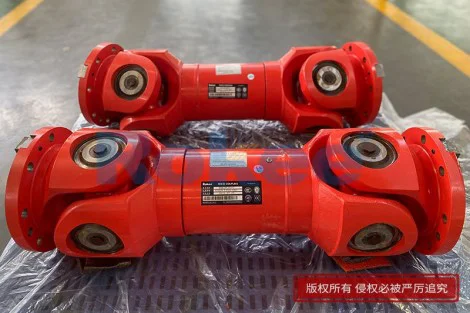
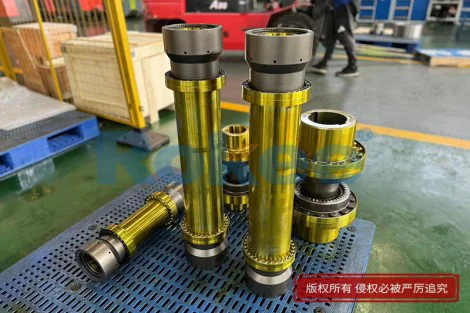
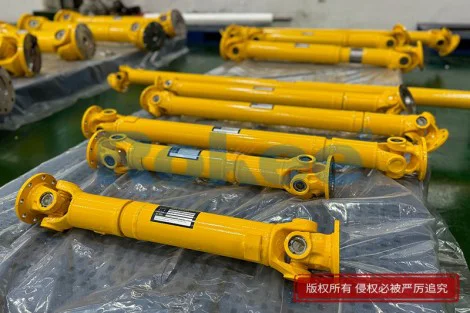
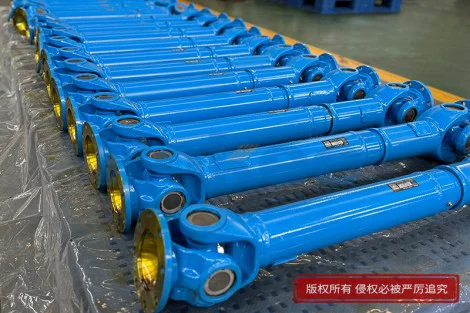
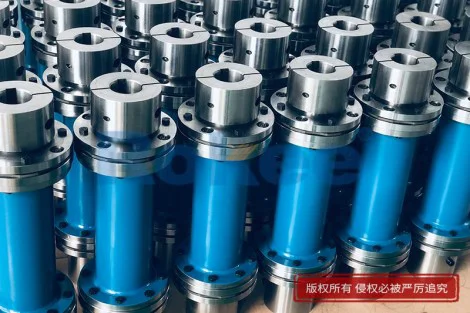
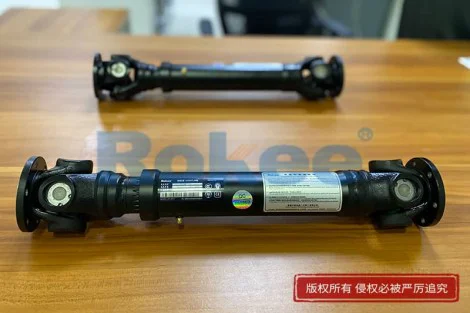
Against this background, the application of flexible coupling has brought a fundamental solution to the pain points of the traditional transmission system of PU sandwich panel production lines, showing unique advantages in promoting transmission upgrade and improving production efficiency and product quality. Flexible coupling is a type of coupling that connects two shafts and transmits torque while having a certain elastic deformation capacity. It is usually composed of a metal skeleton and elastic components made of materials such as rubber, polyurethane, or nylon. These elastic components not only can compensate for radial, angular, and axial deviations between the two shafts but also can absorb vibration and impact, thereby protecting the transmission system and extending the service life of the equipment. Compared with rigid couplings, flexible coupling has more flexible transmission characteristics, which can perfectly adapt to the complex working conditions of PU sandwich panel production lines and effectively solve the problems existing in the traditional transmission system.
One of the most prominent advantages of flexible coupling in the transmission upgrade of PU sandwich panel line is its excellent misalignment compensation capacity. As mentioned earlier, due to the structural limitations of the production line, the shafts of each subsystem are often not perfectly aligned, and there are inevitable deviations during installation and operation. Flexible coupling can effectively compensate for these deviations through the elastic deformation of its internal elastic components, without affecting the stability of power transmission. For example, in the roll forming and lamination links of the PU sandwich panel production line, the misalignment between the driving shaft and the driven shaft will directly affect the flatness of the panel surface and the uniformity of the lamination pressure. After the application of flexible coupling, it can automatically adjust to the angular and radial deviations between the shafts, ensuring that the power is transmitted stably and evenly, thereby improving the flatness of the panel and the quality of lamination. According to industrial application data, high-quality flexible coupling can compensate for angular deviations of 4° to 5° and a certain range of radial and axial deviations, which is far superior to rigid couplings. This misalignment compensation capacity not only reduces the requirements for equipment installation accuracy, lowers the difficulty of installation and debugging but also reduces the wear of shafts, bearings, and other components, extending the service life of the transmission system.
Another important advantage of flexible coupling is its excellent vibration and impact absorption capacity, which can effectively improve the stability of the production line operation. During the operation of the PU sandwich panel production line, the motor start-up, load mutation, equipment braking, and the operation of various mechanical components will generate a certain amount of vibration and impact. These vibrations and impacts, if directly transmitted to the transmission system and the production equipment, will not only affect the precision of product processing but also accelerate the damage of components, leading to equipment failures. Flexible coupling can absorb the energy generated by vibration and impact through its elastic components, reduce the transmission of vibration between the shafts, and play a good buffering role. For example, in the PU foaming link, the stability of the transmission speed directly affects the foaming effect of the PU core material. If there is excessive vibration, it will cause uneven foaming density, affecting the thermal insulation performance and structural strength of the panel. After using flexible coupling, the vibration generated by the motor and other equipment can be effectively absorbed, ensuring that the foaming system operates stably at a constant speed, thereby improving the uniformity of the foam core. At the same time, the absorption of impact by flexible coupling can also reduce the impact current generated when the motor starts and stops, protecting the motor and extending its service life. In addition, the reduction of vibration also helps to reduce the noise generated during the operation of the production line, creating a more comfortable working environment for operators.
Flexible coupling also shows significant advantages in improving transmission efficiency and reducing energy consumption, which is an important part of the transmission upgrade of PU sandwich panel production lines. The traditional rigid coupling has large friction during operation, and the energy loss is relatively serious, especially when there is misalignment between the shafts, the energy loss will be further increased. Flexible coupling, on the other hand, has a reasonable structural design and small friction during operation. The elastic components can reduce the friction between the components, thereby reducing energy loss. According to relevant tests, the torque transmission efficiency of high-quality flexible coupling can be maintained above 98% under normal working conditions, which is significantly higher than that of traditional rigid couplings. This high transmission efficiency can effectively reduce the energy consumption of the production line, reduce the production cost of enterprises, and meet the requirements of energy conservation and environmental protection. At the same time, the stable power transmission of flexible coupling can also avoid the waste of raw materials caused by unstable transmission, further improving the economic benefits of enterprises. For example, in the cutting link of the PU sandwich panel production line, the unstable transmission speed will lead to inaccurate cutting size, resulting in waste of panels. After the application of flexible coupling, the cutting system can obtain stable power support, ensuring the accuracy of cutting size and reducing the waste of raw materials.
In addition to the above advantages, flexible coupling also has the characteristics of simple installation, convenient maintenance, and strong adaptability to complex working conditions, which further promotes the transmission upgrade of PU sandwich panel production lines. The installation of flexible coupling does not require high-precision alignment, which is simpler and more convenient than rigid coupling, and can greatly shorten the installation and debugging time of the production line. In terms of maintenance, most flexible couplings do not require regular lubrication, which reduces the maintenance workload and maintenance costs. Only the elastic components need to be regularly inspected and replaced, and the replacement process is simple and fast, which can effectively reduce the downtime of the production line. For example, some mechanical flexible couplings only need to check the wear of the elastic components every six months to a year, and the replacement can be completed in a short time, which does not affect the normal operation of the production line. At the same time, flexible coupling can adapt to different working environments. By selecting appropriate materials, it can work stably in high temperature, high humidity, corrosion, and other harsh environments. The PU sandwich panel production line often involves the use of chemical raw materials such as PU foam, which may produce certain corrosive gases. The flexible coupling made of corrosion-resistant materials can effectively resist the corrosion of these gases, maintain stable transmission performance, and extend the service life.
The application of flexible coupling in the PU sandwich panel production line not only solves the problems of the traditional transmission system but also promotes the intelligent and automated development of the production line. With the continuous improvement of industrial automation level, the PU sandwich panel production line is developing towards higher speed, higher precision, and full automation. The stable and reliable transmission performance of flexible coupling provides a solid foundation for the intelligent upgrade of the production line. For example, in the automated control system of the production line, the stable power transmission of flexible coupling can ensure the accurate execution of various control commands, improve the response speed and control precision of the system. At the same time, the low failure rate and long service life of flexible coupling can reduce the frequency of equipment maintenance, ensure the continuous operation of the automated production line, and improve the production efficiency. In the context of the increasing demand for PU sandwich panels in the market, the transmission upgrade driven by flexible coupling enables enterprises to improve production capacity and product quality, enhance market competitiveness, and achieve sustainable development.
It is worth noting that the selection and application of flexible coupling in the PU sandwich panel production line also need to be combined with the actual working conditions. Different types of flexible couplings have different performance characteristics and applicable scenarios. For example, mechanical flexible couplings have high torque transmission capacity and can adapt to large load conditions, which are suitable for the roll forming and conveying systems of the production line; elastomeric couplings have excellent vibration absorption capacity and are suitable for the foaming and cutting systems that require high stability. Therefore, enterprises need to comprehensively consider factors such as the torque, speed, misalignment, and working environment of each subsystem when selecting flexible couplings, so as to select the most suitable type of flexible coupling and give full play to its advantages. In addition, the installation and use of flexible coupling also need to follow relevant specifications to ensure the correctness of installation and the rationality of use, so as to maximize its service life and transmission performance.
In conclusion, flexible coupling, with its excellent misalignment compensation capacity, vibration and impact absorption capacity, high transmission efficiency, simple installation, and convenient maintenance, has become a key component in the transmission upgrade of PU sandwich panel production lines. It effectively solves the problems of poor stability, high energy consumption, and high maintenance costs of the traditional transmission system, improves the production efficiency and product quality of the production line, reduces the production cost of enterprises, and promotes the sustainable development of the PU sandwich panel industry. With the continuous progress of technology, the performance of flexible coupling will be further optimized, and its application in the PU sandwich panel production line will be more extensive and in-depth, bringing more opportunities for the development of the industry. In the future, with the continuous innovation of flexible coupling technology and the continuous upgrading of PU sandwich panel production technology, the combination of the two will surely promote the PU sandwich panel industry to move towards a more efficient, energy-saving, and intelligent direction, making greater contributions to the development of the modern construction industry.