Rockwool Sandwich Panel Production Machine With Universal Shaft To Easy Installation And Operation
In the modern construction and industrial fields, rockwool sandwich panels have become an indispensable material due to their excellent fire resistance, thermal insulation, sound absorption, and structural stability. These panels, composed of two thin surface layers and a rockwool core in between, are widely used in industrial workshops, warehouses, cold storage facilities, high-rise buildings, and temporary structures, meeting the diverse needs of energy conservation, safety, and efficiency in construction projects. Behind the mass production of these high-performance panels lies the rockwool sandwich panel production machine, a sophisticated piece of equipment that integrates mechanical engineering, electrical control, hydraulic technology, and material processing. Among the various configurations of such production machines, those equipped with a universal shaft stand out for their remarkable advantages in installation and operation, significantly reducing operational complexity and improving production efficiency while ensuring consistent product quality.
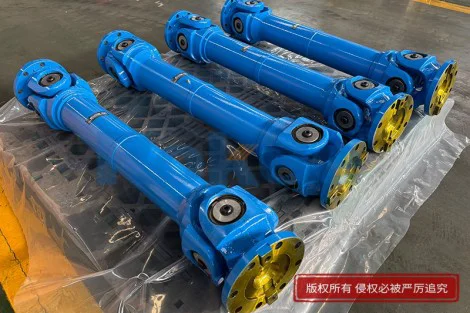
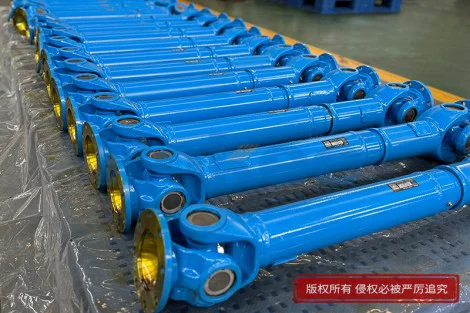
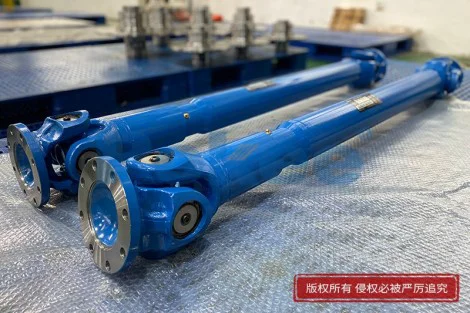
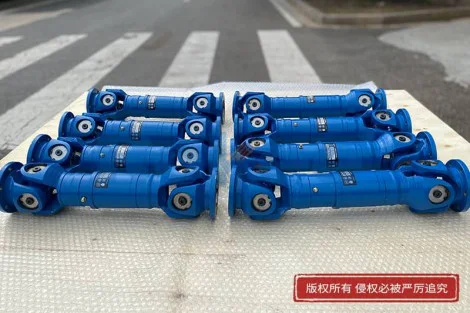
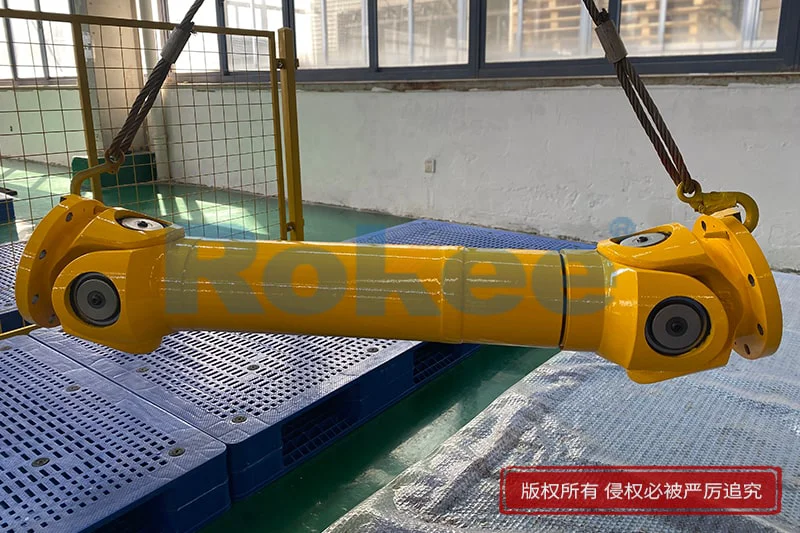
The universal shaft, also known as a cardan shaft, is a key mechanical component integrated into the rockwool sandwich panel production machine, designed to connect different rotating parts of the equipment and transmit torque and motion efficiently. Unlike ordinary couplings, the universal shaft possesses a unique structural design that allows it to achieve reliable power transmission even when the connected shafts are not on the same axis and there is an angular misalignment between them. This angular compensation capability, which typically ranges from 5° to 45° depending on the structural type, makes the universal shaft particularly suitable for the complex mechanical layout of rockwool sandwich panel production machines, where multiple components such as decoilers, roll forming systems, and conveyor belts need to work in coordination but may not be perfectly aligned due to installation space constraints or structural design requirements.
The integration of a universal shaft into the rockwool sandwich panel production machine fundamentally simplifies the installation process, which is a crucial advantage for manufacturers, especially those with limited workshop space or frequent equipment relocation needs. During the installation of traditional production machines without a universal shaft, technicians often face significant challenges in aligning the various rotating components, requiring precise measurement and adjustment to ensure that the shafts are perfectly coaxial. This process not only consumes a great deal of time and labor but also increases the risk of installation errors, which may lead to equipment vibration, noise, or even component damage during operation. In contrast, the universal shaft’s ability to compensate for angular, radial, and axial misalignments eliminates the need for strict coaxial alignment during installation. Technicians can install the machine components according to the actual workshop layout, and the universal shaft will automatically adjust to transmit power smoothly, reducing the installation time by a considerable margin and lowering the technical requirements for installation personnel.
In addition to simplifying installation, the universal shaft also greatly enhances the operational convenience of the rockwool sandwich panel production machine. The production process of rockwool sandwich panels involves a series of continuous and coordinated operations, including raw material feeding, surface layer forming, rockwool core processing, gluing, lamination, curing, and cutting. Each of these links relies on the stable transmission of power from the main motor to the corresponding components, and any interruption or instability in power transmission can affect the entire production process and the quality of the finished panels. The universal shaft ensures smooth and stable power transmission even under varying operating conditions, minimizing vibration and noise during machine operation. This stability not only improves the comfort of operators but also reduces the wear and tear of machine components, extending the service life of the equipment.
The working principle of the universal shaft in the rockwool sandwich panel production machine is based on the theory of spatial linkage mechanisms. Taking the commonly used cross-axis universal shaft as an example, it consists of a cross shaft, bearings, and fork head components. When the main motor drives the active shaft to rotate, the cross shaft converts the rotational motion into a swinging motion, which is then transmitted to the passive shaft connected to the machine’s working components, thereby achieving continuous torque transmission. In practical applications, a double-joint universal shaft is often adopted to avoid speed fluctuations that may occur with a single universal shaft, ensuring that the active and passive shafts rotate synchronously and maintaining the stability of the production process. This synchronized operation is particularly important for the precision of the production machine, as it ensures that the surface layers and rockwool core are compounded accurately, avoiding defects such as uneven gluing, misalignment, or inconsistent thickness of the finished panels.
From a material perspective, the universal shaft used in rockwool sandwich panel production machines is typically made of high-quality alloy steels, such as 45 steel, 45 forged steel, or 40 chromium. These materials undergo appropriate heat treatment to enhance their strength, wear resistance, and fatigue life, enabling them to withstand the high torque and continuous operation requirements of the production machine. For heavy-duty production machines that handle large-scale or high-density rockwool panels, the universal shaft may be made of alloy cast steel or forged steel parts to further improve its load-bearing capacity. With the advancement of materials science, new materials such as high-strength stainless steel and special alloys have also been applied in some special working environments, expanding the application scope of the universal shaft and enhancing the overall reliability of the production machine.
The rockwool sandwich panel production machine equipped with a universal shaft also features a high degree of automation, which further simplifies operation and reduces the need for manual intervention. The entire production process, from raw material feeding to finished product stacking, is controlled by an advanced electrical control system, which can be operated through a user-friendly touch screen interface. Operators only need to set the required production parameters, such as panel thickness, width, and cutting length, and the machine will automatically complete the entire production process. The universal shaft plays a key role in this automated system by ensuring that all rotating components operate in coordination, maintaining the continuity and stability of the production line. This automation not only improves production efficiency but also reduces human errors, ensuring that each batch of rockwool sandwich panels meets the required quality standards.
The production process of rockwool sandwich panels using this machine begins with the feeding and processing of surface materials. The coil materials used for the surface layers, such as galvanized steel sheets, aluminum sheets, or stainless steel sheets, are first loaded into the decoiler. Under the control of a frequency conversion system, the decoiler unrolls the coils smoothly to avoid material deformation caused by uneven tension. The unrolled sheets are then conveyed to the roll forming system, where they undergo step-by-step cold forming through a set of precision rollers. This cold forming process ensures that the surface layers obtain the required shape and structural strength without damaging the surface coating or mechanical properties. During this process, the universal shaft transmits power from the main motor to the decoiler and roll forming system, ensuring that the unrolling and forming operations are synchronized and stable.
While the surface layers are being formed, the rockwool core material undergoes a series of processing procedures to meet the compounding requirements. The original rockwool slabs, which are usually of standard sizes, are transported to the slitting device by a lifting system. The slitting device cuts the slabs into strips of specified thickness, which are then transferred to a flipping device that reorients the strips so that their fiber direction is vertical. This vertical fiber orientation significantly enhances the structural strength and load-bearing capacity of the final sandwich panels. The universal shaft also plays a role in the rockwool processing section, transmitting power to the slitting and flipping devices to ensure precise and efficient processing of the rockwool core.
After the surface layers and rockwool core are processed, they are conveyed to the gluing and lamination station. The gluing system uniformly applies adhesive to the surface of the rockwool core or the inner surface of the surface layers, ensuring strong adhesion between the layers. The laminated panels are then pressed together under high temperature and pressure in the hot pressing curing system to form a solid composite structure. The universal shaft ensures that the conveyor belts, gluing rollers, and hot pressing rollers operate in coordination, maintaining the stability of the lamination process and ensuring that the panels are pressed evenly. Finally, the finished panels are cut to the specified length by the cutting system and conveyed to the stacking system for automatic stacking, completing the entire production process.
One of the key advantages of the rockwool sandwich panel production machine with a universal shaft is its versatility. The machine can be adjusted to produce rockwool sandwich panels of various specifications, including different thicknesses, widths, and surface profiles, to meet the diverse needs of different construction projects. For example, in industrial workshops that require high fire resistance, the machine can produce panels with a thicker rockwool core; in high-rise buildings that focus on lightweight and energy saving, it can adjust the thickness of the surface layers and the density of the rockwool core to achieve the optimal balance between performance and weight. The universal shaft’s flexibility in power transmission allows the machine to adapt to these adjustments easily, ensuring that the production process remains stable and efficient regardless of the product specifications.
In addition to installation and operational advantages, the universal shaft also contributes to the maintenance convenience of the rockwool sandwich panel production machine. The modular design of the universal shaft allows for easy disassembly and replacement, making it simple for technicians to inspect, maintain, or replace worn components. This reduces the maintenance time and costs, minimizing equipment downtime and ensuring continuous production. Regular maintenance of the universal shaft, such as lubrication and inspection of bearings, can further extend its service life and ensure the long-term stable operation of the production machine.
The application of the universal shaft in rockwool sandwich panel production machines also aligns with the current trends of energy conservation and environmental protection in the construction industry. By simplifying installation and operation, reducing energy consumption during operation, and extending the service life of the equipment, the machine helps to reduce the overall carbon footprint of the production process. Additionally, the rockwool sandwich panels produced by the machine are environmentally friendly, as rockwool is a natural and recyclable material that does not release harmful substances during production or use. This makes the machine an ideal choice for manufacturers who prioritize sustainability and environmental responsibility.
In practical use, the rockwool sandwich panel production machine with a universal shaft has been widely recognized for its reliability and efficiency. Manufacturers who have adopted this type of machine report significant improvements in production efficiency, reduced labor costs, and improved product quality. The simplified installation process allows for faster machine commissioning, enabling manufacturers to start production quickly and meet tight project deadlines. The easy operation and low maintenance requirements also reduce the training costs for operators, making it easier for small and medium-sized enterprises to adopt this advanced production equipment.
As the demand for rockwool sandwich panels continues to grow in the global construction market, the importance of efficient and easy-to-operate production equipment becomes increasingly prominent. The rockwool sandwich panel production machine equipped with a universal shaft addresses the key pain points of traditional production machines, offering simplified installation, convenient operation, stable performance, and versatility. Its integration of advanced mechanical technology and intelligent control systems makes it a powerful tool for manufacturers looking to improve production efficiency, reduce costs, and meet the high-quality requirements of modern construction projects.
In conclusion, the rockwool sandwich panel production machine with a universal shaft represents a significant advancement in the field of rockwool panel manufacturing. The universal shaft, with its unique angular compensation capability and stable power transmission, simplifies the installation process, enhances operational convenience, and improves the overall reliability and efficiency of the machine. By integrating this component into the production line, manufacturers can achieve continuous, automated production of high-quality rockwool sandwich panels, meeting the diverse needs of the construction industry while reducing costs and environmental impact. As technology continues to evolve, it is expected that these production machines will become even more advanced, with further improvements in automation, energy efficiency, and versatility, driving the sustainable development of the rockwool sandwich panel industry.