Gear Coupling Adapts To PIR Sandwich Panel Production Line For Stable Transmission
In the modern manufacturing industry, the production of PIR (Polyisocyanurate) sandwich panels has become increasingly important due to their excellent thermal insulation, light weight, high strength, and fire resistance. These panels are widely used in construction, industrial workshops, cold storage, and other fields, putting forward higher requirements for the stability, efficiency, and continuity of the production line. As a key component in the power transmission system, the gear coupling plays an indispensable role in ensuring the stable operation of the PIR sandwich panel production line. Its unique structural design and excellent performance enable it to adapt to the complex working conditions of the production line, effectively transmit power, compensate for shaft misalignment, and reduce the impact of mechanical vibration, thus guaranteeing the quality of PIR sandwich panels and improving production efficiency.
PIR sandwich panel production is a continuous and automated process that involves multiple links such as uncoiling of facing materials, roll forming, preheating, high-pressure foaming, curing, cooling, cutting, and stacking. Each link is closely connected, and the power transmission between various mechanical equipment must be accurate and stable. Any instability in power transmission will lead to problems such as uneven thickness of the panel, poor bonding between the facing and the core, and irregular cutting, which will seriously affect the product quality and production progress. The gear coupling, as a flexible connecting component between the motor and the working equipment (such as uncoilers, roll forming machines, foaming pumps, and conveyors), undertakes the task of transmitting torque and adjusting the relative position of the shafts, which is crucial to the stable operation of the entire production line.
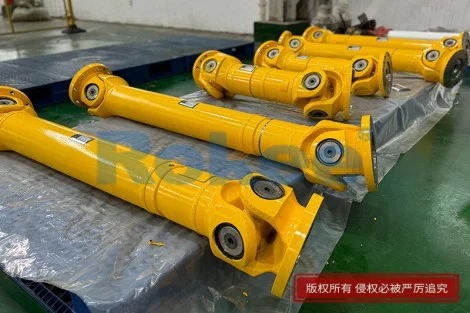
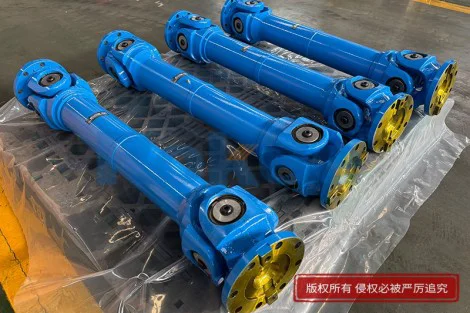
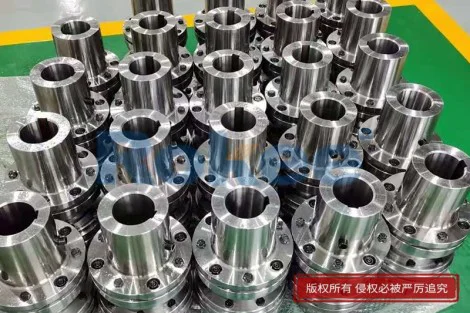
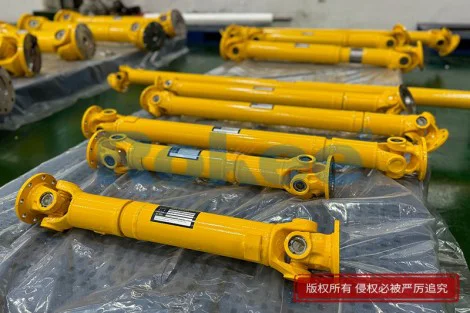
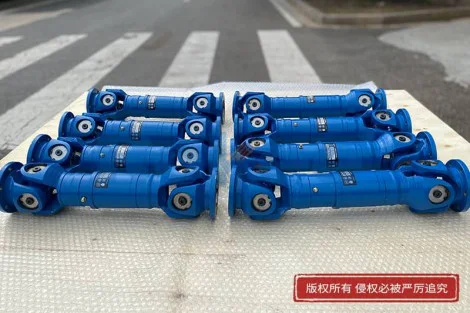
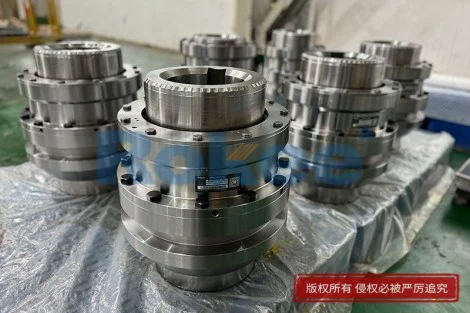
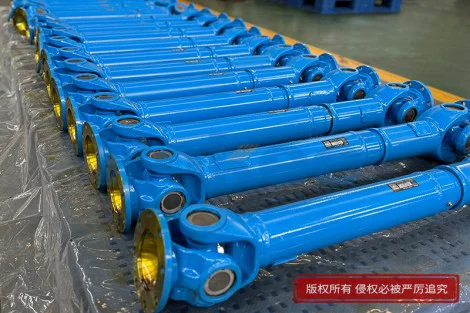
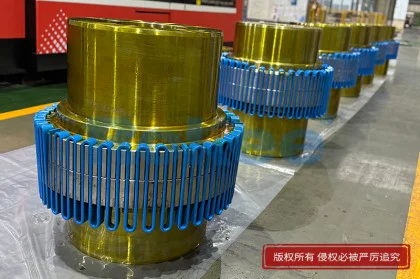
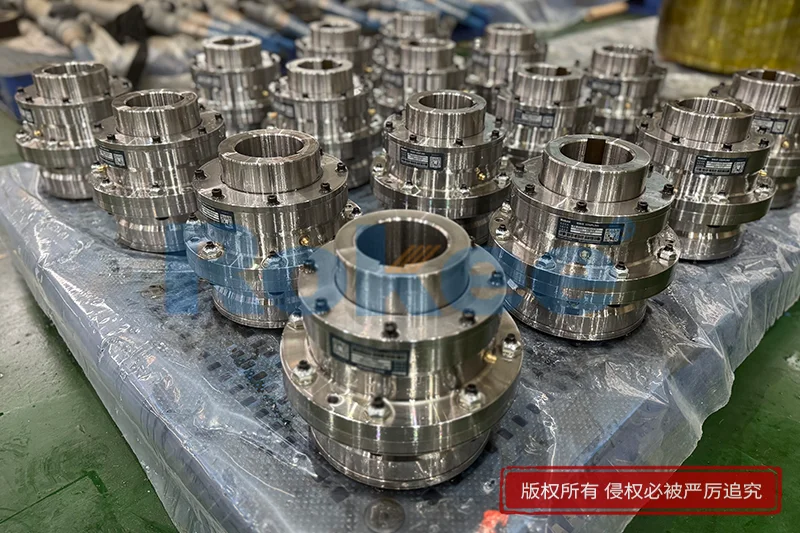
The gear coupling is composed of two hubs with external gear teeth and a sleeve with internal gear teeth, which are meshed with each other to transmit torque. This structural design gives it unique advantages in power transmission. Compared with other types of couplings, the gear coupling has a higher torque-bearing capacity, which can meet the power transmission needs of heavy-duty equipment in the PIR sandwich panel production line. In the production process, equipment such as roll forming machines and foaming pumps need to bear large loads during operation, and the gear coupling can stably transmit large torque without deformation or damage, ensuring the normal operation of the equipment. At the same time, the gear coupling has good flexibility and can compensate for angular, radial, and axial misalignment between the shafts. In the actual installation and operation of the production line, due to factors such as installation errors, mechanical vibration, and thermal expansion and contraction of equipment, it is difficult to ensure that the shafts of the motor and the working equipment are completely coaxial. The gear coupling can effectively absorb these misalignments through the meshing of gear teeth, avoid excessive stress on the shafts and bearings, reduce mechanical wear, and extend the service life of the equipment.
The working environment of the PIR sandwich panel production line is relatively complex. During the foaming process, a certain amount of heat and chemical gas will be generated, and the equipment will be in a state of continuous operation for a long time, which puts forward high requirements for the durability and corrosion resistance of the gear coupling. The gear coupling is usually made of high-strength alloy steel, and the gear teeth are subjected to quenching, tempering, and other heat treatment processes, which greatly improve the hardness, wear resistance, and corrosion resistance of the gear teeth. In addition, the gear coupling is equipped with a sealed structure, which can prevent dust, moisture, and chemical gas in the production environment from entering the internal gear meshing part, avoid gear wear and corrosion, and ensure the stable operation of the coupling for a long time. Even in the harsh working environment of long-term continuous operation, the gear coupling can maintain good performance, providing a reliable guarantee for the continuous operation of the PIR sandwich panel production line.
In the uncoiling link of the PIR sandwich panel production line, the uncoiler needs to stably release the facing material (usually galvanized steel sheet, aluminum sheet, or non-metallic substrate) at a uniform speed, which requires the power transmission between the motor and the uncoiler to be stable and accurate. The gear coupling connects the motor and the uncoiler shaft, which can transmit the torque of the motor to the uncoiler stably, ensuring that the uncoiling speed is consistent with the speed of the subsequent roll forming link. If the power transmission is unstable, it will lead to uneven release of the facing material, resulting in wrinkles or deviations in the material, which will affect the subsequent roll forming quality. The gear coupling can effectively avoid this problem. Its high-precision gear meshing ensures the accuracy of torque transmission, and the flexible compensation performance can adjust the slight misalignment between the motor and the uncoiler shaft, ensuring that the uncoiling process is stable and smooth.
The roll forming link is a key part of forming the facing material into the required shape. The roll forming machine needs to apply a certain pressure to the facing material through the roller group to form the desired profile. The power transmission between the motor and the roller group is realized through the gear coupling. The gear coupling can transmit large torque stably, ensuring that the roller group has sufficient power to form the facing material. At the same time, due to the high-speed operation of the roller group, mechanical vibration is inevitable. The gear coupling can absorb part of the vibration energy through the elastic deformation of the gear meshing part, reduce the impact of vibration on the equipment and the production line, and avoid the deformation of the roller group or the damage of the bearing due to excessive vibration. In addition, the gear coupling can compensate for the axial displacement caused by the thermal expansion of the roller group during operation, ensuring that the roller group operates in a stable position and improving the forming accuracy of the facing material.
The preheating link is crucial to improving the adhesion between the facing material and the PIR core. The preheating equipment needs to heat the facing material to a specified temperature at a uniform speed, which requires the power transmission system to be stable and reliable. The gear coupling connects the motor and the preheating roller, which can transmit the torque stably, ensuring that the preheating roller rotates at a uniform speed, so that the facing material is heated evenly. If the rotation speed of the preheating roller is unstable, it will lead to uneven heating of the facing material, resulting in poor bonding between the facing and the core, and even delamination of the panel. The gear coupling's stable transmission performance can effectively avoid this problem, ensuring that the preheating process is carried out smoothly, and laying a good foundation for the subsequent foaming link.
The high-pressure foaming link is the core link of PIR sandwich panel production. The foaming pump needs to inject the PIR foam mixture into the gap between the two layers of facing materials at a constant pressure and flow rate. The power transmission between the motor and the foaming pump is directly related to the stability of the foaming process. The gear coupling can transmit the torque of the motor to the foaming pump stably and accurately, ensuring that the foaming pump operates at a constant speed, so that the foam mixture is injected evenly and the density of the foam core is consistent. If the power transmission is unstable, it will lead to fluctuations in the pressure and flow rate of the foaming pump, resulting in uneven foam density, bubbles, or voids in the foam core, which will affect the thermal insulation performance and structural strength of the PIR sandwich panel. The gear coupling's high torque-bearing capacity and stable transmission performance can effectively ensure the normal operation of the foaming pump, ensuring the quality of the foam core.
After the foaming is completed, the panel needs to go through the curing and cooling links. The conveyor belt is responsible for transporting the panel to the curing chamber and the cooling area at a uniform speed. The power transmission between the motor and the conveyor belt is also realized through the gear coupling. The gear coupling can adapt to the long-distance power transmission of the conveyor belt, transmit torque stably, ensure that the conveyor belt runs at a uniform speed, and avoid the panel from shifting or jamming during transportation. In addition, the conveyor belt will generate a certain amount of tension during operation, and the gear coupling can compensate for the slight misalignment caused by the tension, reduce the wear of the conveyor belt and the bearing, and ensure the smooth progress of the curing and cooling process.
The cutting link requires the cutting machine to cut the continuous panel into the specified length accurately. The power transmission between the motor and the cutting blade must be precise and stable to ensure the cutting accuracy. The gear coupling can transmit the torque of the motor to the cutting blade accurately, ensuring that the cutting blade rotates at a constant speed and the cutting surface is flat and smooth. At the same time, the gear coupling can absorb the vibration generated during the cutting process, reduce the impact of vibration on the cutting accuracy, and avoid the occurrence of uneven cutting or burrs. The stable transmission performance of the gear coupling ensures that the cutting link can meet the requirements of product size, improving the qualification rate of products.
In addition to adapting to various links of the PIR sandwich panel production line, the gear coupling also has the advantages of easy installation and maintenance. The installation process of the gear coupling is relatively simple, and it can be installed and debugged quickly without complex equipment and professional technology. In the daily maintenance process, only regular lubrication and inspection are needed to ensure its normal operation. The lubrication of the gear coupling is very important. Proper lubrication can reduce the friction between the gear teeth, reduce wear, and extend the service life of the coupling. Generally, grease or oil lubrication is used. Regularly checking the lubrication condition and adding lubricating oil or grease in time can effectively prevent the gear teeth from being worn due to insufficient lubrication. At the same time, regularly checking the gear teeth for wear, cracks, and other defects, and replacing the damaged parts in time can ensure the stable performance of the gear coupling.
The application of gear coupling in the PIR sandwich panel production line not only improves the stability and efficiency of the production line but also reduces the maintenance cost of the equipment. Due to the excellent durability and reliability of the gear coupling, the frequency of equipment failure is reduced, the downtime of the production line is shortened, and the production efficiency is improved. At the same time, the gear coupling can reduce the wear of other mechanical components, extend the service life of the entire production line equipment, and reduce the investment cost of equipment replacement. In the long-term production process, the gear coupling has become an important guarantee for the stable operation of the PIR sandwich panel production line, and its role cannot be replaced by other components.
With the continuous development of the PIR sandwich panel industry, the requirements for the production line are getting higher and higher. The gear coupling, as a key component of the power transmission system, is also constantly improving and upgrading. In the future, with the development of material science and manufacturing technology, the gear coupling will have higher torque-bearing capacity, better flexibility, and longer service life, which can better adapt to the development needs of the PIR sandwich panel production line. At the same time, the integration of intelligent technology will make the gear coupling have functions such as real-time monitoring and fault early warning, which can timely find potential faults and take corresponding measures, further improving the stability and reliability of the production line.
In conclusion, the gear coupling is an indispensable key component in the PIR sandwich panel production line. Its unique structural design and excellent performance enable it to adapt to the complex working conditions of the production line, stably transmit power, compensate for shaft misalignment, reduce mechanical vibration, and ensure the quality of PIR sandwich panels and the continuous operation of the production line. From the uncoiling of facing materials to the final cutting and stacking, the gear coupling plays an important role in every link, providing a reliable guarantee for the efficient and stable operation of the PIR sandwich panel production line. With the continuous progress of technology, the application of gear coupling in the PIR sandwich panel production line will be more extensive and in-depth, promoting the sustainable development of the PIR sandwich panel industry.