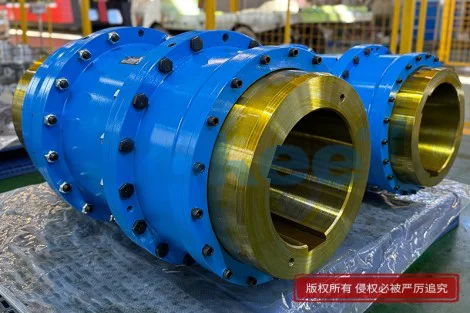
Membrane Coupling Helps Thermal Insulation Board Production Line Save Energy And Reduce Consumption
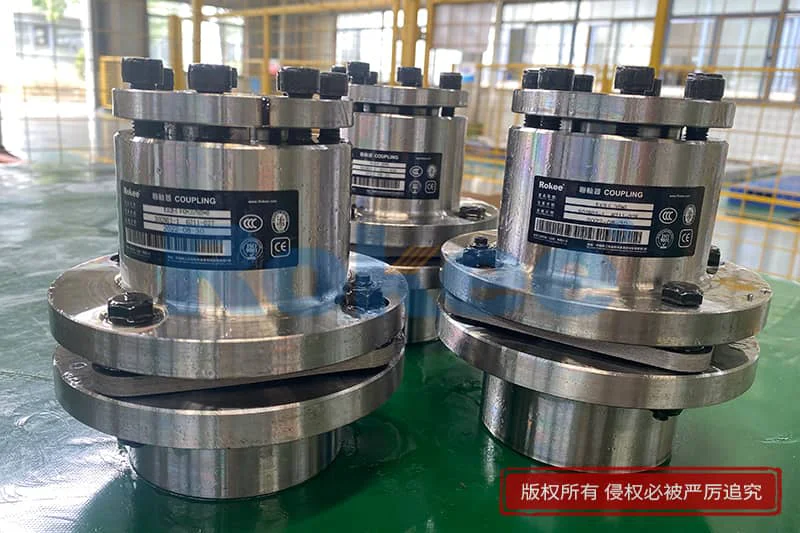
In the modern industrial landscape, the thermal insulation board production industry is facing increasing pressure to save energy, reduce consumption, and achieve green development. As a key component in mechanical transmission systems, membrane couplings have gradually become an indispensable part of thermal insulation board production lines, bringing significant energy-saving and consumption-reducing effects to the industry through their unique structural design and excellent performance. Unlike traditional coupling devices, membrane couplings abandon the cumbersome lubrication system and rely on the elastic deformation of metal diaphragms to achieve efficient power transmission, which not only improves the stability and efficiency of the production line but also effectively reduces energy waste and operational costs, providing strong technical support for the sustainable development of the thermal insulation board production industry.
To understand how membrane couplings help thermal insulation board production line save energy and reduce consumption, it is first necessary to clarify the core working principle of membrane couplings and the energy consumption characteristics of thermal insulation board production lines. Thermal insulation board production is a complex process involving raw material mixing, molding, drying, cutting, and other multiple links, each of which requires the drive of power equipment such as motors, pumps, and conveyors. The transmission efficiency between these power equipment and the working machinery directly affects the overall energy consumption of the production line. In traditional production lines, rigid couplings or gear couplings are often used for power transmission. However, these coupling devices have inherent defects: rigid couplings cannot compensate for the relative displacement between the shafts, which easily leads to increased friction, vibration, and noise during operation, resulting in significant energy loss; gear couplings require continuous lubrication to ensure normal operation, and the lubrication process not only consumes a large amount of lubricating oil but also generates additional energy consumption due to friction between gears, while the leakage of lubricating oil may also cause environmental pollution and increase maintenance costs.
Membrane couplings, as a new type of metal elastic flexible coupling, have fundamentally solved the defects of traditional couplings through their innovative structural design. The core structure of a membrane coupling mainly consists of two half-couplings and one or more sets of metal diaphragm groups. The diaphragm groups are usually composed of multiple layers of ultra-thin high-strength stainless steel sheets, which are precision machined with bolt holes and stress relief grooves to ensure excellent elasticity and toughness. When the production line is in operation, the power of the driving shaft is transmitted to the diaphragm group through the half-coupling, and the diaphragm group generates slight elastic deformation to compensate for the axial, radial, and angular displacements between the driving shaft and the driven shaft, then transmits the power to the driven shaft efficiently. This elastic deformation transmission method avoids the rigid connection between the shafts, greatly reducing friction and vibration during the transmission process, thereby reducing energy loss caused by friction and vibration.
The high transmission efficiency of membrane couplings is one of the key factors contributing to energy saving in thermal insulation board production lines. Relevant research shows that the transmission efficiency of high-quality membrane couplings can reach more than 99%, which is significantly higher than that of traditional gear couplings and rigid couplings. In the thermal insulation board production line, the power transmission links are numerous, and each link has a certain energy loss. The use of membrane couplings can reduce the energy loss in each transmission link, and the accumulated energy saving effect is very significant. For example, in the raw material mixing link, the mixer is driven by a motor through a membrane coupling. Due to the high transmission efficiency of the membrane coupling, the power loss during the transmission process is reduced by more than 5% compared with the traditional gear coupling. For a production line with a daily output of 200 cubic meters of thermal insulation boards, this can save dozens of kilowatt-hours of electricity every day. In the long run, the energy saving effect is very considerable.
In addition to high transmission efficiency, the maintenance-free characteristics of membrane couplings also play an important role in reducing consumption. Traditional gear couplings require regular lubrication and maintenance, which not only requires a large amount of lubricating oil but also consumes a lot of manpower and material resources. The replacement of lubricating oil and the maintenance of coupling parts will also lead to the shutdown of the production line, affecting production efficiency and increasing production costs. Membrane couplings, on the other hand, do not require any lubrication during operation because there is no relative sliding between the diaphragm group and the half-coupling, and there is no wear problem. This not only saves the cost of lubricating oil but also eliminates the labor cost and time cost of regular lubrication and maintenance, reducing the overall operational cost of the production line.
The excellent vibration and shock absorption performance of membrane couplings also contributes to the energy saving and consumption reduction of thermal insulation board production lines. In the production process of thermal insulation boards, the operation of equipment such as mixers, conveyors, and dryers will generate a lot of vibration. These vibrations not only affect the stability of the production line and the quality of the products but also increase energy consumption because the vibration will cause additional load on the motor and other power equipment, making the motor need to consume more energy to maintain normal operation. Membrane couplings can absorb and buffer these vibrations through the elastic deformation of the diaphragm group, reducing the impact of vibration on the equipment. This not only reduces the energy consumption caused by vibration but also prolongs the service life of the motor, reducer, and other equipment, reducing the frequency of equipment replacement and maintenance, and further reducing the production cost.
The adaptability of membrane couplings to harsh working environments also makes them more suitable for thermal insulation board production lines. The production process of thermal insulation boards often involves high temperatures, dust, and other harsh conditions. For example, in the drying link, the temperature of the drying equipment can reach above 100 degrees Celsius, and a large amount of dust will be generated during the mixing and cutting of raw materials. Traditional couplings are easily affected by high temperatures and dust, leading to reduced performance and increased energy consumption. Membrane couplings are made of high-temperature resistant and corrosion-resistant stainless steel materials, which can work stably in high-temperature and dusty environments without performance degradation. This ensures the stable operation of the transmission system under harsh working conditions, avoids energy waste caused by unstable operation of the equipment, and improves the overall operational efficiency of the production line.
To further verify the energy-saving and consumption-reducing effects of membrane couplings in thermal insulation board production lines, we can analyze the actual application cases. A thermal insulation board production enterprise once replaced the traditional gear couplings in its production line with membrane couplings. After a period of operation, the enterprise found that the overall energy consumption of the production line decreased by 8%-12%, and the electricity consumption per cubic meter of thermal insulation boards decreased by 3-5 kilowatt-hours. At the same time, the maintenance cost of the production line was reduced by about 30% because the membrane couplings did not require lubrication and maintenance, and the frequency of equipment failure was also significantly reduced. The production efficiency of the production line was improved by 5%-7% due to the stable operation of the transmission system and the reduction of shutdown time caused by maintenance. This case fully shows that the application of membrane couplings can effectively help thermal insulation board production lines save energy and reduce consumption, improve production efficiency, and bring significant economic benefits to enterprises.
The energy-saving and consumption-reducing mechanism of membrane couplings in thermal insulation board production lines is not only reflected in the transmission efficiency and maintenance cost but also in the optimization of the overall operation of the production line. The stable transmission performance of membrane couplings can ensure the coordinated operation of various equipment in the production line, avoid the energy waste caused by the mismatch of equipment operation speed, and improve the utilization rate of energy. For example, in the molding link of thermal insulation boards, the conveyor needs to maintain a stable speed to ensure the uniformity of the board thickness. The use of membrane couplings can ensure that the conveyor runs at a stable speed, avoiding the uneven thickness of the boards caused by speed fluctuations, which not only improves the product quality but also reduces the energy waste caused by rework. In addition, the accurate power transmission of membrane couplings can also help the production line achieve precise control, reduce the waste of raw materials, and further reduce production costs.
With the continuous improvement of global energy conservation and environmental protection requirements, the thermal insulation board production industry is facing increasingly severe challenges in energy conservation and emission reduction. Membrane couplings, as an efficient and energy-saving transmission component, have broad application prospects in the thermal insulation board production industry. In the future, with the continuous development of material science and manufacturing technology, the performance of membrane couplings will be further improved. For example, the use of new composite materials can further improve the transmission efficiency and service life of membrane couplings, and the optimization of structural design can make membrane couplings more suitable for the special working conditions of thermal insulation board production lines. At the same time, the combination of membrane couplings with intelligent control technology can realize real-time monitoring of the transmission system, timely find and solve potential problems, and further improve the energy-saving effect and operational stability of the production line.
It should be noted that to give full play to the energy-saving and consumption-reducing effects of membrane couplings in thermal insulation board production lines, reasonable selection and installation are very important. Enterprises should select membrane couplings of appropriate models and specifications according to the actual working conditions of the production line, such as the power of the motor, the speed of the equipment, and the magnitude of the relative displacement between the shafts. During the installation process, the alignment of the shafts should be ensured to avoid excessive displacement between the shafts, which affects the transmission efficiency and service life of the membrane couplings. In addition, regular inspection and maintenance of membrane couplings are also necessary, such as checking the wear of the diaphragm group and the tightness of the bolts, to ensure the stable operation of the membrane couplings.
In conclusion, membrane couplings play an irreplaceable role in helping thermal insulation board production lines save energy and reduce consumption. Through their high transmission efficiency, maintenance-free characteristics, excellent vibration absorption performance, and strong adaptability to harsh environments, membrane couplings not only reduce the energy consumption and operational costs of the production line but also improve the production efficiency and product quality, providing a reliable technical guarantee for the green and sustainable development of the thermal insulation board production industry. With the continuous advancement of industrial technology, the application of membrane couplings in the thermal insulation board production industry will become more extensive and in-depth, making greater contributions to the global energy conservation and environmental protection cause.