Adaptation Of Continuous PU Sandwich Panel Production Line And Cardan Shaft Coupling Reduces Equipment Failure Rate
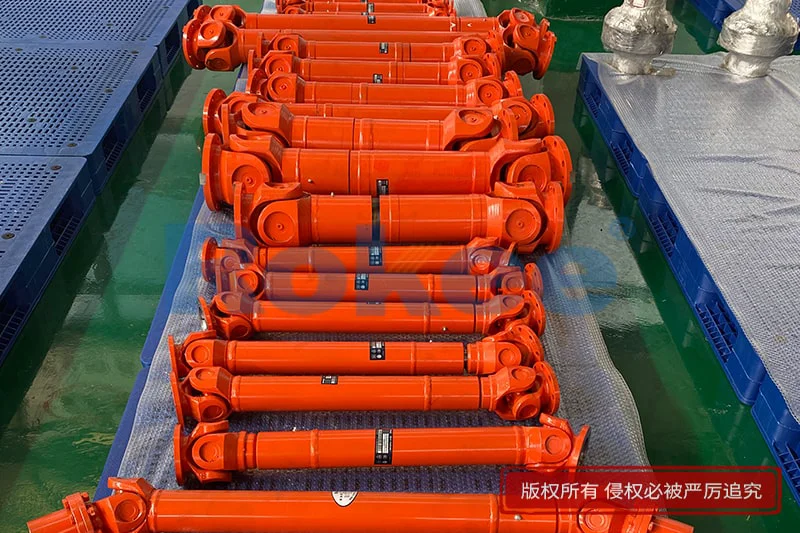
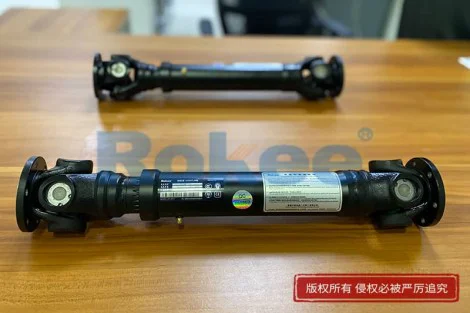
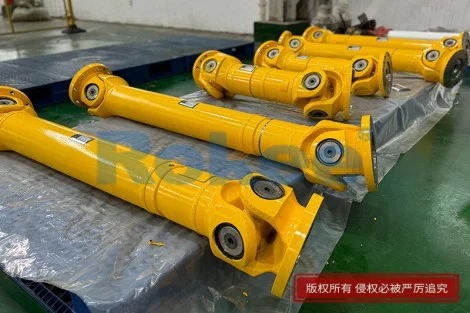
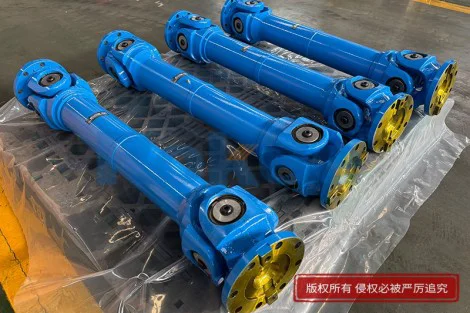
In the manufacturing environment, where continuous production is the backbone of profitability, any unplanned downtime on a PU sandwich panel production line represents not merely a pause but a cascade of lost revenue, material waste, and compromised delivery schedules. A continuous PU sandwich panel line is a complex orchestration of unwinding stations, mixing heads, double-band conveyors, laminating presses, curing ovens, and cutting systems running in lockstep at speeds that rarely stop once the line reaches steady state. When a single drive component falters, the entire synchronized sequence shudders to a halt, leaving miles of half-cured foam, misbonded facings, and out-of-tolerance panels behind it. Among the most critical—and most frequently overlooked—links in this mechanical chain is the cardan shaft coupling that transmits torque from gearboxes to rollers, drive drums, and conveyor segments. For decades, engineers treated this coupling as a catalog commodity: select a size, bolt it on, and wait for the next failure. That mindset is precisely why so many lines still operate at elevated failure rates. By approaching the coupling not as a spare part but as an engineered interface that must be adapted to the specific torsional, angular, and axial demands of a continuous PU panel line, plants have discovered that a remarkably inexpensive change point delivers outsized reliability gains. The journey toward lower equipment failure rate begins with a clear-eyed diagnosis of what actually breaks, and why.
To understand why the cardan shaft coupling deserves special attention on a PU sandwich panel line, it helps to first appreciate the duty cycle the coupling must endure. A continuous line does not run at a single comfortable speed; it ramps up from a standing start, settles into a steady production rate that may stretch for twelve-hour shifts, then slows or reverses during threading and changeover. The torque transmitted through each coupling is not smooth either. The mixing head delivers a chemically reactive two-component polyurethane blend that expands and cures as the facing materials—typically pre-painted steel or aluminum—are pulled through the double-band press. As the foam density shifts across panel widths, as the band tension fluctuates, and as the line speeds change between insulated wall panels and decorative ceiling tiles, the driven rollers experience torsional ripple that travels straight back through the driveline. Add to this the unavoidable misalignment between motor shaft, gearbox output, and roller input—installation tolerances, thermal expansion of the press frame, foundation settling, and even the slight deflection of shafts under load—and the coupling is being asked to absorb angular, parallel, and axial errors while transmitting high torque at relatively low speeds. Rigid or undersized universal joints bind, wear, and ultimately fracture under this combined loading. The result is a predictable pattern of failures: needle bearings pitting, cross-bearing races spalling, yoke cracks propagating at welds, and, in the worst cases, complete shaft separation that can damage the drum, the band, and the surrounding structure. Recognizing this duty cycle is the first adaptation step: matching the coupling's capacity and geometry to the real, dynamic loads the line imposes, rather than to the nameplate horsepower of the motor.
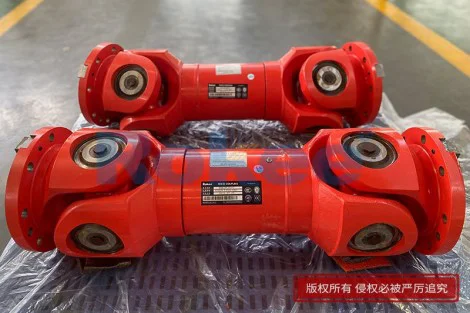
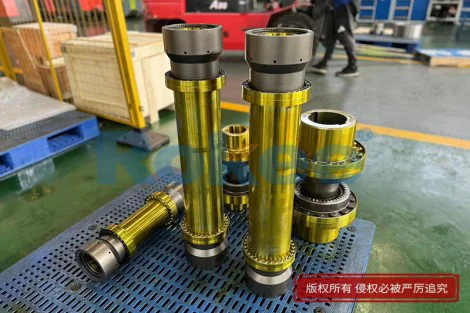
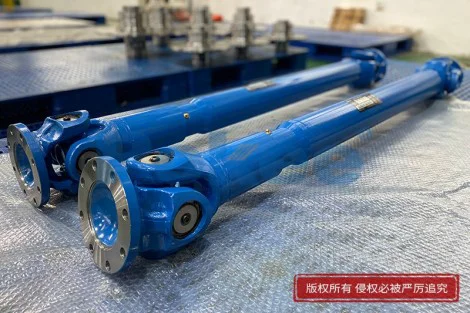
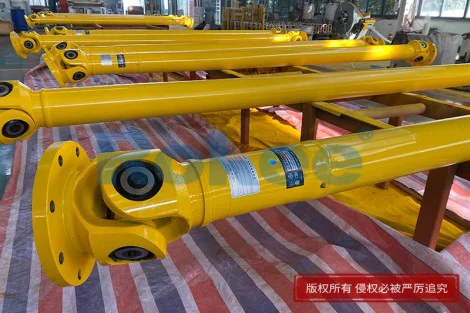
The word "adaptation" carries a specific meaning in this context. It is not about selecting a more expensive coupling off the shelf; it is about reshaping the interface between the existing driveline and the new demands of a modernized or upgraded PU sandwich panel line. Many plants that install higher-capacity mixing systems, faster double-band conveyors, or wider panel widths leave the original couplings untouched, assuming they are "strong enough." This is a false economy. When line speed increases by twenty percent and panel width expands by several hundred millimeters, the torque demand on every driven roller rises, and the angular misalignment introduced by the longer, more flexible press frame rises with it. An adapted coupling solution typically begins with a torsional analysis of each drive point, mapping the actual torque profile—starting torque, running torque, peak torque during splice or joint passage—against the coupling's published fatigue rating. It continues with a geometric survey of the installed shaft positions, measuring the actual angular and parallel offsets rather than trusting the as-built drawings. From that data, engineers select a double-cardan arrangement at locations where angular misalignment exceeds what a single joint can tolerate, specify larger cross-bearing journals where peak torque is intermittent but severe, and choose appropriate lubrication fittings and sealing boots that can survive the dusty, chemically fume-laden atmosphere around a PU foaming line. The adaptation also extends to the shaft-to-hub connection: clamping hubs, shrink discs, or keyed connections sized to the actual shaft diameter and surface speed, eliminating the fretting and keyway deformation that often masquerades as a coupling failure. In practice, this kind of tailored fit-up means the coupling stops being the weak link and starts being a forgiving element that protects the more expensive components downstream.
One of the most visible dividends of a properly adapted cardan shaft coupling is a sharp reduction in vibration transmitted to the rest of the line. On many legacy PU sandwich panel lines, operators and maintenance crews become so accustomed to a certain level of rumble that they no longer register it as abnormal. They tighten belt guards, brace the conveyor frame, and replace bearings at regular intervals as if vibration were an unavoidable tax of running the machine. In reality, that vibration is a diagnostic signal: it indicates that a universal joint is not articulating smoothly, that needle bearings are failing, or that the driveline is resonating at a frequency excited by the pulsing torque of the mixing head output. When the coupling is resized and re-centered, the vibration floor drops dramatically, often by half or more as measured at the bearing housings. The benefits ripple outward. Quieter operation means the drive motors run cooler, because less of their energy is wasted as mechanical shake. The conveyor band tracks more true, reducing edge wear and the need for frequent steering corrections. The panel surfaces emerging from the press are smoother, with fewer micro-wrinkles and dents caused by band flutter. Even the building itself benefits, as the transmitted structural vibration stops loosening fasteners in adjacent ductwork and piping. Operators report being able to hold a cup of coffee on the control cabinet without spilling it—a simple but telling metric that aligns with real reductions in bearing failure, seal leakage, and hydraulic hose fatigue along the whole line.
Another critical failure mode that a well-adapted coupling addresses is lubrication degradation. PU sandwich panel environments are unkind to any unsealed rotating component. The workshop air carries a fine mist of isocyanate and polyol components, foam dust, steel grindings from slitter knives, and condensation from the cooling section of the oven. Conventional universal joints with open zerk fittings and fabric boots quickly draw in this contamination, turning the lithium grease inside into an abrasive paste that grinds the needle races faster than any overload could. The adaptation response here is not simply to grease the joints more often, which is a losing battle, but to specify couplings fitted with fully enclosed, labyrinth-sealed bearing blocks and permanently lubricated cross-bearing kits. Some configurations incorporate a small central lubrication line that feeds a measured quantity of fresh grease into each joint on a timed cycle, continuously purging the chamber and keeping contaminants out. When this is combined with guards that deflect overspray from the mixing head away from the drive area, the mean time between coupling overhauls stretches from a matter of weeks to many months. The plant stops treating coupling relubrication as a weekly chore and starts treating it as a scheduled inspection task, which frees maintenance hours for the genuinely complex work of calibrating the mixing head or aligning the band press. Fewer spontaneous lubrication failures also mean fewer in-weekend emergency breakdowns, which is where equipment failure costs spiral most dramatically in terms of overtime and expedited material fees.
The economic case for coupling adaptation is rarely about the coupling itself, because the coupling is a low-cost element in the overall capital outlay. The case is about what the coupling protects. A PU sandwich panel line depends on several very large, very expensive pieces of equipment: the double-band steel conveyor, which is precision-ground and replaced at enormous cost; the heated press platens, whose flatness directly determines panel quality; the cutting saw stack, which must hold accuracy across tens of meters of travel; and the facing decoilers, which carry several tons of pre-painted coil at taut tension. When a poorly matched coupling lets go—say, a yoke fractures during an overnight run—the resulting torque spike can jam a roller, scuff the band, and even tear a gouge into the platen surface. Repairing that kind of damage takes the line down for days, not hours, and the repair bill dwarfs the entire coupling budget for the year. By sizing the coupling with an appropriate service factor and, in some cases, fitting a torque-limiting shear or slip element in the drive train, the adapted coupling becomes the deliberate weak link in the chain. It is designed to fail predictably and visibly, stopping the line through a shear pin or a proximity sensor before the damage propagates. This philosophy of a controlled, inexpensive failure point is a quiet but powerful lever for reducing overall equipment failure rate. Maintenance teams stop chasing catastrophic, unknowable breakdowns and start managing a small number of expected, planned replacements—pin changes, gasket kits, cross-bearing overhauls—that can be scheduled during planned stoppages rather than imposed on the plant as emergencies.
Beyond the mechanical improvements, the adaptation of the cardan shaft coupling changes the maintenance culture around the line. When couplings are treated as disposable catalog items, maintenance programs tend to be reactive: wait for a failure, swap the part, reset the alarm, and move on. There is no incentive to understand the wear pattern, because every failure is treated as random. Once a coupling is engineered into the line with documented torque ratings, alignment tolerances, and inspection intervals, a condition-monitoring program can actually take root. Vibration sensors can be mounted near each universal joint, and analysts can trend the harmonic content of the signal over weeks. A specific rise in twice-per-revolution vibration, for instance, points to a failing cross-bearing before any metal debris appears in the grease. Thermographic scans during production can detect a seized needle bearing by the localized heat it generates. Ultrasonic detection can reveal dry joints that have lost their grease film. With this data in hand, the maintenance planner can pull a coupling from the storeroom, replace it on a planned Sunday shift, and return the part to the workshop for teardown analysis. Over a year, the accumulated teardown records reveal which suppliers, which lubricants, and which operating regimes are producing the longest service life. The program becomes self-improving, and the equipment failure rate does not just drop once—it keeps drifting downward quarter after quarter as the organization learns from each repaired component. This flywheel effect is rarely captured in initial ROI projections, yet it is often the largest long-term benefit of a properly adapted coupling strategy.
It is also worth noting that the adaptation of the coupling is not a one-time event but a continuing practice that evolves with the line. PU sandwich panel manufacturing itself is evolving: facings are getting thinner as material costs rise, foam formulations are shifting toward lower-density, higher-insulation systems, and customer specifications are pushing panels flatter and longer. Each of these trends subtly changes the torque profile and the vibration signature the driveline must manage. A coupling that was perfectly matched three years ago may now be under-loaded, which sounds like a good thing but is actually a problem—universal joints run best when loaded to a reasonable fraction of their rated torque, and severe under-loading can cause the needle bearings to skid instead of roll, producing brinelling and premature failure. Conversely, if the plant introduces a new, heavier facer material, the same coupling may now be over-loaded and headed for early fatigue. A mature adaptation program includes periodic re-analysis whenever a major process change occurs: a new foam recipe, a wider panel format, a higher line speed, or a change in the curing oven temperature profile. Engineers re-survey shaft alignment, re-measure torque at the driven rollers, and either re-fit the existing couplings with upgraded cross-bearing kits or replace them with appropriately sized alternatives. This ongoing vigilance keeps the failure rate from creeping back up as the production landscape shifts. Plants that install a coupling upgrade and then walk away from it typically see the failure rate drift back toward its original level over three to five years, as conditions change and the original fit is no longer optimal.
The human dimension of this upgrade should not be overlooked either. Line operators, who are the first to hear a new rattle or feel an unfamiliar vibration, are far more likely to report an issue early when they trust that the maintenance program has the backing of engineering. When operators have seen couplings fail catastrophically in the past, they tend to become fatalistic about noise and shake, writing off new symptoms as "just how this line sounds." But after a coupling adaptation campaign visibly smooths out the line, operators become attuned to the difference between normal and abnormal sound levels, and they begin submitting work orders for minor symptoms that would previously have been ignored. Maintenance technicians, too, gain confidence: when they are handed couplings that actually fit the shaft positions without shimming, hammering, and makeshift adapter plates, they can complete a swap in a fraction of the time, and the repair stays done. Morale on the line improves because the day is less often derailed by a two a.m. failure that nobody saw coming. Safety improves as well, because operators are no longer called in to deal with messy oil leaks, spinning shafts held in place by improvised restraints, or coupling guards that had to be removed because the wrong-size coupling would not fit behind them. These soft outcomes are difficult to put on a balance sheet, but they translate directly into lower turnover, higher quality consistency, and a plant that behaves like a system rather than a collection of patched-together machines.
Ultimately, the adaptation of a continuous PU sandwich panel production line around a properly selected, aligned, and monitored cardan shaft coupling is a case study in how reliability is won through attention to the unglamorous details. The mixing head, the double-band press, and the control system get the engineering attention they deserve, but it is the coupling—the quiet, cross-shaped piece of steel between gearbox and roller—that ultimately decides whether that expensive equipment can run the schedule it was built for. By measuring the real duty cycle, matching the coupling to that cycle rather than to a catalog page, sealing it against the factory environment, protecting the larger assets with deliberate failure points, and building a condition-monitoring culture around it, plants have shown that equipment failure rate can be cut by a very large margin without undertaking a full line rebuild. The returns compound: less unplanned downtime means more finished panels shipped, fewer batches of off-spec product, lower maintenance overtime, and a workforce that trusts the machine they operate. In an industry where margins are thin and customer delivery windows are tight, that combination is decisive. The cardan shaft coupling, far from being an afterthought, is one of the highest-leverage reliability investments a PU sandwich panel plant can make, and its adaptation deserves to be treated not as a repair task but as a permanent engineering practice woven into the way the line is designed, operated, and improved year after year.