Transmission Accuracy Improvement Of Universal Coupling For PU Sandwich Panel Line
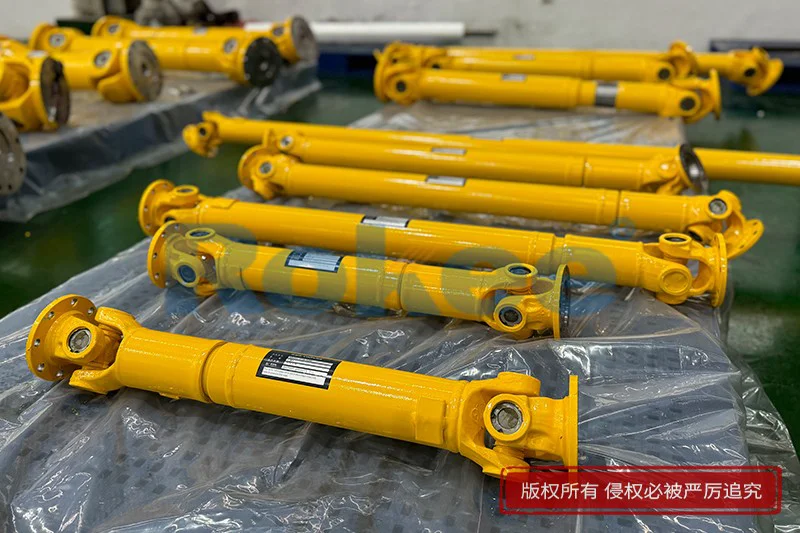
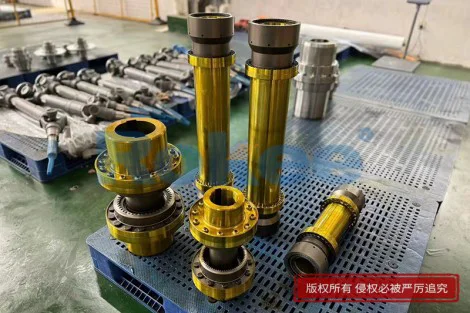
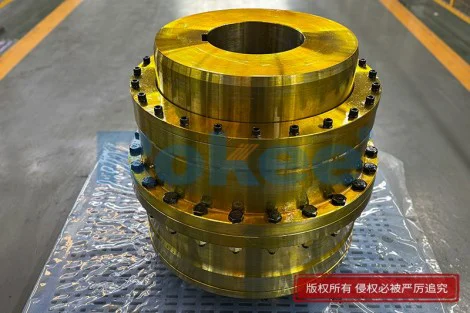
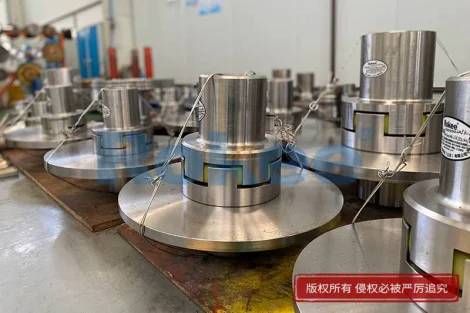
The PU sandwich panel production line is a highly integrated continuous production system that integrates raw material feeding, foaming compounding, rolling pressing, fixed-length cutting and finished product conveying. The overall operation coordination degree of the equipment directly determines the forming flatness, core material uniformity and dimensional consistency of PU sandwich panels. As a key flexible transmission component in the production line, the universal coupling undertakes the core function of transmitting torque and synchronous motion between spatially offset transmission shafts. It can compensate for angular deviation, axial displacement and parallel misalignment between shafts caused by equipment assembly errors, operational vibration and thermal deformation, and its transmission accuracy and stability are the core prerequisites to ensure the synchronous operation of each functional module of the production line. In the long-term continuous operation of traditional PU sandwich panel production lines, the universal coupling is prone to periodic transmission deviation, torsional vibration and motion hysteresis, which leads to asynchronous operation of rolling system, cutting system and conveying system, resulting in uneven foaming thickness of sandwich panels, deviation of fixed-length cutting size and local warping of plate surfaces. Therefore, exploring effective technical means to improve the transmission accuracy of universal couplings is of great practical significance to optimize the overall operation performance of PU sandwich panel production lines and stabilize product quality.
In the actual operation scenario of PU sandwich panel production lines, the operating conditions of universal couplings have distinct industry characteristics, which put forward higher requirements for their transmission accuracy and dynamic stability. Different from intermittent operation mechanical equipment, the PU sandwich panel line maintains long-term uninterrupted continuous operation, and the transmission system needs to bear cyclic alternating load generated by frequent start-stop, speed regulation and variable material feeding resistance. In the whole production process, the linkage of multiple processes leads to complex stress on the coupling: the uncoiling and feeding stage brings low-speed and high-torque transmission load, the rolling and forming stage requires high-precision synchronous transmission at medium and high speed, and the cutting and discharging stage needs rapid response of transmission motion to match fixed-length positioning. In addition, the production environment of PU sandwich panels has certain temperature fluctuation. The heat generated by the foaming curing process will cause slight thermal expansion and deformation of the transmission shaft and coupling components, which changes the initial assembly coaxiality of the transmission system. Meanwhile, tiny vibration generated by the operation of mechanical equipment will continuously impact the coupling structure, inducing micro-clearance wear at the hinge and connection parts. These complex working conditions jointly cause the attenuation of transmission accuracy of traditional universal couplings, which restricts the improvement of production line operation precision.
The transmission accuracy errors of universal couplings in PU sandwich panel production lines mainly come from structural characteristics, assembly errors, operational wear and dynamic response lag, and each factor interacts and superimposes to affect the overall transmission performance. The inherent structural defect of the traditional single universal coupling is the primary source of periodic transmission error. In the working process of a single universal coupling, when there is a certain angular offset between the driving shaft and the driven shaft, the instantaneous angular velocity of the driven shaft will produce periodic fluctuation, that is, the non-uniform motion phenomenon. This periodic velocity fluctuation cannot be completely eliminated by the basic structure, resulting in synchronous motion deviation of the front and rear equipment of the transmission system. For the PU sandwich panel production line with continuous forming operation, even tiny periodic speed errors will be accumulated in the continuous production process, leading to inconsistent feeding speed of the upper and lower color steel plates and uneven distribution of PU foaming materials, and finally forming local thickness difference and surface bulging defects of the sandwich panel.
Assembly and installation deviation is another key factor affecting transmission accuracy. In the equipment assembly process, limited by manual operation precision and equipment debugging conditions, it is impossible to achieve absolute coaxial alignment of the driving and driven shafts connected by the coupling. Tiny parallel offset, angular inclination and axial spacing deviation will form composite misalignment errors. In the initial stage of equipment operation, these errors have little impact, but with the extension of operation time, the misalignment will cause asymmetric stress on the coupling hinge structure, resulting in unilateral accelerated wear of the pin shaft, slider and hinge groove. The gradual expansion of assembly clearance further amplifies the transmission motion error, makes the transmission torque produce eccentric load, and induces low-frequency vibration of the transmission system. This vibration will be transmitted to the rolling and forming mechanism, destroying the uniform pressure state of the plate during pressing and forming, and affecting the bonding compactness between the steel plate and the PU core material.
Dynamic wear and fatigue deformation under long-term operation are the main causes of continuous decline in transmission accuracy. The universal coupling of PU sandwich panel production line needs to adapt to frequent speed regulation and load fluctuation. The repeated friction and impact of the internal hinge structure under cyclic load will cause micro-abrasion of the matching surface, increase the structural clearance, and reduce the motion synchronization. At the same time, the long-term torsional load will produce tiny fatigue deformation of the coupling force-bearing components, changing the original structural dimensional accuracy and stress distribution. In the high-speed transmission stage, the accumulated structural deformation and clearance will lead to obvious motion hysteresis and torque transmission delay, resulting in the asynchronous action of the cutting system and the conveying system. When the conveying speed fluctuates abnormally, the fixed-length cutting position will deviate, resulting in inconsistent dimensional accuracy of the finished sandwich panels and increasing the rate of defective products.
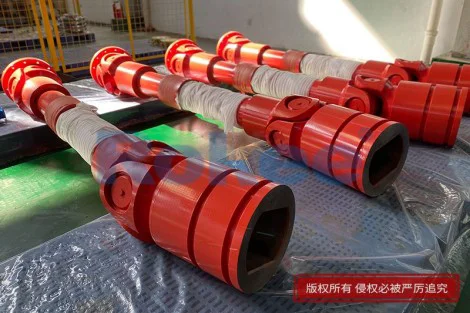
On the basis of clarifying the error sources and failure mechanisms of universal coupling transmission accuracy in PU sandwich panel production lines, systematic accuracy improvement schemes can be formulated from structural optimization, material performance upgrading, assembly precision control and dynamic operation maintenance, so as to comprehensively improve the synchronous transmission performance of the coupling. Structural optimization is the core link to eliminate inherent transmission errors. The traditional single universal coupling is replaced by a double universal coupling symmetric combination structure. By means of paired installation and angle compensation setting, the periodic angular velocity fluctuation generated by the single coupling during operation can be mutually offset. The symmetric double coupling structure can realize uniform angular velocity transmission under a certain range of angular misalignment conditions, fundamentally solving the inherent non-uniform motion defect of the single coupling. Meanwhile, the internal hinge structure of the coupling is optimized, and the traditional point contact matching is improved to surface contact matching. The contact area of the force-bearing parts is increased, the unit stress is reduced, the structural wear degree in the operation process is alleviated, and the stability of long-term transmission accuracy is maintained.
Material performance upgrading effectively improves the wear resistance and fatigue resistance of the coupling, reducing the accuracy attenuation rate caused by operational wear. Combined with the continuous operation characteristics of PU sandwich panel production lines, high-strength alloy materials with good toughness and wear resistance are selected to replace traditional ordinary carbon steel materials. After integral forging and precise heat treatment, the material has higher surface hardness and internal toughness, which can resist micro-friction wear and impact fatigue deformation under cyclic load. In addition, the surface of the coupling matching parts is treated with precision anti-wear treatment to form a smooth and dense protective layer, reducing the friction coefficient of the contact surface, avoiding the rapid expansion of structural clearance caused by abrasive wear, and ensuring the long-term consistency of transmission motion accuracy. The optimized material performance enables the coupling to maintain stable structural precision under long-term variable load and temperature fluctuation conditions, and greatly reduces the periodic transmission error caused by component wear.
Precision assembly and debugging technology is adopted to eliminate initial installation misalignment errors and reduce the basic deviation of transmission operation. In the equipment assembly stage, a high-precision shaft alignment detection method is used to calibrate the coaxiality, parallelism and axial spacing of the driving and driven shafts connected by the coupling. Fine adjustment is carried out according to the actual operation state of the production line to control the comprehensive misalignment error of the shaft system within a tiny range. Different from the traditional empirical assembly mode, the precision debugging process focuses on the dynamic matching state of the transmission system, simulates the load operation state of the production line, and carries out secondary fine calibration after the equipment is pre-operated, so as to eliminate the coaxiality deviation caused by static assembly and thermal deformation after equipment heating. Accurate assembly and debugging can avoid eccentric load and unilateral wear of the coupling, reduce the vibration amplitude of the transmission system, and lay a foundation for high-precision synchronous transmission.
Dynamic operation maintenance and intelligent error compensation further optimize the transmission accuracy in the full operation cycle. A regular precision detection and maintenance mechanism is established for the coupling transmission system. The structural clearance, shaft system coaxiality and transmission synchronization are detected periodically in the daily operation process, and minor wear and deviation are adjusted and repaired in time to avoid the accumulation of tiny errors into large transmission deviation. At the same time, combined with the operation characteristics of the PU sandwich panel production line, a real-time dynamic compensation strategy is introduced for the transmission system. By monitoring the operation speed and torque fluctuation of each transmission module in real time, the motion deviation of the coupling is dynamically identified, and the transmission speed and phase of the driving end are fine-tuned through the linkage control system to realize real-time compensation of transmission errors. This intelligent compensation mode can effectively eliminate the periodic transmission deviation and accidental motion error caused by load fluctuation and temperature change, and further improve the operation synchronization of the production line.
After the comprehensive improvement of structure, material, assembly and maintenance, the transmission performance of the universal coupling for PU sandwich panel production lines has been significantly optimized, and the practical application effect is remarkable. The optimized double universal coupling symmetric structure completely eliminates the inherent periodic angular velocity fluctuation error, and the transmission synchronization accuracy of the shaft system is greatly improved. The transmission vibration amplitude of the whole production line is significantly reduced, the asynchronous operation phenomenon between the rolling forming system and the conveying cutting system is completely solved, and the problem of accumulated size deviation in continuous production is effectively avoided. The high-strength wear-resistant material and optimized contact structure reduce the wear rate of coupling components by a large margin, the attenuation speed of transmission accuracy in long-term operation is significantly slowed down, and the stable operation cycle of the equipment is effectively prolonged.
In the actual production process, the improved universal coupling transmission system ensures the stable and consistent feeding speed of upper and lower steel plates, makes the PU foaming material fill uniformly and cure fully, effectively improves the flatness and thickness uniformity of the sandwich panel surface, and eliminates product quality defects such as local thinning, bulging and warping. The synchronous response speed of the cutting system is significantly improved, the fixed-length cutting error is controlled within a tiny stable range, and the dimensional consistency rate of finished products is greatly increased. In addition, the stable transmission state reduces the abnormal load and impact wear of the transmission system, reduces the failure rate of equipment operation, lowers the frequency of equipment shutdown maintenance, and effectively improves the continuous production efficiency of the PU sandwich panel production line.
In conclusion, the transmission accuracy of universal coupling is a key factor restricting the operation precision and product quality stability of PU sandwich panel production lines. The comprehensive improvement measures based on structural optimization, material upgrading, precision assembly and dynamic compensation can effectively solve the problems of periodic transmission error, structural wear and motion hysteresis existing in traditional couplings. The optimized universal coupling transmission system adapts to the long-term continuous and variable-load operation characteristics of PU sandwich panel production lines, realizes high-precision and high-stability synchronous power transmission, provides reliable mechanical guarantee for the precision forming of PU sandwich panels, and has important popularization value in the field of performance optimization of sandwich panel production equipment. With the continuous upgrading of precision manufacturing requirements in the building thermal insulation material industry, the high-precision flexible transmission technology of universal couplings will be further optimized, and the adaptive operation ability of the production line under complex working conditions will be continuously improved to promote the overall high-quality development of the PU sandwich panel manufacturing industry.