Angular Compensation Transmission Adaptation Of Cardan Driveshaft For PU Sandwich Panel Machine
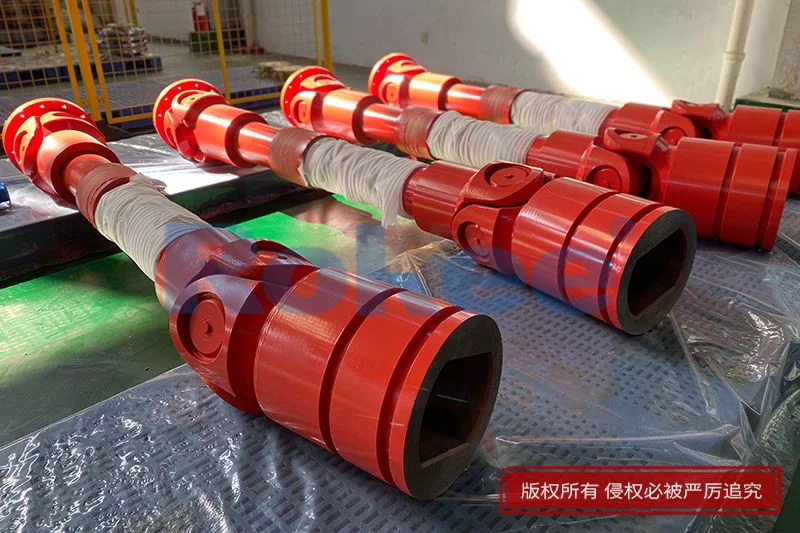
The stable operation of PU sandwich panel manufacturing equipment relies heavily on the precision and continuity of mechanical transmission systems, where the cardan driveshaft serves as a core transmission component that bridges power input and execution units. In the full production process of PU sandwich panels, including raw material feeding, panel pressing, continuous rolling and finished product conveying, the equipment will inevitably produce subtle structural deformation, running vibration and axial offset under long-term load operation, leading to angular misalignment between adjacent transmission shafts. If the traditional rigid transmission structure is adopted, the inconsistent shaft axis will cause severe torque loss, transmission jitter and component wear, which directly affects the flatness and dimensional uniformity of PU sandwich panels, and even causes frequent equipment shutdowns in severe cases. The angular compensation and adaptive transmission characteristics of cardan driveshafts can effectively solve the above problems, realizing stable power output under dynamic angular deflection conditions, and providing reliable mechanical transmission guarantee for the high-efficiency and high-precision production of PU sandwich panels.
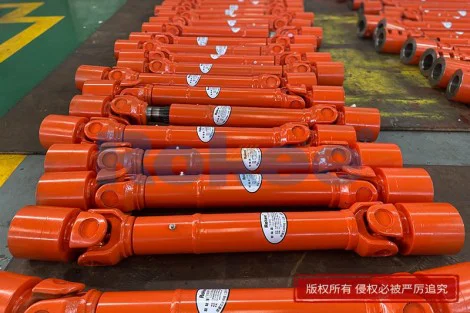
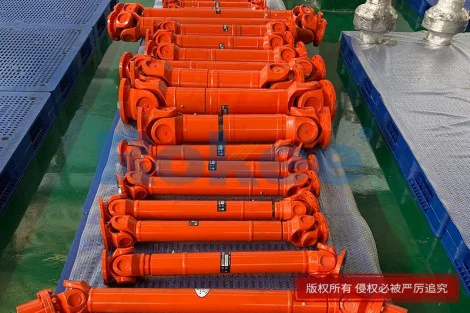
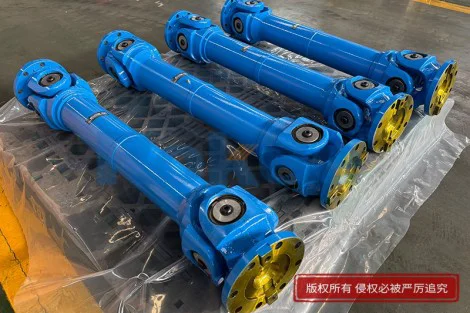
The core working mechanism of the cardan driveshaft lies in the spatial kinematic characteristics of its universal joint structure, which is composed of cross shaft components and symmetric yoke structures. Different from rigid coupling transmission that requires strict coaxiality of shafts, the articulated structure of the cardan driveshaft allows independent pivoting movement of the driving end and driven end within a certain angular range. When the PU sandwich panel machine is in operation, the installation deviation generated during equipment assembly, the micro-displacement caused by metal frame stress release, and the amplitude variation of mechanical vibration during high-speed rolling will jointly lead to real-time angular deviation between the power drive shaft and the working shaft. The cross shaft of the cardan joint can rotate flexibly in the inner cavity of the yoke bearing, automatically compensating for the angular offset between the two shafts, and always maintaining the effective transmission of rotational torque and motion trajectory without interrupting the power output process. This inherent angular compensation capability enables the transmission system to adapt to the dynamic working state of the PU sandwich panel machine, eliminating the transmission dead zone caused by shaft misalignment.
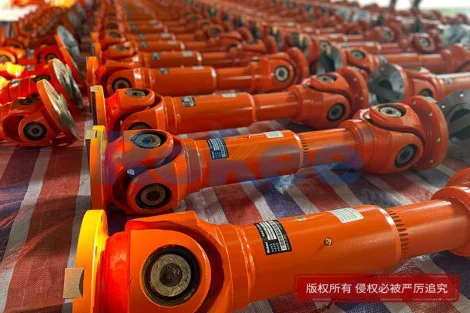
In the actual production scenario of PU sandwich panels, the operating conditions of the transmission system present obvious dynamic and variable characteristics, which put forward higher requirements for the adaptive performance of the driveshaft. The continuous molding process of PU sandwich panels requires the equipment to maintain uninterrupted operation for a long time, and the cyclic load generated by reciprocating operation of pressing and rolling units will cause periodic micro-deformation of the equipment base and transmission supports. This deformation will change the relative angle of the transmission shafts in real time, resulting in frequent fluctuation of shaft alignment state. Conventional fixed transmission parts cannot adapt to this dynamic angular change, which will lead to uneven transmission speed, cause jitter of the rolling roller and pressing die, and finally form surface wrinkles, thickness deviation and structural inconsistencies on the surface of PU sandwich panels. The cardan driveshaft realizes flexible transmission through the cooperative movement of double universal joints. By setting two groups of symmetric universal joint structures at both ends of the intermediate shaft, it can offset the periodic angular velocity fluctuation generated by single universal joint transmission, realize constant-speed and stable torque transmission under continuous angular deflection, and effectively adapt to the dynamic load and variable angle working environment of PU sandwich panel production equipment.
The angular compensation transmission adaptation of cardan driveshafts is reflected in multiple key links of PU sandwich panel machine operation, covering low-load feeding, medium-load rolling and high-load pressing working conditions. In the raw material feeding stage of PU sandwich panels, the transmission system needs to drive the uniform delivery of polyurethane raw materials and base plate materials, requiring stable and low-jitter transmission power. The small-angle compensation ability of the cardan driveshaft can eliminate the micro-vibration transmission caused by the slight misalignment of the feeding shaft, ensure the uniform feeding speed of raw materials, and avoid the product quality problems such as local hollowing and uneven foaming density of PU sandwich panels caused by unstable feeding. In the continuous rolling and shaping stage, the equipment runs at a relatively high speed, and the vibration amplitude of the transmission shaft increases correspondingly. The cardan driveshaft can adapt to the dynamic angular deflection generated by high-speed operation, maintain the synchronization of the front and rear rolling shafts, ensure the consistent rolling speed of the upper and lower rollers, and make the surface flatness and overall thickness of the formed PU sandwich panels reach a unified standard.
In the high-load pressing and curing stage of PU sandwich panels, the equipment bears the maximum working load, and the pressure reaction force will cause obvious structural displacement of the transmission support frame, resulting in a large-angle offset between the driving shaft and the driven shaft. At this time, the wide-range angular compensation performance of the cardan driveshaft plays a key role. It can bear the torque transmission task under large angular deflection, avoid transmission stalling and torque attenuation caused by shaft separation, ensure that the pressing die maintains stable pressure output and uniform operating speed, so that the polyurethane material can fully foam and cure under constant pressure conditions, and improve the structural compactness and overall mechanical performance of the finished sandwich panels. This multi-working-condition adaptive transmission characteristic makes the cardan driveshaft perfectly match the full-process production requirements of PU sandwich panels, and solves the transmission failure problems that are easy to occur in traditional transmission structures under variable load and variable angle conditions.
Compared with ordinary rigid driveshafts and single flexible coupling structures, the cardan driveshaft has unique advantages in angular compensation accuracy and transmission adaptability for PU sandwich panel machines. Rigid driveshafts completely rely on assembly precision to ensure coaxial transmission, and any tiny angular deviation in the operation process will be converted into internal stress of the transmission components, resulting in accelerated wear of bearings and shafts, increased equipment operating noise, and shortened service life of transmission parts. Single-section flexible couplings have limited compensation range and poor dynamic adaptability, which can only adapt to static small-angle deviation, but cannot cope with real-time dynamic angular changes in the production process of PU sandwich panel machines. The cardan driveshaft adopts a combined structural design of double universal joints and intermediate shaft body, which not only expands the adaptable angular deflection range, but also realizes bidirectional synchronous compensation of angular deviation. This structural design can effectively absorb the dynamic displacement and vibration impact of the equipment, reduce the internal friction and fatigue load of the transmission system, and greatly improve the operational stability and service life of the transmission system.
The adaptive optimization of angular compensation transmission of cardan driveshafts also needs to match the structural characteristics and operating parameters of PU sandwich panel machines. In the design and matching process, the maximum angular deflection of the equipment under extreme working conditions, the cyclic load change rule and the operating speed range need to be fully considered to optimize the structural parameters of the universal joint and the intermediate shaft. Reasonable matching of universal joint pivot angle and shaft body rigidity can ensure that the driveshaft maintains excellent angular compensation ability while possessing sufficient torsional rigidity, avoiding torsional deformation and transmission lag under high load. At the same time, the flexible rotation fit of the cross shaft and bearing assembly can reduce the friction resistance during angular compensation movement, improve the sensitivity of dynamic angle adjustment, and ensure that the transmission system can respond quickly to the shaft offset changes generated by equipment operation, realizing real-time and accurate adaptive compensation.
In the long-term continuous production of PU sandwich panels, the excellent angular compensation transmission performance of cardan driveshafts also brings significant economic and operational benefits for equipment operation. Stable adaptive transmission can effectively reduce the vibration and impact of the transmission system, avoid abnormal wear and failure of mechanical components, reduce the frequency of equipment maintenance and parts replacement, and improve the continuous operation rate of the production line. More importantly, the stable power transmission ensured by angular compensation eliminates the product quality fluctuations caused by transmission jitter and speed inconsistency, reduces the rate of defective products in the production process, and improves the overall production efficiency and product qualification rate of PU sandwich panels. For the standardized and large-scale production of PU sandwich panels, the adaptive transmission characteristics of cardan driveshafts provide a stable and reliable mechanical foundation for the consistency of product quality and the continuity of production process.
In conclusion, the angular compensation and adaptive transmission mechanism of cardan driveshafts are highly compatible with the dynamic and variable working conditions of PU sandwich panel machines. Through the flexible articulated structure and double-joint synchronous compensation principle, the cardan driveshaft effectively solves various angular misalignment transmission problems caused by equipment assembly errors, operational vibration, load deformation and structural displacement in the production process. It realizes stable, uniform and continuous torque and motion transmission under variable angle and variable load conditions, meets the high-precision and high-stability production requirements of PU sandwich panels, and makes up for the inherent defects of traditional rigid and single flexible transmission structures. With the continuous improvement of the automation and precision level of PU sandwich panel production equipment, the adaptive transmission advantage of cardan driveshafts in angular compensation will become more prominent, and it will continue to be an indispensable core transmission component to ensure the stable operation of PU sandwich panel production lines.