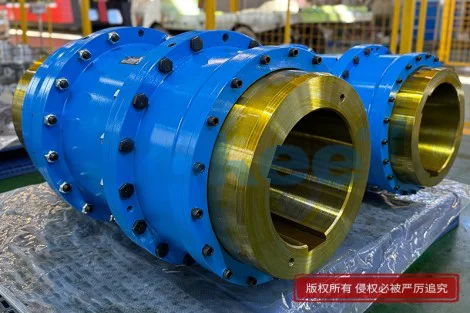
Universal Coupling Adapts To Application Of PU Sandwich Panel Line
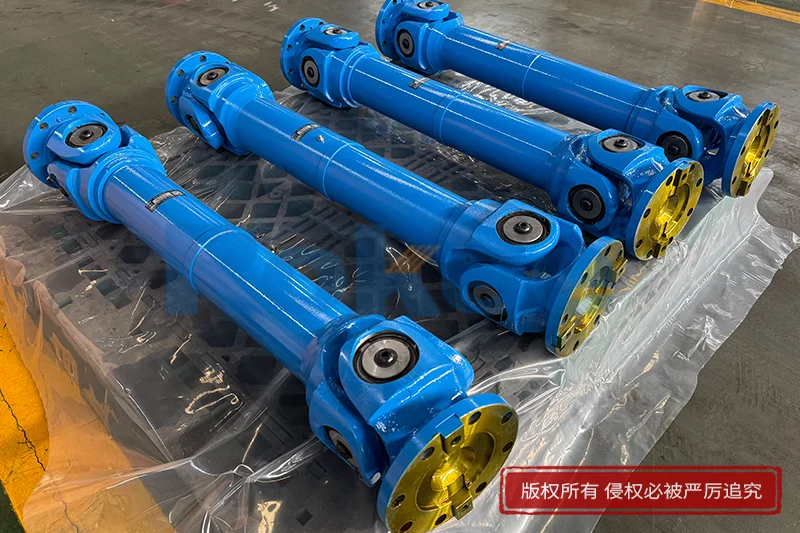
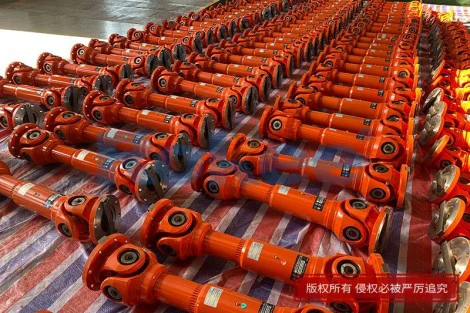
As a core flexible transmission component in modern industrial mechanical systems, universal coupling has gradually become an indispensable basic part for the stable and efficient operation of PU sandwich panel production lines with its unique structural characteristics and excellent adaptive transmission performance. PU sandwich panel manufacturing is a highly continuous and integrated industrial production process, which integrates material unwinding, roll forming, polyurethane foaming, composite lamination, constant temperature curing, fixed-length cutting and finished product conveying into a streamlined operation. The entire production process puts forward extremely strict requirements on the stability, synchronism and fault tolerance of the transmission system. Slight transmission deviation, speed fluctuation or shaft connection failure will directly affect the forming quality, structural uniformity and dimensional accuracy of sandwich panels, and even cause frequent equipment shutdowns and production interruption. Different from rigid transmission parts that rely on precise coaxial alignment, universal coupling can adapt to complex shaft displacement states such as angular deviation, axial displacement and radial offset generated during the operation of production equipment, realizing stable torque and rotational power transmission under non-ideal installation and operating conditions, which perfectly fits the diversified and high-precision operation needs of PU sandwich panel production lines.
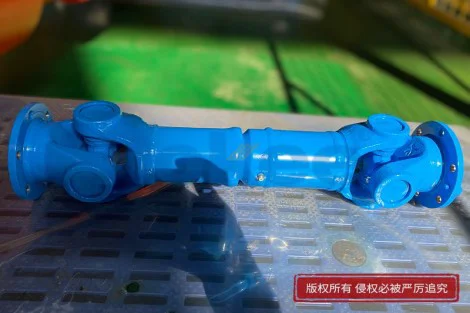
The operational characteristics of PU sandwich panel line determine the high adaptability demand for flexible transmission components. In the actual production scenario, the long-term continuous operation of mechanical equipment will inevitably lead to subtle structural changes, including minor deformation of the frame caused by long-term load bearing, shaft position offset caused by equipment vibration, and assembly deviation accumulated after long-term operation of transmission components. These subtle changes are difficult to avoid in continuous industrial production, and will form multi-dimensional misalignment between the driving shaft and the driven shaft of each functional unit of the production line. For traditional rigid coupling structures, such misalignment will produce additional mechanical stress and transmission resistance during operation, resulting in uneven torque transmission, obvious speed jitter of the equipment, and long-term fatigue wear of transmission parts. In the PU sandwich panel foaming and composite molding stage, the upper and lower facing materials need to maintain a completely synchronous conveying speed and uniform tension state. Once the transmission system has speed fluctuation or asynchronous operation, the polyurethane foam core material will be distributed unevenly, leading to inconsistent bonding strength between the core material and the facing materials, and producing defective products such as bulging, delamination and uneven thickness of finished panels. The universal coupling fundamentally solves this industry pain point by virtue of its flexible compensation function. Its special universal joint structure can freely adapt to the angle and displacement changes between the connected shafts, eliminate additional mechanical stress caused by misalignment, ensure continuous and stable torque output, and maintain the consistent operating state of each transmission node of the production line.
The adaptive advantages of universal coupling are fully reflected in multiple key functional links of the PU sandwich panel production line. In the roll forming link of metal facing materials, the production line is equipped with multiple groups of forming rolls arranged in a staggered manner, and the transmission shafts between the power drive device and each forming roll present multi-angle spatial distribution characteristics. The complex shaft connection environment makes it impossible to achieve absolute coaxial alignment of all transmission shafts. The application of universal coupling can well adapt to the angular deviation of multi-directional transmission shafts, realize synchronous and stable operation of each group of forming rolls, and ensure the uniform forming and flat surface of metal facing materials. Stable transmission torque avoids jitter and pause in the rolling process, effectively guarantees the consistent flatness and dimensional accuracy of the facing materials, and lays a good foundation for the subsequent composite molding of sandwich panels. Without the flexible adaptation of universal couplings, the staggered transmission structure of the roll forming unit will generate huge transmission loss and mechanical impact, which will not only reduce the forming quality of raw materials, but also accelerate the wear and aging of rolling equipment.
In the double-belt composite conveying link, which is the core process of PU sandwich panel molding, the adaptive performance of universal coupling plays a decisive role in product quality. The double-belt conveyor undertakes the tasks of clamping, conveying and composite molding of upper and lower facing materials and foaming core materials. It needs to maintain constant speed and stable tension in the whole process to ensure that the polyurethane material foams evenly and solidifies stably in the closed composite space. The transmission system of the double-belt conveyor is affected by material thickness deviation, equipment operation vibration and thermal expansion and contraction of the body, and the shaft displacement state is dynamically changing during production. The universal coupling can dynamically compensate for the real-time displacement deviation in the transmission process, keep the synchronous operation of the upper and lower conveyor belts, avoid the relative sliding and speed difference between the belts, and make the foaming density and internal structure of the PU core material uniform and stable. This stable transmission state effectively prevents product quality problems such as local hollowing, uneven core thickness and inconsistent bonding degree, and greatly improves the overall structural stability and service performance of finished sandwich panels.
In the subsequent constant temperature curing and fixed-length cutting links of the production line, the adaptive value of universal coupling is also prominent. The curing section of the PU sandwich panel line has a long operation stroke, and the long-distance transmission mechanism is prone to axial displacement and radial offset due to long-term operation and temperature change. The universal coupling can adapt to the slight position change of the long-distance transmission shaft, ensure the stable and uniform conveying speed of the plate during curing, make the polyurethane material complete the curing reaction at a constant speed and temperature, and optimize the internal molecular structure of the product. In the fixed-length cutting link, the cutting mechanism has high requirements on the accuracy and real-time performance of power transmission. The flexible and precise transmission performance of universal coupling ensures that the cutting equipment can obtain stable power output, makes the cutting action accurate and in place, effectively guarantees the dimensional standard and neat incision of finished plates, and reduces the generation of edge damage and dimensional deviation defective products. At the same time, the stable transmission can reduce the mechanical impact during the start-stop operation of the cutting mechanism, and protect the precision components of the cutting equipment.
In addition to improving production accuracy and product quality, the excellent adaptability of universal coupling also brings significant advantages in equipment operation stability and cost control for PU sandwich panel production lines. In traditional transmission matching schemes, shaft misalignment often leads to increased equipment operation load, intensified component wear, and frequent failure of transmission parts, which not only increases the frequency of equipment shutdown maintenance, but also improves the comprehensive operation cost of the production line. The flexible compensation characteristic of universal coupling can buffer the mechanical vibration and impact generated during equipment operation, reduce the fatigue loss of transmission shafts, bearings and other matching parts, and effectively extend the service life of the entire transmission system. For continuous PU sandwich panel production lines that pursue high-efficiency and uninterrupted operation, reducing unexpected shutdowns caused by transmission failures means improving the overall production efficiency and production continuity. The stable operating state of the equipment also reduces the loss of raw materials and labor costs caused by equipment failures and defective products, and realizes the optimization of production benefits while stabilizing product quality.
The structural adaptability of universal coupling also matches the long-term operation and iterative upgrading characteristics of PU sandwich panel production equipment. With the continuous optimization of sandwich panel production technology, the production line is gradually developing towards high speed, high precision and high integration, and the operating load and transmission accuracy requirements of the equipment are constantly improved. The universal coupling has strong structural scalability and working condition adaptability, which can adapt to the speed adjustment and load change in the production line upgrading process, and maintain stable transmission performance under different operating parameters. Its compact and reliable structural design is suitable for the dense and integrated equipment layout of modern PU sandwich panel lines, and can realize efficient power transmission in a limited installation space without affecting the overall structural layout and operation rhythm of the production line. Compared with other transmission connecting parts, universal coupling has lower requirements on installation accuracy and later debugging, which simplifies the equipment assembly and maintenance process, and is more suitable for the large-scale and continuous production mode of sandwich panels.
In the actual application process, the good adaptability of universal coupling is also reflected in its excellent environmental tolerance. The PU sandwich panel production workshop has complex operating conditions, including temperature change generated by curing equipment, dust generated by raw material processing, and slight vibration generated by long-term operation of mechanical equipment. The universal coupling with stable structural performance can maintain stable working state in such complex industrial environments, will not have obvious performance attenuation due to environmental interference, and can continuously play a role of displacement compensation and stable transmission. Its durable mechanical properties ensure the long-term reliable operation of the transmission system, reduce the frequency of parts replacement and equipment maintenance, and provide a solid guarantee for the stable and efficient operation of the production line in the whole life cycle.
To sum up, the universal coupling, with its unique flexible displacement compensation capability, stable torque transmission performance and strong working condition adaptability, forms a highly compatible matching relationship with the full-process operation of PU sandwich panel production lines. It solves many transmission pain points in the continuous production of sandwich panels, including shaft misalignment, speed fluctuation, mechanical impact and easy wear of parts, effectively stabilizes the production accuracy and product quality of PU sandwich panels, improves the continuous operation efficiency of production equipment, and reduces the comprehensive operation and maintenance cost of the production line. With the continuous improvement of the automation and precision level of PU sandwich panel manufacturing industry, the adaptive application value of universal coupling in production line transmission systems will be further highlighted, becoming an important basic guarantee for the high-quality and high-efficiency development of the sandwich panel manufacturing industry.