PU Sandwich Panel Machine With Cardan Driveshaft For Easier Operation And Maintenance
In the modern construction and industrial manufacturing fields, the demand for efficient, high-quality, and easy-to-maintain production equipment is constantly rising. PU sandwich panels, known for their excellent thermal insulation, soundproofing, light weight, and high mechanical strength, have become indispensable materials in various applications such as industrial workshops, warehouses, cold storage facilities, residential buildings, and public structures. The production efficiency and product quality of these panels are directly determined by the performance of the PU sandwich panel machine. Among the various innovations in such machinery, the integration of a cardan driveshaft has emerged as a key improvement, significantly enhancing the machine’s operability and reducing maintenance burdens, thus becoming a preferred choice for many manufacturers.
A PU sandwich panel machine with a cardan driveshaft is a specialized piece of industrial equipment designed to produce composite panels consisting of two outer facing materials (typically metal sheets such as color steel, aluminum alloy, or stainless steel) and a middle core of polyurethane foam. This equipment integrates multiple technological processes, including material unwinding, leveling, cleaning, foam mixing, lamination, pressing, curing, and cutting, forming a continuous and automated production line. What sets this machine apart from traditional models is the adoption of a cardan driveshaft in its power transmission system, which addresses many of the operational and maintenance challenges faced by conventional PU sandwich panel machines.
To fully understand the advantages of a PU sandwich panel machine equipped with a cardan driveshaft, it is first necessary to grasp the basic functions and working principles of the equipment. The production process of PU sandwich panels begins with the preparation of raw materials. The outer facing materials, usually in the form of coils, are fed into the machine through an unwinding system, which is equipped with hydraulic tensioning technology to ensure stable and smooth feeding. The coils then pass through a precision leveling machine with a multi-roller structure to eliminate wrinkles and ensure the flatness of the panels, laying a solid foundation for subsequent lamination. After leveling, the facing materials go through an online cleaning process, which typically involves an alkaline degreasing system combined with high-pressure spraying to remove dust, oil, and other contaminants from the surface, enhancing the bonding strength between the facing materials and the polyurethane core.
Meanwhile, the raw materials for the polyurethane core, mainly polyol and isocyanate, along with optional additives such as foaming agents, catalysts, and flame retardants, are stored in separate tanks and preheated to a specific temperature range. This preheating process is crucial as it ensures the stability and uniformity of the foaming reaction. The preheated raw materials are then accurately measured by a mass flow meter and injected into a high-pressure mixing head, where they are fully mixed under high pressure to initiate the foaming reaction. The foaming mixture is evenly sprayed between the two layers of facing materials, which are then conveyed to the composite pressurization system. Here, uniform pressure is applied to ensure that the polyurethane foam is evenly distributed between the facing materials and that the three layers (upper facing, core, lower facing) are tightly bonded together. The composite panel then enters a curing zone, where the polyurethane foam undergoes a chemical reaction to harden, forming a solid and stable core structure. Finally, the cured panels are cut to the required length by an automatic cutting system, completing the entire production process.
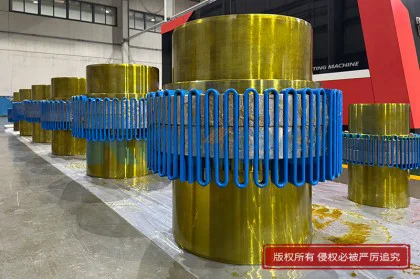
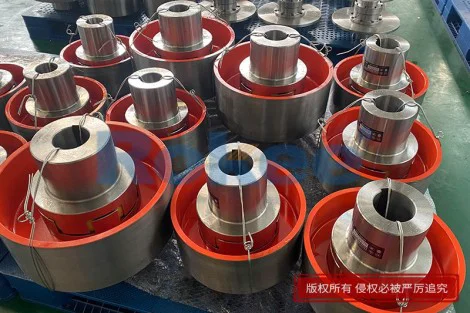
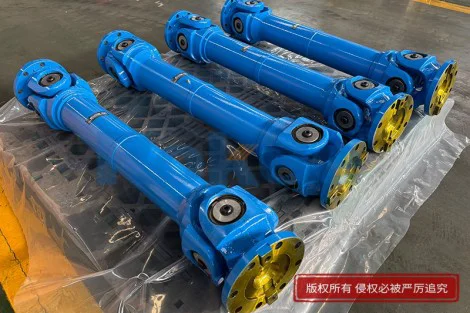
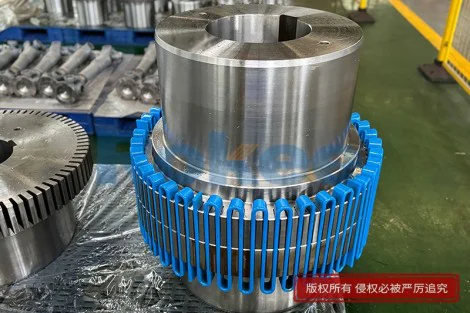
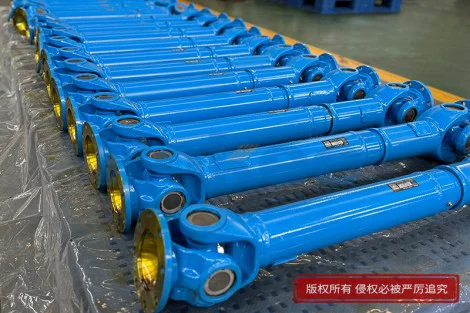
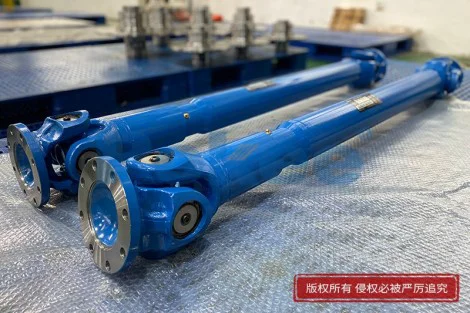
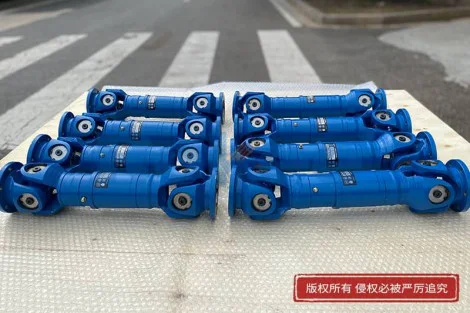
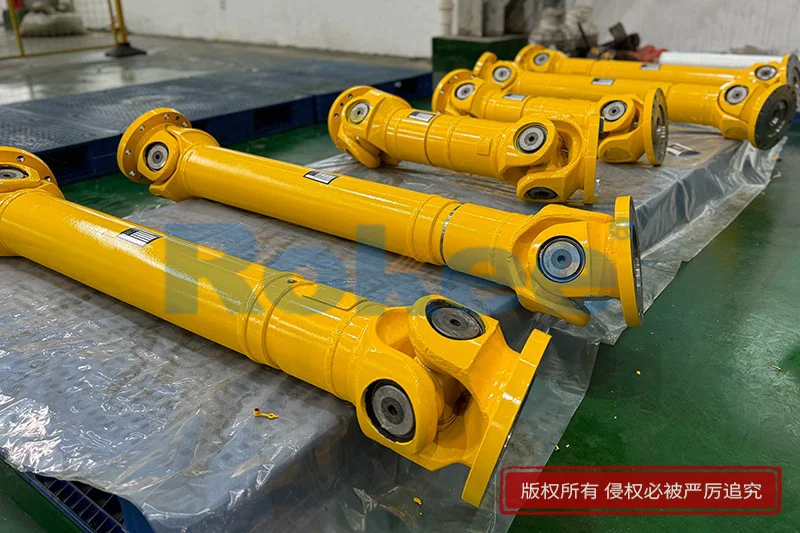
The cardan driveshaft, also known as a universal joint driveshaft, plays a pivotal role in the power transmission of this machine. It is a critical mechanical component that enables the transmission of rotational power between non-aligned shafts, consisting of two yokes connected by a cross-shaped intermediate member. This unique design allows the driveshaft to accommodate angular misalignment, axial movement, and even slight parallel misalignment between the power source (such as a motor) and the driven components (such as the unwinding rollers, forming rollers, and conveyor belts) while maintaining smooth and efficient power transfer. This flexibility is particularly important in PU sandwich panel machines, where the various functional modules are often arranged in different positions, making perfect alignment between the power source and driven components difficult to achieve.
One of the most significant advantages of integrating a cardan driveshaft into the PU sandwich panel machine is the simplification of operation. Traditional machines often use rigid shafts for power transmission, which require precise alignment during installation and operation. Any slight misalignment can lead to uneven power transmission, resulting in unstable operation of the machine, such as jittering during material feeding or uneven panel thickness. In contrast, the cardan driveshaft’s ability to accommodate misalignment eliminates the need for strict alignment, making the installation and adjustment of the machine much easier. Operators do not need to spend a great deal of time and effort on aligning the power transmission components, which significantly reduces the difficulty of operation and shortens the setup time before production.
Moreover, the cardan driveshaft contributes to the overall stability and smoothness of the machine’s operation. During the production process, the machine’s components are subject to continuous movement and vibration, which can cause wear and tear on rigid shafts and lead to power loss. The cardan driveshaft, with its flexible design, can absorb vibrations and shocks, reducing the impact on the machine’s components. This not only ensures a smoother operation but also minimizes the occurrence of malfunctions caused by vibration, such as material jams or uneven foam distribution. As a result, operators can maintain a stable production rhythm with less intervention, improving overall production efficiency and reducing the risk of human error.
In terms of maintenance, the cardan driveshaft also brings significant benefits to the PU sandwich panel machine. Traditional power transmission systems with rigid shafts often require frequent inspection and adjustment to maintain alignment, and any wear or damage to the shafts can be difficult to repair, requiring the disassembly of multiple components. This not only increases maintenance time but also raises the labor intensity of maintenance personnel. In contrast, the cardan driveshaft is designed for durability and ease of maintenance. Its standardized structure allows for easy disassembly and replacement, and the precision-engineered bearings and robust materials used in its construction ensure a long service life with minimal wear. Maintenance personnel can easily inspect the driveshaft for signs of wear, such as loose joints or damaged bearings, and replace the necessary parts without disassembling the entire power transmission system. This significantly reduces maintenance time and labor costs, minimizing production downtime caused by maintenance.
Another advantage of the cardan driveshaft is its ability to handle high torque loads, which is essential for the efficient operation of PU sandwich panel machines. The production process of PU sandwich panels involves multiple heavy-duty operations, such as pressing the composite panels and driving the large rollers in the forming system. These operations require a stable and powerful power transmission system to ensure consistent performance. The cardan driveshaft, with its robust construction and high load-bearing capacity, can efficiently transmit high torque from the motor to the driven components, ensuring that each process is carried out smoothly and effectively. This not only improves the quality of the finished panels but also extends the service life of the machine by reducing the stress on other components.
The use of a cardan driveshaft also enhances the adaptability of the PU sandwich panel machine to different production environments and requirements. PU sandwich panels can be customized in terms of thickness, width, and facing material to meet the specific needs of different applications. The cardan driveshaft’s flexible power transmission allows the machine to adjust its speed and torque according to the production requirements, making it suitable for producing panels of various specifications. For example, when producing thicker panels that require more pressure during the pressing process, the cardan driveshaft can transmit higher torque to the pressing system, ensuring that the panels are tightly bonded. Similarly, when producing thinner panels, the torque can be adjusted to avoid damaging the facing materials. This adaptability makes the machine more versatile and suitable for a wide range of production needs.
In addition to the advantages brought by the cardan driveshaft, the PU sandwich panel machine itself is designed with user-friendliness and efficiency in mind. Many models are equipped with an advanced control system that allows operators to monitor and adjust the production parameters, such as temperature, pressure, and speed, in real time. The control panel is usually intuitive and easy to operate, with clear indicators and buttons that enable even inexperienced operators to quickly master the machine’s operation. The machine’s automatic functions, such as automatic unwinding, automatic cutting, and automatic stacking, further reduce the need for manual intervention, freeing up operators to focus on other important tasks, such as quality inspection.
The working environment requirements of the PU sandwich panel machine with a cardan driveshaft are also relatively flexible. The machine can operate within a temperature range of -5 ℃ to +40 ℃ and can be stored in an environment of -20 ℃ to +42 ℃ without affecting its performance. This makes it suitable for use in various regions and climates, from cold northern areas to hot southern regions. The machine’s electrical components are designed with a high protection grade, ensuring that they can operate stably in environments with a certain level of pollution. The control panel and power plates are usually protected to a high standard, and the motor and reducer have a high protection grade, preventing dust, water, and other contaminants from entering and causing malfunctions.
Safety is another important consideration in the design of the PU sandwich panel machine. The machine is equipped with various safety protection devices, such as emergency stop buttons, safety guards, and alarm systems, to ensure the safety of operators during operation. The safety guards are installed around the moving components, such as the rollers and cutting system, to prevent operators from accidentally touching them and getting injured. The emergency stop button allows operators to stop the machine immediately in case of an emergency, minimizing the risk of accidents. Additionally, the machine’s operation manual provides detailed safety instructions and operating procedures, which operators must read and follow before using the machine. This ensures that the machine is operated in a safe and standardized manner, reducing the risk of personal injury and equipment damage.
The application of PU sandwich panel machines with cardan driveshafts is widespread across various industries. In the construction industry, they are used to produce panels for industrial workshops, warehouses, and residential buildings, providing excellent thermal insulation and structural strength. In the cold storage and冷链 logistics industry, the panels produced by these machines are ideal for use as insulation walls and roofs, as they have excellent thermal insulation performance and low water absorption, ensuring the stability of the cold storage environment. In the food processing and pharmaceutical industries, the panels are used to construct clean workshops, as they have a smooth surface that is easy to clean and resist bacterial growth. In addition, the panels are also used in the construction of temporary buildings, such as container houses and mobile homes, due to their light weight and easy installation.
To ensure the long-term and stable operation of the PU sandwich panel machine with a cardan driveshaft, regular maintenance is essential. Regular cleaning and lubrication are crucial to prevent the accumulation of dust, debris, and residue, which can affect the machine’s performance. The moving parts, including the cardan driveshaft, should be lubricated regularly to reduce wear and tear. Maintenance personnel should also regularly inspect the machine for signs of wear and tear, such as worn belts, chains, or bearings, and replace any damaged parts promptly. Monitoring the temperature and pressure during the production process is also important to ensure that the machine operates within the recommended range, avoiding quality issues with the panels. Additionally, keeping a record of maintenance activities and malfunctions can help identify potential problems early and prevent costly breakdowns.
In conclusion, the PU sandwich panel machine with a cardan driveshaft represents a significant advancement in the production of PU sandwich panels. Its integration of a cardan driveshaft simplifies operation, reduces maintenance burdens, and enhances the machine’s stability and efficiency. The flexible power transmission provided by the cardan driveshaft allows the machine to adapt to different production requirements and environments, making it a versatile and reliable piece of equipment. With its user-friendly design, high safety standards, and wide range of applications, this machine is well-suited to meet the growing demand for high-quality PU sandwich panels in various industries. As technology continues to advance, it is expected that further improvements will be made to these machines, making them even more efficient, reliable, and easy to use.