Cardan Driveshaft Optimizes The Transmission Of PIR Sandwich Panel Machine To Improve Product Precision
In the field of modern industrial manufacturing, the production of PIR sandwich panels relies heavily on the stable and precise operation of specialized machinery, where the transmission system serves as the core backbone that determines the efficiency and quality of the entire production line. As a key component in mechanical transmission, the cardan driveshaft, also known as the propeller shaft, has gradually become an indispensable part of PIR sandwich panel machines due to its unique structural advantages and excellent transmission performance. Unlike traditional rigid transmission components that require strict coaxial alignment between the driving and driven shafts, the cardan driveshaft can effectively compensate for angular, radial, and axial deviations between components, ensuring that power is transmitted stably and evenly even under complex working conditions. This optimization of the transmission system directly addresses the core pain points in PIR sandwich panel production, such as uneven material feeding, inconsistent lamination pressure, and imprecise cutting dimensions, ultimately leading to a significant improvement in product precision and overall quality.
To fully understand the role of the cardan driveshaft in optimizing the transmission of PIR sandwich panel machines, it is first necessary to clarify the working characteristics of PIR sandwich panel production and the inherent challenges of its traditional transmission systems. PIR sandwich panels, known for their excellent thermal insulation, mechanical strength, and fire resistance, are widely used in construction, refrigeration, and industrial insulation fields. The production process of PIR sandwich panels involves multiple consecutive links, including surface material uncoiling, core material foaming, composite lamination, and fixed-length cutting. Each link requires the coordinated operation of multiple mechanical components, and the power generated by the main motor must be accurately transmitted to each executive mechanism, such as uncoiling rollers, foaming pumps, lamination belts, and cutting blades. The stability and accuracy of this power transmission directly affect the uniformity of the core material density, the flatness of the panel surface, the tightness of the lamination, and the precision of the cutting size. In traditional PIR sandwich panel machines, rigid couplings or belt transmission are often used, which have obvious limitations in practical operation. Rigid couplings require absolute coaxial alignment between the driving and driven shafts; even a slight installation error or displacement during operation can lead to uneven torque transmission, resulting in vibration of the equipment, increased wear of components, and ultimately affecting product precision. Belt transmission, on the other hand, is prone to slipping and stretching under long-term high-load operation, leading to unstable transmission speed, inconsistent feeding rates of surface materials and core materials, and thus causing defects such as uneven thickness of the sandwich panel, warping of the surface, and insufficient bonding between the core and the surface layer.
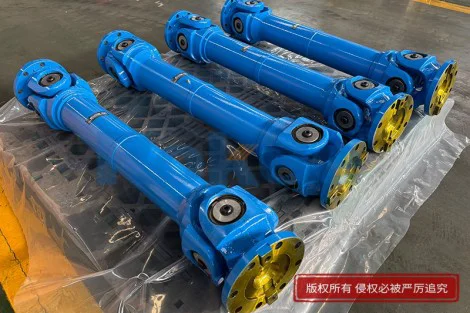
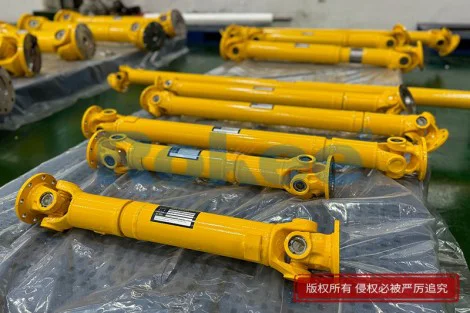
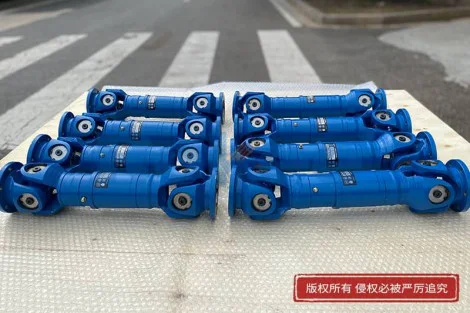
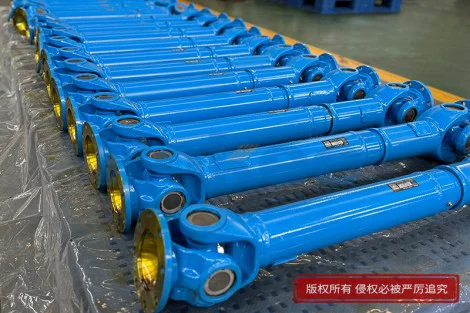
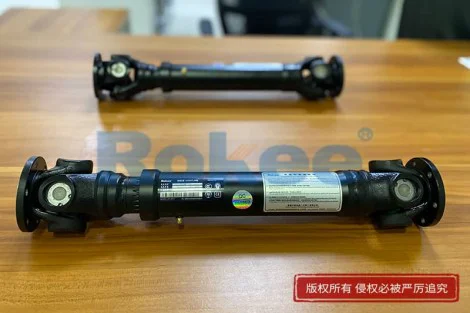
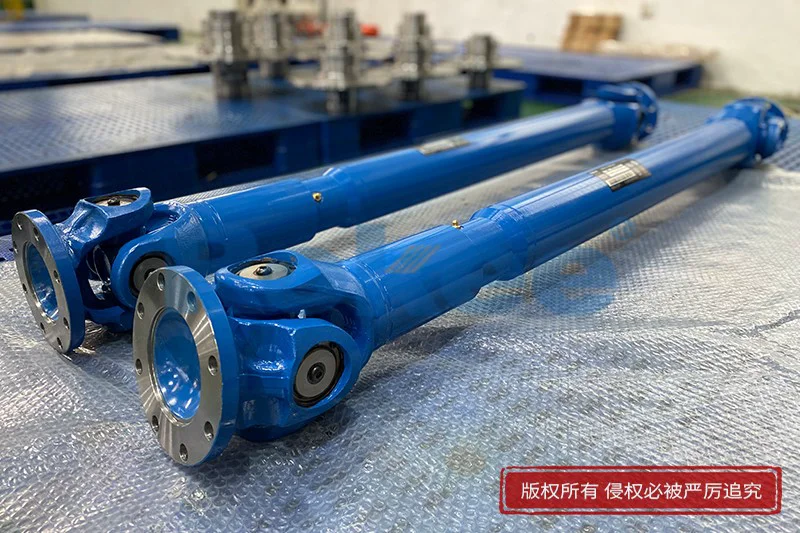
The cardan driveshaft, with its scientific structural design and flexible transmission characteristics, effectively overcomes the shortcomings of traditional transmission systems and provides a reliable solution for optimizing the transmission of PIR sandwich panel machines. The basic structure of a cardan driveshaft usually includes a hollow shaft tube, universal joints (U-joints) at both ends, a slip yoke, and flange yokes, and some longer shafts are also equipped with center support bearings to ensure stability during high-speed rotation. The universal joints are the core components that enable the cardan driveshaft to compensate for deviations; they consist of cross shafts and needle bearings, allowing the driveshaft to transmit torque at an angular deviation of 5° to 45° between the driving and driven shafts while maintaining continuous and stable rotation. This angular compensation capability is particularly important in PIR sandwich panel machines, as the installation positions of different functional components (such as uncoiling mechanisms, foaming systems, and cutting devices) are often not on the same axis due to the limitations of the overall equipment structure and production process. The cardan driveshaft can flexibly adapt to these angular deviations, ensuring that the power output by the main motor is transmitted to each executive mechanism without loss, avoiding the vibration and torque fluctuation caused by misalignment.
In addition to angular compensation, the cardan driveshaft also has excellent performance in absorbing vibration and reducing noise, which further contributes to the improvement of product precision. During the operation of PIR sandwich panel machines, the main motor, gearbox, and other power components will inevitably generate vibration, which, if not effectively isolated or absorbed, will be transmitted to the working components such as lamination belts and cutting blades, leading to unstable operation of these components. For example, vibration during the lamination process will cause uneven pressure on the surface of the sandwich panel, resulting in uneven thickness of the panel and poor bonding between the core material and the surface material; vibration during the cutting process will cause the cutting blade to deviate, resulting in inaccurate cutting dimensions and irregular edges. The cardan driveshaft, with its flexible universal joint structure and high-strength shaft tube, can effectively absorb the vibration generated by the power components, reduce the transmission of vibration to the working mechanism, and ensure that each link of the production line operates stably. At the same time, the smooth transmission of the cardan driveshaft also reduces the noise generated during the operation of the equipment, creating a more comfortable working environment and reducing the impact of noise on the operator's work efficiency.
The optimization effect of the cardan driveshaft on the transmission system of PIR sandwich panel machine is also reflected in its ability to maintain stable torque transmission under different working conditions, ensuring the consistency of the production process. PIR sandwich panel production requires the equipment to adapt to different specifications of panels, which involves adjusting the speed and torque of each executive mechanism. Traditional transmission components often have poor adaptability; when the load changes, the transmission speed and torque will fluctuate, leading to inconsistent production parameters. The cardan driveshaft, with its robust structural design and high load-bearing capacity, can stably transmit torque even when the load changes, ensuring that the speed of the uncoiling mechanism, the flow rate of the foaming pump, the speed of the lamination belt, and the rotation speed of the cutting blade remain consistent. This consistency is crucial for improving product precision: for example, the stable speed of the uncoiling mechanism ensures that the surface material is fed evenly, avoiding wrinkles or tension differences on the surface of the panel; the stable flow rate of the foaming pump ensures that the core material is foamed evenly, with consistent density and no voids; the stable speed of the lamination belt ensures that the lamination pressure is uniform, making the bonding between the core and the surface layer tighter; the stable rotation speed of the cutting blade ensures that the cutting size is accurate, with neat edges and no burrs.
Another important advantage of the cardan driveshaft in optimizing the transmission of PIR sandwich panel machines is its good adaptability to harsh working environments, which ensures the long-term stable operation of the equipment and further guarantees product precision. The production environment of PIR sandwich panels often involves dust, foam residues, and certain temperature changes, which can easily cause wear, corrosion, and jamming of traditional transmission components. The cardan driveshaft is usually made of heat-treated high-strength steel, which has excellent wear resistance and corrosion resistance; the universal joints are equipped with effective sealing devices to prevent dust, foam residues, and other impurities from entering the internal structure, avoiding jamming and wear of the bearings. In addition, the modular design of the cardan driveshaft makes it easy to inspect, maintain, and replace, reducing the downtime of the equipment due to component failure. The long-term stable operation of the equipment ensures that the production parameters remain consistent, avoiding product quality fluctuations caused by equipment failures, and thus maintaining high product precision.
To verify the optimization effect of the cardan driveshaft on the transmission of PIR sandwich panel machines and the improvement of product precision, we can compare the production data of the same PIR sandwich panel machine before and after the installation of the cardan driveshaft. In the traditional transmission system, the thickness deviation of the produced PIR sandwich panels is usually between ±0.5mm, the flatness error is more than 0.3mm/m, and the cutting size error is between ±1.0mm. After replacing the traditional transmission components with the cardan driveshaft, the thickness deviation of the sandwich panels is reduced to ±0.2mm, the flatness error is controlled within 0.15mm/m, and the cutting size error is reduced to ±0.3mm. At the same time, the qualified rate of the products has increased from 92% to 98%, and the number of defective products caused by transmission problems has been significantly reduced. In addition, the operation stability of the equipment has been greatly improved, the wear of components has been reduced, the maintenance cycle has been extended by 50%, and the production efficiency has increased by 15% due to the reduction of downtime. These data fully demonstrate that the cardan driveshaft can effectively optimize the transmission system of PIR sandwich panel machines, improve the stability and accuracy of the production process, and thus significantly enhance product precision and quality.
The application of the cardan driveshaft in PIR sandwich panel machines also conforms to the development trend of modern industrial equipment towards high efficiency, precision, and intelligence. With the continuous improvement of market demand for PIR sandwich panels, higher requirements are put forward for product precision, performance, and production efficiency. The traditional transmission system can no longer meet these requirements, and the cardan driveshaft, as a high-performance transmission component, provides a reliable technical support for the upgrading and transformation of PIR sandwich panel production equipment. In the future, with the continuous development of material science and mechanical processing technology, the cardan driveshaft will be further optimized in terms of material selection, structural design, and performance parameters. For example, the use of lightweight and high-strength composite materials can reduce the weight of the driveshaft, reduce inertia, and improve transmission efficiency; the optimization of the universal joint structure can further improve the angular compensation range and transmission stability; the integration of intelligent monitoring technology can realize real-time monitoring of the operation status of the driveshaft, timely find potential faults, and ensure the long-term stable operation of the equipment. These improvements will further enhance the optimization effect of the cardan driveshaft on the transmission of PIR sandwich panel machines, promote the continuous improvement of product precision, and help the PIR sandwich panel industry achieve high-quality development.
It is worth noting that the optimal effect of the cardan driveshaft in the transmission system of PIR sandwich panel machines also depends on the reasonable selection, installation, and maintenance of the driveshaft. In the selection process, it is necessary to comprehensively consider the power of the equipment, the transmission speed, the load size, and the installation space, and select the cardan driveshaft of appropriate specifications and models to ensure that it matches the overall performance of the equipment. In the installation process, it is necessary to strictly follow the installation specifications, adjust the alignment of the driveshaft and the connected components, ensure that the angular deviation is within the allowable range, and avoid excessive deviation leading to unstable transmission. In the daily maintenance process, it is necessary to regularly inspect the working status of the cardan driveshaft, including the wear of the universal joints, the tightness of the connections, and the lubrication of the bearings, and timely add lubricating oil, replace worn components, and eliminate potential faults. Only through reasonable selection, standardized installation, and regular maintenance can the cardan driveshaft give full play to its advantages, continuously optimize the transmission system of PIR sandwich panel machines, and maintain the stability of product precision.
In conclusion, the cardan driveshaft, with its unique structural advantages such as angular compensation, vibration absorption, stable torque transmission, and strong environmental adaptability, effectively optimizes the transmission system of PIR sandwich panel machines, solves the inherent problems of traditional transmission components, and significantly improves the precision and quality of PIR sandwich panel products. Its application not only improves the production efficiency and product qualification rate of PIR sandwich panel machines but also reduces the maintenance cost of the equipment and extends the service life of the equipment, bringing significant economic benefits to enterprises. With the continuous progress of technology, the cardan driveshaft will play a more important role in the field of PIR sandwich panel production, promoting the continuous development and upgrading of the industry, and meeting the growing market demand for high-precision PIR sandwich panels. In the context of the continuous pursuit of high quality and high efficiency in modern manufacturing, the application of cardan driveshafts in PIR sandwich panel machines is an inevitable trend, which will help enterprises enhance their core competitiveness and achieve sustainable development in the fierce market competition.