Cardan Driveshaft Cooperates With Insulation Sandwich Panel Production Machines To Ensure Production Continuity
In the modern construction industry, the demand for energy-saving and environmentally friendly building materials is constantly rising, and insulation sandwich panels have become an indispensable core component in prefabricated buildings, cold storage facilities, external wall insulation projects, and various industrial buildings due to their excellent thermal insulation, sound insulation, fire resistance, and structural stability. The production of these high-performance panels relies heavily on advanced insulation sandwich panel production machines, which operate continuously for long hours to meet the large-scale and high-efficiency production needs of the market. However, the continuous and stable operation of these production machines is closely related to the performance of their internal transmission components, among which the cardan driveshaft plays an irreplaceable role. As a key power transmission component, the cardan driveshaft cooperates with various modules of the insulation sandwich panel production machine in a seamless manner, solving the core challenges of power transmission under complex working conditions, and thus ensuring the continuity of the entire production process, reducing downtime losses, and improving production efficiency and product quality.
To understand the close cooperation between cardan driveshafts and insulation sandwich panel production machines, it is first necessary to clarify the working characteristics of the insulation sandwich panel production process and the core requirements for power transmission. Modern insulation sandwich panel production machines are complex integrated systems that integrate mechanical, electrical, hydraulic, and even chemical reaction technologies, covering multiple consecutive processes such as uncoiling of surface materials, roll forming, glue coating, core material feeding, composite lamination, curing, fixed-length cutting, and automatic stacking. Each process link requires precise and stable power support, and the coordination between different modules directly determines the consistency of product quality and the efficiency of the production line. Unlike ordinary mechanical equipment, insulation sandwich panel production machines need to maintain continuous operation for 24 hours in many cases, which puts extremely high requirements on the reliability, stability, and load-bearing capacity of the transmission system. The transmission system not only needs to transmit power accurately to each executing component but also needs to adapt to the structural characteristics of the production line, such as the misalignment between different modules, the vibration generated during operation, and the slight displacement caused by thermal expansion, which are all key issues that the transmission components must solve.
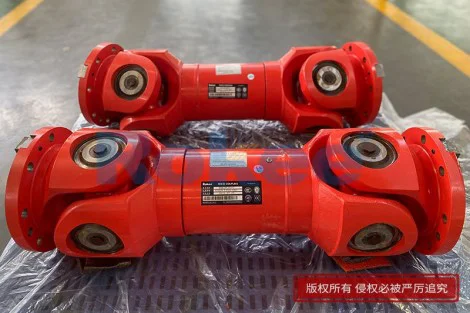
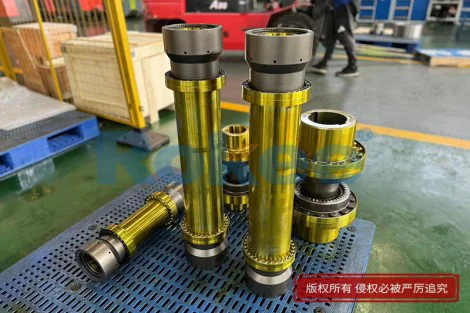
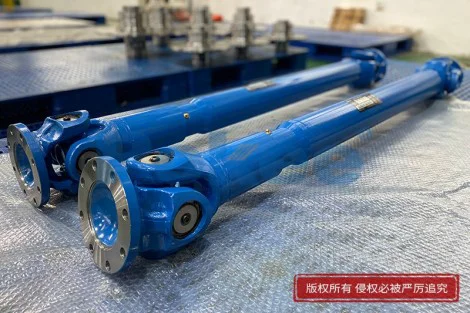
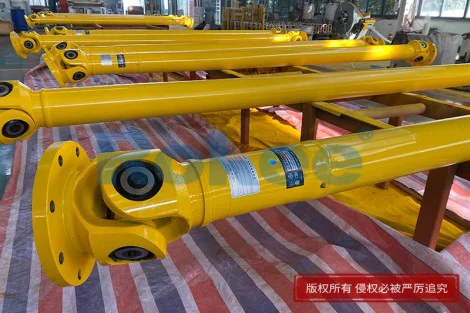
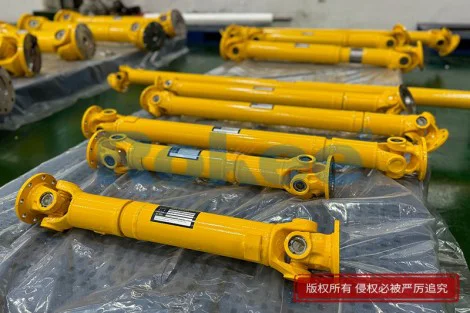
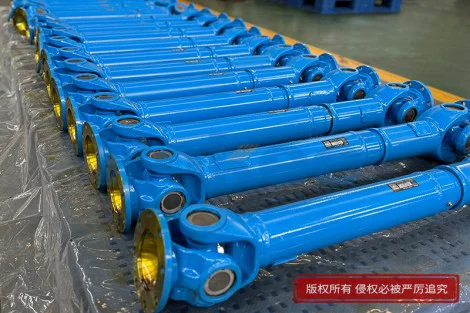
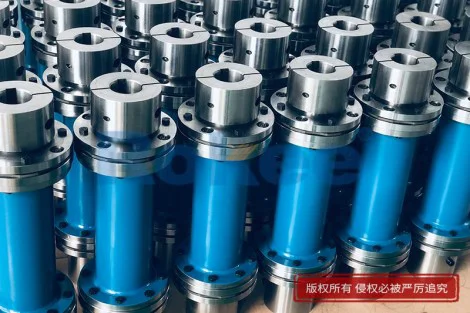
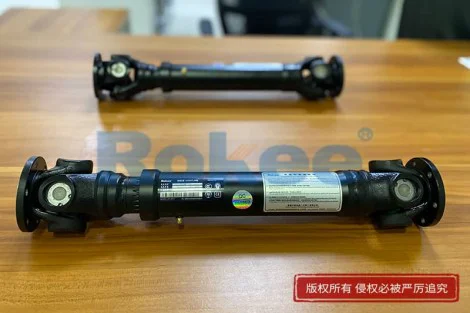
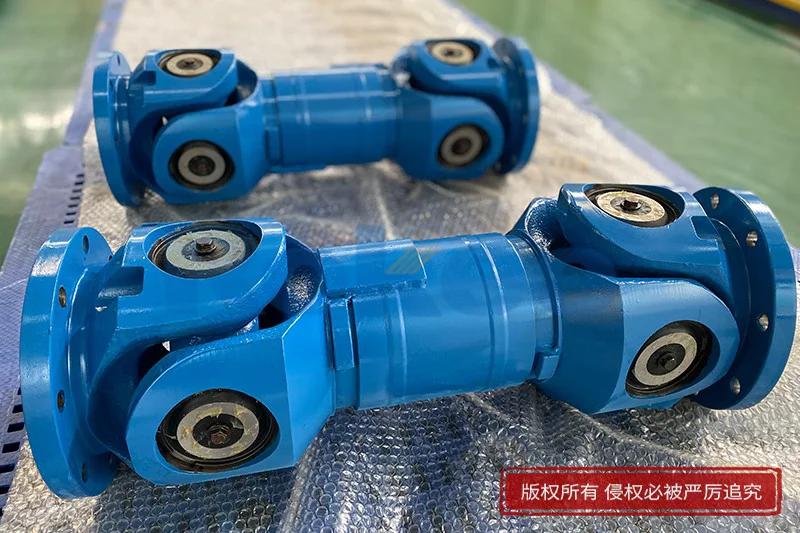
The cardan driveshaft, also known as the universal joint driveshaft, is designed to address the problem of power transmission between non-coaxial shafts, which is precisely the core demand of the insulation sandwich panel production machine's transmission system. Its unique structural design, consisting of cross shafts, yokes, and bearings, allows it to compensate for angular deviations, radial displacements, and axial displacements between the driving shaft and the driven shaft, ensuring stable and continuous torque transmission even when the two shafts are not perfectly aligned. In the insulation sandwich panel production line, due to the layout limitations of each functional module—such as the uncoiling system, forming unit, and cutting unit often being installed at different positions and angles—the driving shafts and driven shafts of different modules cannot be perfectly coaxial. If rigid transmission components are used, it will lead to excessive stress on the equipment, increased wear, and even serious failures such as shaft breakage, which will interrupt the production process. The cardan driveshaft solves this problem through its flexible compensation capacity, which can adapt to angular deviations ranging from 5° to 45° depending on the structural type, ensuring that power is transmitted smoothly between different modules without affecting the operation accuracy of each component.
In the specific production process of insulation sandwich panels, the cardan driveshaft cooperates with various key modules of the production machine in a targeted manner, forming a seamless power transmission chain. In the uncoiling and forming stage, the metal coil used as the surface material needs to be uncoiled stably and then rolled into a specific shape by the forming machine. The uncoiling system and the forming unit are usually not on the same axis, and the cardan driveshaft connects the power source of the uncoiling system to the forming roller, transmitting torque stably while compensating for the angular deviation between the two shafts. This ensures that the metal coil is uncoiled at a uniform speed, and the forming process is stable, avoiding problems such as uneven plate thickness or edge warping caused by unstable power transmission. At the same time, the cardan driveshaft can adapt to the slight vibration generated during the operation of the uncoiling and forming equipment, reducing the impact of vibration on the transmission system, thereby extending the service life of the equipment and ensuring continuous operation.
The glue coating and composite lamination stage is a key link affecting the bonding quality of insulation sandwich panels, which requires the coordinated operation of the glue coating device, core material feeding system, and composite mechanism. The cardan driveshaft plays a key role in transmitting power to the glue coating roller and the composite pressure roller. The glue coating roller needs to rotate at a constant speed to ensure uniform glue application on the surface of the metal plate, and the composite pressure roller needs stable torque to press the upper and lower metal plates and the core material tightly together, ensuring sufficient bonding strength. The cardan driveshaft transmits the power of the main motor to these two types of rollers accurately, and its excellent torque transmission stability ensures that the glue coating amount is uniform and the composite pressure is consistent, avoiding quality defects such as uneven glue coating, insufficient bonding, or delamination of the sandwich panel. In addition, since the glue coating device and the composite mechanism are often installed at different heights and angles, the cardan driveshaft's ability to compensate for axial and radial displacements ensures that the power transmission is not affected by the installation position, maintaining the continuity and stability of the production process.
The curing and cutting stage is the final link of the insulation sandwich panel production, and the stability of power transmission directly affects the cutting accuracy and product qualification rate. After the composite panel is cured, it needs to be cut into fixed-length finished products by the cutting unit, which requires the cutting blade to rotate at a high speed and stably, and the feeding speed of the panel to be consistent with the cutting speed. The cardan driveshaft connects the power source to the cutting blade and the feeding roller, ensuring that the cutting blade rotates at a constant speed and the feeding roller moves stably, avoiding cutting errors caused by unstable power transmission, such as uneven cutting surfaces, incorrect length dimensions, or edge burrs. At the same time, during the long-term continuous operation of the cutting unit, the cardan driveshaft can withstand the impact load generated during cutting, reducing the wear of the transmission components and avoiding sudden failures that may interrupt production.
The ability of the cardan driveshaft to ensure the continuity of the insulation sandwich panel production process is not only reflected in its structural advantages but also in its excellent performance in adapting to harsh working environments. Insulation sandwich panel production workshops often have complex working conditions, including high temperature, dust, and occasional vibration. The cardan driveshaft is usually made of high-strength alloy materials, which have good wear resistance, corrosion resistance, and high-temperature resistance, and can operate stably in harsh environments for a long time. Its sealed structure prevents dust, glue, and other impurities from entering the internal components, avoiding failures such as bearing jamming or shaft wear caused by impurity intrusion. In addition, the cardan driveshaft has a simple structure and convenient maintenance, which can reduce the maintenance time and cost of the production line. Regular lubrication and inspection can ensure its long-term stable operation, further improving the continuity of the production process.
Another important aspect of the cooperation between the cardan driveshaft and the insulation sandwich panel production machine is the improvement of production efficiency and energy saving. The traditional transmission components often have problems such as large power loss, low transmission efficiency, and high energy consumption when transmitting power between non-coaxial shafts. The cardan driveshaft has high transmission efficiency, which can reduce power loss during the transmission process, making the power of the motor fully utilized, thereby reducing energy consumption of the production line. At the same time, due to its high reliability and stability, the cardan driveshaft can reduce the frequency of equipment failures and downtime, ensuring that the production line operates continuously for a long time. For insulation sandwich panel production enterprises, reducing downtime means increasing production output, reducing production costs, and improving market competitiveness. In addition, the cardan driveshaft's flexible design allows it to adapt to the production needs of sandwich panels of different thicknesses and specifications. When the production line needs to switch product specifications, the cardan driveshaft can quickly adapt to the adjustment of the transmission system, avoiding the need for large-scale modification of the equipment, thereby improving the flexibility and adaptability of the production line.
It is worth noting that the effective cooperation between the cardan driveshaft and the insulation sandwich panel production machine also requires scientific selection, installation, and maintenance. In the selection process, it is necessary to determine the type, size, and load-bearing capacity of the cardan driveshaft according to the power requirements, transmission distance, and angular deviation of the production machine to ensure that it matches the performance of the production line. During installation, accurate alignment is required to minimize the angular deviation between the driving shaft and the driven shaft, avoid excessive stress on the cardan driveshaft, and ensure stable operation. Regular maintenance is also essential, including adding lubricating oil to the bearings, checking the wear of the cross shaft and yoke, and replacing damaged components in a timely manner. These measures can effectively extend the service life of the cardan driveshaft, ensure its long-term stable operation, and further enhance the continuity of the insulation sandwich panel production process.
With the continuous development of the insulation sandwich panel industry, the requirements for production efficiency, product quality, and production continuity are constantly improving, which puts higher demands on the performance of the cardan driveshaft. In recent years, with the advancement of material science and mechanical processing technology, the design and manufacturing level of cardan driveshafts has also been continuously improved. New high-strength, lightweight materials are widely used, making the cardan driveshaft have higher load-bearing capacity and longer service life while reducing its own weight, further improving transmission efficiency. At the same time, the optimization of structural design, such as the adoption of double cardan driveshafts, has solved the problem of speed fluctuation in single cardan driveshaft transmission, making the power transmission more stable and accurate, which is more suitable for the high-precision production needs of insulation sandwich panels.
In the context of the global promotion of green buildings and energy conservation and emission reduction, the market demand for insulation sandwich panels will continue to grow, and the insulation sandwich panel production industry will face greater opportunities and challenges. The continuous and stable operation of the production line is the key to the development of enterprises, and the cardan driveshaft, as a core transmission component, will play an increasingly important role in ensuring production continuity. Its close cooperation with insulation sandwich panel production machines not only solves the technical difficulties of power transmission under complex working conditions but also provides strong support for the efficient, stable, and energy-saving operation of the production line. In the future, with the continuous innovation of technology, the cardan driveshaft will be more optimized in terms of performance, structure, and maintenance, further improving the cooperation efficiency with insulation sandwich panel production machines, promoting the high-quality development of the insulation sandwich panel industry, and making greater contributions to the construction of green and energy-saving buildings.
In summary, the cardan driveshaft is an indispensable core component in the insulation sandwich panel production machine, and its cooperation with the production machine is crucial to ensuring production continuity. Through its unique structural design and excellent performance, the cardan driveshaft solves the problem of power transmission between non-coaxial shafts, adapts to the harsh working environment of the production workshop, improves production efficiency, reduces energy consumption, and ensures the stability and consistency of product quality. With the continuous advancement of technology, the cooperation between the cardan driveshaft and the insulation sandwich panel production machine will be more close and efficient, providing a solid guarantee for the sustainable development of the insulation sandwich panel production industry. Enterprises engaged in the production of insulation sandwich panels should pay full attention to the role of the cardan driveshaft, strengthen the scientific selection, installation, and maintenance of the cardan driveshaft, and give full play to its role in ensuring production continuity, so as to improve the core competitiveness of enterprises in the fierce market competition.