Universal Shaft Coupling Helps PUR Sandwich Panel Making Machinery Save Energy And Reduce Consumption
The manufacturing of PUR sandwich panels stands as a core segment in the modern lightweight building material industry, catering to the booming market demand for energy-efficient thermal insulation structures, prefabricated construction components, and cold storage enclosure systems. The entire production process of PUR sandwich panels relies on a complete set of continuous and semi-continuous forming machinery, which integrates raw material feeding, high-pressure foaming, continuous laminating, fixed-size cutting, and rapid curing procedures. All these production links require stable and consistent power transmission between various mechanical drive components, as even minor fluctuations in power output or mechanical transmission deviation will not only affect the dimensional accuracy and surface flatness of finished sandwich panels but also lead to extra mechanical friction, unnecessary power loss, and accelerated wear and tear of key equipment parts. In the long-term continuous operation state that PUR sandwich panel making machinery inherently requires, the overall energy consumption level of the production line is not only determined by the core drive motors and foaming heating systems but also closely linked to the performance of basic transmission components that are often overlooked in daily production management. Among these essential transmission parts, the universal shaft coupling has emerged as a pivotal functional component that optimizes the operating state of sandwich panel production equipment, effectively cuts down invalid energy consumption, extends the service life of the entire mechanical system, and realizes stable and low-consumption long-term production operation for PUR sandwich panel manufacturing lines.
PUR sandwich panel making machinery operates under unique and harsh working conditions that differ greatly from ordinary light-duty industrial processing equipment, posing strict and specialized requirements for the stability and efficiency of the power transmission system. During the continuous production process, the equipment needs to bear long-term uninterrupted load operation, frequent start-stop adjustments according to different production specifications of sandwich panels, and subtle mechanical vibration generated by high-speed foaming material mixing and continuous plate body pressing and forming. Due to the limitations of on-site installation space, long-term mechanical operation deformation, and cumulative installation errors after multiple equipment maintenance and debugging, the driving shafts and driven shafts of various core transmission parts in the production line often cannot maintain absolute coaxial alignment. There are inevitable angular deviation, radial offset, and axial displacement between the connected shafts of pressing rollers, traction rollers, cutting power components, and raw material conveying drive structures. In the past, many sandwich panel production lines adopted traditional rigid connection parts or ordinary fixed couplings to connect transmission shafts, which lacked the ability to compensate for shaft misalignment and buffer mechanical vibration. This rigid connection mode forced the drive motor and transmission bearings to bear additional radial and torsional loads during operation. A large amount of electric energy output by the motor was not converted into effective power for plate forming and material conveying, but consumed in severe mechanical friction, rigid collision between parts, and repeated vibration loss of the equipment frame. This not only causes the actual operating power consumption of the production line to remain high for a long time but also leads to frequent failure of transmission bearings, shaft bodies, and connecting parts, resulting in unplanned production shutdowns, increased maintenance workload, and rising replacement costs of wearing parts, bringing dual economic losses of energy waste and production efficiency reduction to sandwich panel manufacturing enterprises.
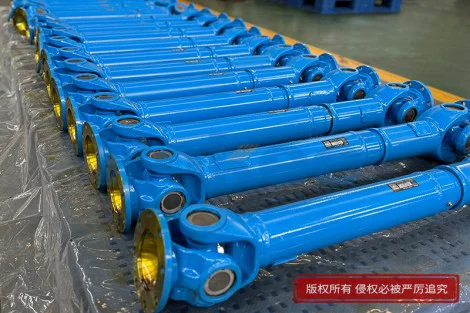
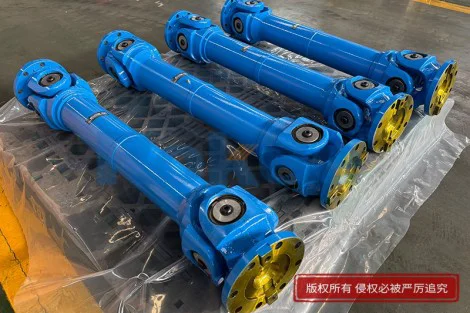
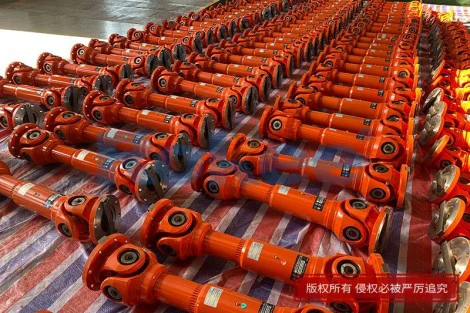
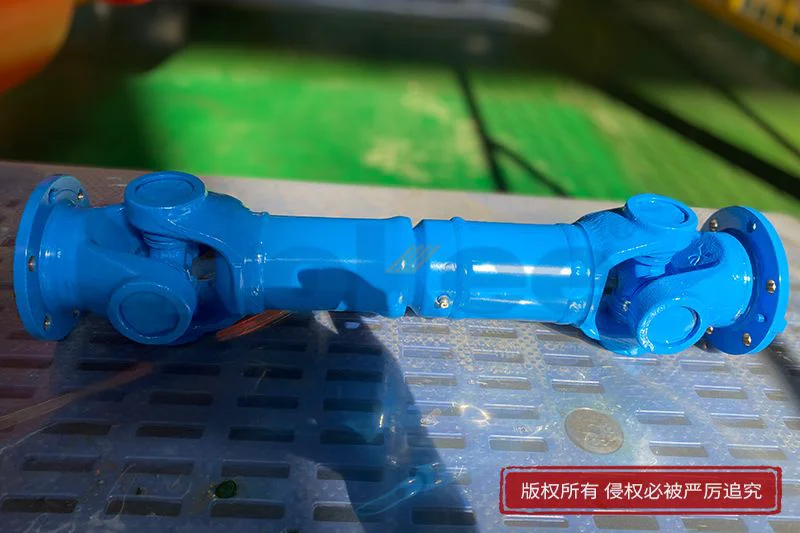
The universal shaft coupling, designed with a mature spatial linkage mechanical structure, fundamentally solves the misalignment compensation and flexible power transmission problems faced by PUR sandwich panel making machinery in actual operation, laying a solid mechanical foundation for the equipment to achieve energy saving and consumption reduction. The core structure of the universal shaft coupling consists of two fork-shaped yokes and a central cross shaft component, with precision low-friction bearings installed at each end of the cross shaft. This ingenious structural design enables the coupling to flexibly adapt to angular deviation, radial offset, and axial displacement between the driving shaft and the driven shaft within a reasonable range during the power transmission process. Unlike rigid couplings that force two misaligned shafts to operate synchronously and generate huge additional mechanical stress, the universal shaft coupling relies on the free rotation and flexible adjustment of the cross shaft and bearing assembly inside it to automatically offset various deviations generated by equipment installation errors and long-term operation deformation. It always maintains smooth and synchronous rotational motion transmission between the input shaft and the output shaft without generating extra friction resistance and rigid torsional pressure. In the daily operation of PUR sandwich panel production lines, this flexible and adaptive transmission characteristic directly reduces the invalid mechanical resistance in the power transmission link, ensuring that almost all the power output by the drive motor is directly applied to the effective production links such as plate traction, pressing forming, and material conveying, rather than being dissipated in unnecessary mechanical friction and vibration loss. The high transmission efficiency brought by the structural advantages of the universal shaft coupling becomes the core premise for the entire sandwich panel production line to reduce unit power consumption and optimize energy utilization efficiency.
The energy-saving and consumption-reducing effects of universal shaft couplings on PUR sandwich panel making machinery are reflected in every key production link of panel processing, bringing tangible operational optimization changes from reducing instantaneous power loss to lowering long-term comprehensive operating consumption. In the continuous laminating and pressing link, which is the core process determining the forming quality of PUR sandwich panels, multiple groups of upper and lower pressing rollers need to maintain stable and synchronous rotational speed operation to ensure uniform foaming and consistent thickness of the PUR foam layer inside the sandwich panel. In the absence of high-performance universal shaft couplings, the slight misalignment between the drive shafts of the pressing rollers will cause asynchronous rotation of the rollers, resulting in uneven surface stress of the sandwich panel, while the friction generated by shaft misalignment will increase the operating load of the drive motor in real time, leading to a sharp rise in instantaneous current and obvious power consumption surge during equipment operation. After adopting universal shaft couplings for shaft connection, the flexible compensation function eliminates the extra load caused by shaft misalignment, the motor operates under a stable and rated load state all the time, the current fluctuation range is significantly reduced, and the electric energy required for the pressing and forming process per square meter of PUR sandwich panel is effectively reduced. In the raw material conveying and high-pressure foaming mixing link, the stable operation of the transmission system directly affects the uniform mixing ratio of PUR raw materials and the continuity of foaming injection. The vibration buffering and stable transmission performance of universal shaft couplings avoid transmission jitter and intermittent power supply caused by rigid connection failure, ensure the continuous and stable operation of raw material conveying pumps and mixing equipment, prevent material waste and repeated processing energy consumption caused by unstable feeding, and further reduce the comprehensive energy and material consumption in the foaming production stage.
In addition to directly reducing electric energy consumption during the production operation of PUR sandwich panel making machinery, universal shaft couplings also achieve indirect energy saving and consumption reduction for enterprises by reducing equipment maintenance frequency, extending the service life of core mechanical parts, and reducing production shutdown loss. The rigid transmission mode of traditional couplings will generate continuous impact load and friction wear on transmission shafts, bearings, and motor internal components. Under the long-term high-load continuous operation state of sandwich panel production lines, these key parts are prone to rapid aging, deformation, and damage, requiring frequent shutdown maintenance and parts replacement. Each equipment shutdown not only interrupts continuous production and reduces production capacity but also generates extra energy consumption for equipment restart and preheating adjustment. Moreover, the frequent replacement of wearing parts and maintenance labor input will increase the daily operating cost of the enterprise virtually. The structural design of universal shaft couplings can effectively buffer the mechanical vibration and impact force generated during equipment start-stop and operation, isolate the adverse effect of shaft misalignment on core transmission components, and greatly reduce the friction and wear degree of bearings, shafts, and motor drive parts. The service life of key equipment components is significantly prolonged, the failure rate of the transmission system is greatly reduced, and the number of planned and unplanned maintenance shutdowns is minimized. The production line maintains long-term continuous and stable operation, avoiding energy waste and production loss caused by frequent start-stop and maintenance, and the comprehensive operating cost of the entire production process is effectively controlled while realizing energy saving.
With the continuous upgrading of the building material industry's requirements for green production and low-carbon manufacturing, PUR sandwich panel manufacturing enterprises are paying more and more attention to optimizing the energy consumption structure of production lines and reducing the comprehensive carbon emission of the production process. Many enterprises have focused on upgrading high-energy-consuming equipment such as motors and heating systems for energy saving and consumption reduction in the past, while ignoring the huge energy-saving potential contained in the basic transmission link. The practical application effect of universal shaft couplings in a large number of PUR sandwich panel production practices has fully proved that optimizing the transmission performance of basic mechanical components is a low-investment and high-return energy-saving transformation method. The installation and replacement process of universal shaft couplings is simple and convenient, without the need for large-scale transformation of the original production line equipment and long-term production shutdown adjustment. After simple installation and debugging, the equipment can immediately enter the low-consumption stable operation state, and the energy-saving effect can be reflected in the daily power consumption data of the production line in a short time. For small and medium-sized PUR sandwich panel manufacturing enterprises with limited transformation funds and large-scale production enterprises pursuing long-term low-cost operation benefits, popularizing and applying universal shaft couplings in the transmission system of making machinery is an efficient and reliable energy-saving measure that conforms to the development trend of green manufacturing in the building material industry.
In the actual long-term operation process of PUR sandwich panel making machinery, the excellent adaptive transmission performance of universal shaft couplings also helps to improve the overall operation stability of the equipment and optimize the finished product yield of sandwich panels, which further indirectly promotes the realization of energy saving and consumption reduction goals. When the power transmission of the equipment is unstable and the rotational speed of each transmission component fluctuates frequently, the forming thickness, foaming density, and bonding firmness of PUR sandwich panels will be unstable, resulting in a large number of unqualified products that need to be reworked or scrapped. The rework and reproduction of unqualified products will not only consume extra electric energy, raw materials, and labor costs but also cause unnecessary waste of production resources. The stable and synchronous power transmission provided by universal shaft couplings ensures that all production processes of sandwich panels are carried out under constant and standard operating parameters, the product qualification rate is significantly improved, the number of rework and scrapped products is reduced, and the invalid energy and resource consumption caused by product quality problems is fundamentally cut down. This benign cycle of stable equipment operation and high product yield enables PUR sandwich panel production lines to maximize the conversion rate of energy and raw materials into qualified finished products, achieving the dual goals of green low-carbon production and efficient economic operation.
To sum up, the universal shaft coupling, as a basic and important mechanical transmission component, plays an irreplaceable key role in optimizing the operation state of PUR sandwich panel making machinery and promoting energy saving and consumption reduction in the production process. It perfectly adapts to the complex working conditions of long-term continuous operation and unavoidable shaft misalignment of sandwich panel production equipment through its unique flexible misalignment compensation, high-efficiency power transmission, and vibration buffering and wear reduction characteristics. It not only directly reduces the invalid power friction loss of the production line and cuts down the daily electric energy consumption of equipment operation but also indirectly reduces comprehensive operating consumption and resource waste by extending the service life of equipment parts, reducing maintenance shutdowns, and improving finished product yield. In the context of the building material industry vigorously promoting low-carbon transformation and green upgrading, attaching importance to the optimization and upgrading of basic transmission components represented by universal shaft couplings is an important part of the refined management and energy-saving transformation of PUR sandwich panel manufacturing enterprises. It can help enterprises realize the coordinated development of stable production, quality improvement, energy saving and efficiency increase, and lay a solid foundation for the long-term sustainable and high-quality development of the PUR sandwich panel manufacturing industry.