Flexible Coupling Helps Efficient Transmission Of PU Sandwich Panel Production Line
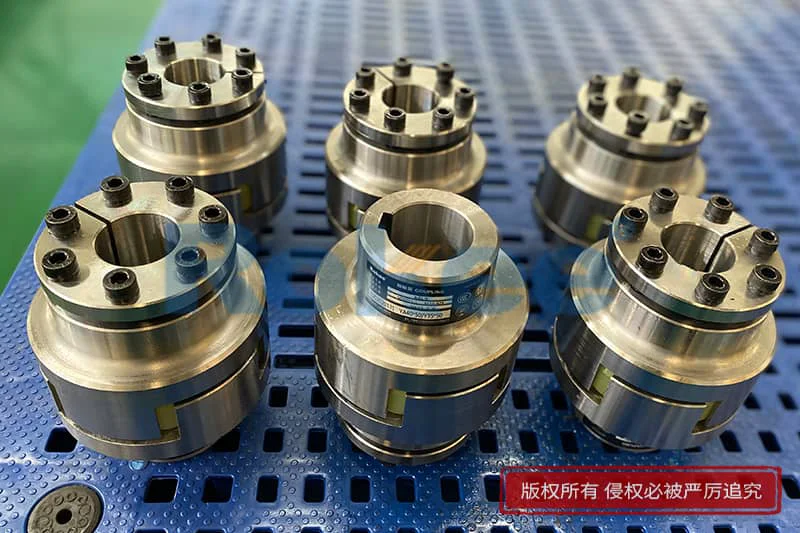
The stable and continuous operation of a PU sandwich panel production line relies fundamentally on the seamless coordination of every mechanical transmission link throughout the entire manufacturing process, from raw material feeding and foaming compounding to panel pressing, shaping, cutting and finished product conveying. As a core composite building material with excellent thermal insulation, fire resistance and structural stability, PU sandwich panels require consistent production precision and uninterrupted line operation to ensure uniform product density, stable surface flatness and reliable overall structural performance in every finished panel. In the actual industrial production environment, however, long-term continuous operation of the production line inevitably leads to subtle shaft misalignment between driving and driven equipment, mechanical vibration generated by high-speed rotating components, impact loads caused by frequent start-stop operations and thermal deformation of metal parts after long-time heat accumulation. These common mechanical operating conditions will directly interfere with the stability of power transmission, cause additional wear and tear on key transmission components, lead to fluctuations in production operating speed, and even trigger frequent equipment shutdowns and production quality deviations if not properly regulated. Under such practical production demands, flexible couplings have become an indispensable core transmission component for optimizing the operating state of PU sandwich panel production lines, achieving efficient and stable power transmission, buffering mechanical vibration and impact, compensating for various shaft misalignments, and maintaining long-term consistent and reliable operation of the entire production system, laying a solid mechanical foundation for high-efficiency and high-quality continuous production of PU sandwich panels.
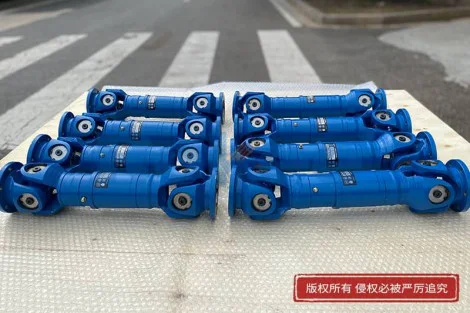
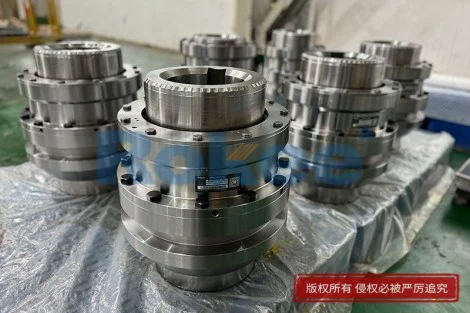
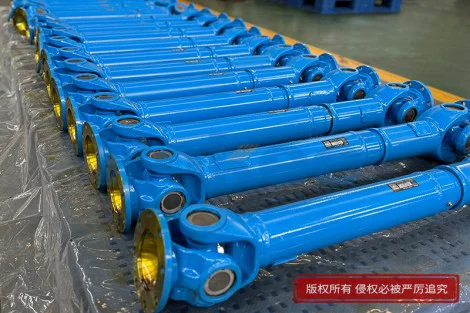
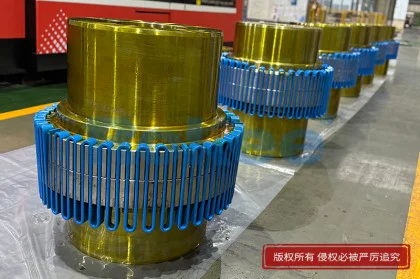
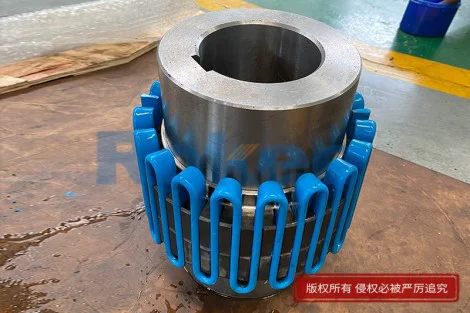
Different from rigid transmission connecting parts that require extremely precise shaft alignment and lack adaptive adjustment capabilities, flexible couplings are professionally designed with elastic deformation structures and high-toughness flexible elements, which can effectively connect driving shafts and driven shafts in various mechanical transmission systems while transmitting rotational torque stably and efficiently. The core working principle of flexible couplings lies in utilizing the elastic deformation of internal flexible materials and structural characteristics to naturally compensate for three common types of shaft misalignment inevitably generated during the installation and long-term operation of PU sandwich panel production lines, including parallel offset misalignment, angular deflection misalignment and axial displacement misalignment. In the assembly and installation stage of the production line, even with precise mechanical calibration and professional installation operations, it is impossible to achieve absolute perfect coaxiality between all connected rotating shafts due to the large overall volume of the PU sandwich panel production line, numerous distributed transmission stations and slight installation errors of on-site construction. During the long-term continuous production process, the mechanical base of the equipment will produce subtle deformation under long-term load bearing, the thermal expansion and contraction of metal components caused by the continuous heat release of the PU foaming process and the operating temperature changes of the pressing equipment will further change the relative position of the transmission shafts, and the slight vibration generated by the continuous operation of motors, reducers and conveyor equipment will also gradually expand the initial tiny misalignment between shafts. Without the adaptive compensation function of flexible couplings, these misalignment problems will generate huge additional mechanical stress and friction torque during power transmission, resulting in severe wear on shaft heads, bearings and gear components, increasing operating resistance and power consumption of the production line, and making the rotating speed of key production equipment fluctuate irregularly, which directly affects the foaming uniformity of PU materials and the pressing forming stability of sandwich panels.
In the whole operation flow of PU sandwich panel production line, every key production link is closely linked with the power transmission effect of flexible couplings, and the efficient operation of each functional module cannot be separated from the stable guarantee provided by flexible transmission performance. In the raw material feeding and conveying stage of the production line, various raw materials such as polyurethane raw materials, metal base plates and auxiliary insulation materials need to be continuously and quantitatively transported to the subsequent processing stations at a constant and stable speed. The transmission motors and reduction transmission equipment responsible for material conveying need to maintain constant torque output and stable rotating speed to avoid material accumulation or intermittent feeding caused by unstable transmission speed, which would affect the proportioning accuracy of PU foaming raw materials and the continuity of subsequent composite processing. Flexible couplings used in the feeding and conveying transmission mechanism can effectively absorb the slight vibration generated by the high-speed operation of the driving motor and the instantaneous impact load generated during equipment start-up and shutdown, avoid the vibration transmission between the motor shaft and the conveying roller shaft, ensure that the conveying roller maintains a uniform and stable rotating speed all the time, realize accurate and continuous feeding of various raw materials, and lay a good foundation for the precise proportioning and uniform mixing of subsequent PU foaming materials. Stable feeding transmission not only ensures the consistent ratio of each component of PU foaming materials, avoids product quality problems such as uneven foaming and local hollowing of sandwich panels caused by unstable feeding, but also reduces the frequent jitter of conveying equipment caused by vibration, effectively reducing the wear and failure probability of conveying rollers, bearings and other wearing parts.
In the core foaming compounding and high-pressure mixing stage of PU sandwich panel production, the requirement for transmission stability of production equipment reaches a higher level, and the role of flexible couplings in ensuring efficient and precise transmission becomes more prominent. The PU foaming reaction has extremely strict requirements on the mixing ratio, mixing speed and continuous feeding pressure of raw materials. The mixing and stirring equipment and high-pressure metering pump equipment responsible for raw material mixing need to operate at a constant speed and stable torque without any obvious speed fluctuation or transmission jitter. Once the power transmission is unstable and the rotating speed fluctuates, the mixing uniformity of polyurethane raw materials will be directly reduced, resulting in insufficient foaming reaction, uneven internal density of the formed sandwich panel, inconsistent thermal insulation performance of different parts of the panel, and even defective products with quality hazards such as local cracking and poor bonding between the PU foam layer and the metal base plate. The flexible couplings configured for the transmission parts of mixing and metering equipment can rely on their excellent vibration damping and misalignment compensation performance to eliminate the adverse effects of shaft misalignment and mechanical vibration on the transmission stability of high-precision mixing equipment. The elastic flexible elements inside the couplings can buffer the instantaneous torque impact generated during the frequent start and speed regulation of the mixing equipment, avoid the rigid impact between the driving end and the driven end of the transmission shaft, keep the mixing rotor and metering pump running at a constant and precise speed, ensure the full and uniform mixing of PU foaming raw materials, make the foaming reaction proceed stably according to the preset process parameters, and effectively guarantee the internal structural uniformity and bonding firmness of the semi-finished sandwich panels after foaming and initial molding.
The continuous pressing and curing forming process is a key link that determines the overall flatness, structural strength and dimensional accuracy of finished PU sandwich panels, and the stable operation of the pressing transmission system directly determines the final forming quality of the panels. The pressing equipment of the production line needs to maintain stable pressing pressure and continuous and uniform conveying speed during operation, so that the PU foam layer can be fully cured and bonded with the upper and lower metal base plates under constant temperature and pressure, and the overall dimensional specification of each batch of sandwich panels can be kept consistent. The transmission system of the pressing equipment bears large transmission torque and continuous mechanical load for a long time, and the shaft misalignment and vibration generated during operation are more obvious than those of other production links. The application of flexible couplings in the pressing transmission mechanism can well adapt to the high-load transmission working conditions of the pressing equipment, effectively compensate for the shaft position deviation caused by long-term high-load pressure and thermal deformation of the pressing equipment, reduce the vibration and mechanical impact during the operation of the pressing roller transmission shaft, ensure that the pressing roller runs smoothly and the pressing force is evenly distributed on the surface of the sandwich panel. This stable transmission effect avoids the problems of panel surface unevenness, edge warping and inconsistent thickness caused by jitter and speed fluctuation of the pressing roller, ensures that each finished PU sandwich panel has accurate dimensional specifications and flat surface quality, and meets the unified standard requirements of subsequent storage, transportation and engineering installation.
In the later cutting, finishing and finished product conveying stages of the PU sandwich panel production line, the efficient transmission advantage of flexible couplings is also fully reflected, providing reliable guarantee for the smooth completion of subsequent processing and finished product handling. The cutting equipment needs to operate at a stable and precise rotating speed to ensure neat and smooth cutting edges of the sandwich panels without burrs and edge damage, while the finished product conveying equipment needs to run continuously and stably to realize automatic stacking and orderly output of finished panels. The transmission components of cutting and conveying equipment are prone to frequent start-stop and speed adjustment operations in the production process, and rigid transmission parts are easy to generate instantaneous impact and vibration during frequent speed changes, resulting in unstable cutting accuracy and intermittent conveying jitter. Flexible couplings can effectively weaken the impact force generated during equipment speed regulation and start-stop through their own elastic buffering performance, maintain the stability of the transmission system during speed switching, ensure the cutting precision of the cutting equipment and the smooth operation of the finished product conveying line, reduce the generation of cutting defective products and conveying blockage problems, and improve the overall finished product rate and production efficiency of the production line.
In addition to directly improving the production stability and product quality of PU sandwich panel production lines, flexible couplings also bring significant long-term operation and maintenance advantages for industrial production, helping production enterprises reduce unnecessary equipment maintenance costs and production downtime losses, and further improving the overall production and operation efficiency of the production line. Traditional rigid transmission connecting parts cannot compensate for shaft misalignment and absorb vibration and impact, so the bearings, shafts, gears and other key transmission parts of the production line are prone to severe accelerated wear under long-term misalignment operation and vibration impact, resulting in frequent equipment failures, regular replacement of wearing parts and long-time shutdown maintenance. Each equipment shutdown and maintenance will interrupt the continuous production rhythm of PU sandwich panels, reduce the overall production output, and also increase the procurement cost of spare parts and the labor cost of maintenance work. Flexible couplings can effectively reduce the additional mechanical stress and friction wear of key transmission components through misalignment compensation and vibration damping functions, greatly prolong the service life of bearings, reducers, motors and other core equipment parts of the production line, reduce the frequency of equipment failure and daily maintenance workload. The structural design of flexible couplings is simple and reasonable, with convenient installation, disassembly and replacement operations. When routine inspection and individual part replacement are needed, the operation can be completed quickly without large-scale disassembly of the production line equipment, effectively shortening the maintenance time and reducing the production downtime caused by equipment maintenance. For PU sandwich panel production enterprises that pursue long-term stable operation and efficient mass production, this maintenance and operation advantage can create stable production benefits and effectively control comprehensive production and operation costs.
The material selection and structural design of flexible couplings are highly adaptable to the harsh working environment of PU sandwich panel production lines, which further ensures the long-term reliable and efficient transmission performance of the couplings in complex industrial working conditions. The interior of the PU sandwich panel production workshop will generate certain chemical gas and heat during the PU foaming reaction process, and the production equipment needs to operate continuously in a certain temperature and humid environment for a long time. The flexible elements of flexible couplings are mostly made of high-toughness, wear-resistant and aging-resistant elastic materials, which have good adaptability to temperature changes and slight chemical corrosion in the production environment, will not be easily deformed, aged or damaged due to long-term exposure to the production workshop environment, and can maintain stable elastic deformation performance and transmission effect for a long time. At the same time, the overall structural design of flexible couplings is compact and sturdy, with strong pressure resistance and fatigue resistance, and can adapt to long-term high-load continuous transmission work without fatigue damage and performance attenuation. Whether it is low-speed and high-torque transmission in the pressing link or high-speed and stable transmission in the feeding and conveying link, flexible couplings can always maintain consistent transmission efficiency, avoid transmission power loss caused by performance attenuation of transmission parts, ensure that the power output of the driving equipment is efficiently transmitted to the driven production equipment, and reduce energy consumption waste in the power transmission process.
In the actual operation and management of modern PU sandwich panel production lines, efficient power transmission is not only a basic guarantee for normal production and processing, but also an important core factor for enterprises to achieve high-efficiency production, quality upgrading and cost optimization. With the continuous improvement of market demand for high-quality PU sandwich panels and the continuous upgrading of industrial production automation level, the requirements for the operation stability, production continuity and product precision of sandwich panel production lines are getting higher and higher, and the importance of flexible couplings as a key basic transmission component is becoming increasingly prominent. Flexible couplings do not need complex operation control and frequent maintenance, but rely on their own excellent mechanical performance and structural advantages to solve various common power transmission problems in the operation of PU sandwich panel production lines from the source, stabilize the operating state of the entire production transmission system, ensure the stable progress of each production processing link, and help the production line maintain efficient continuous production state for a long time. While improving production efficiency and product qualification rate, it also reduces equipment maintenance pressure and comprehensive production costs for production enterprises, realizing a win-win situation of efficient production, stable quality and cost control.
To sum up, flexible couplings play an irreplaceable key role in the efficient transmission and stable operation of PU sandwich panel production lines. From compensating installation and operation misalignment, damping mechanical vibration and buffering impact load, to stabilizing transmission speed and torque, protecting key equipment components, reducing maintenance costs and improving overall production efficiency, every performance advantage of flexible couplings is closely matched with the actual production needs of PU sandwich panel production lines. In the whole process of PU sandwich panel raw material conveying, foaming and mixing, pressing and forming, cutting and finishing, flexible couplings always provide reliable basic guarantee for efficient and stable power transmission of the production line, help production lines avoid various production disturbances caused by unstable transmission, ensure the stable improvement of product quality and production efficiency, and lay a solid mechanical foundation for the long-term stable and high-efficiency operation of modern PU sandwich panel industrial production.