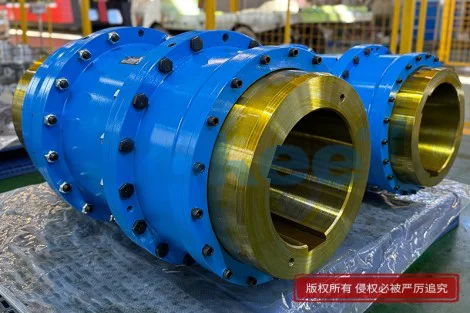
High Precision Torque Transmission Of Cardan Driveshaft For Sandwich Panel Machinery
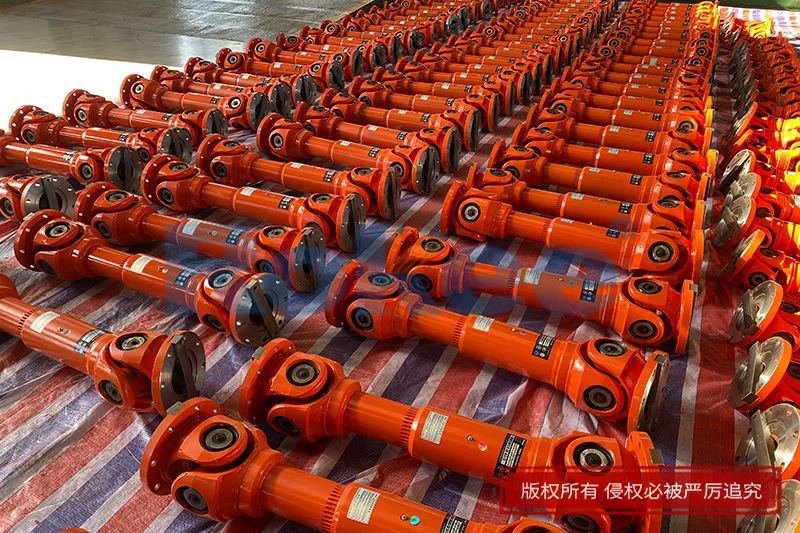
Sandwich panel manufacturing machinery operates at the core of modern lightweight construction material production lines, undertaking continuous and cyclic processing tasks including raw material feeding, core material laminating, surface panel bonding, rolling shaping, edge trimming and fixed-length cutting throughout the entire production workflow. The overall operational stability and processing accuracy of this specialized mechanical equipment directly determine the flatness, bonding firmness, dimensional consistency and overall structural uniformity of finished sandwich panels, which are fundamental prerequisites for ensuring that building and industrial sandwich panels meet practical application requirements in subsequent installation and service processes. Among all the core power transmission components supporting the normal operation of sandwich panel machinery, the cardan driveshaft stands out as an indispensable key mechanical part responsible for connecting power output modules and execution working components, and its high precision torque transmission performance has become a decisive factor in maintaining the synchronized operation of each processing station, avoiding production running deviations and reducing defective product rates in the continuous production process. Unlike power transmission parts used in general industrial mechanical equipment, the cardan driveshaft configured for sandwich panel machinery needs to adapt to long-term continuous operation, frequent load fluctuation, minor mechanical vibration deviation and inevitable axis misalignment generated by equipment frame stress deformation during the production process, and it must always maintain stable and accurate torque output without instantaneous power transmission fluctuation or rotational speed deviation, so as to ensure that each link of sandwich panel pressing, compounding and forming proceeds in a standardized and orderly manner without quality fluctuations caused by asynchronous power transmission.
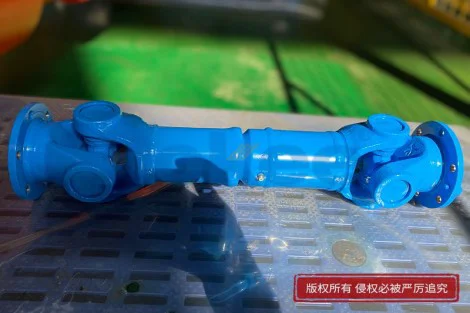
The core working principle of the cardan driveshaft is based on the articulated structural design of universal joint assemblies, which can effectively transmit rotational power and torque between driving shafts and driven shafts that are not in a completely collinear state, and reliably compensate for angular, axial and radial misalignment deviations generated during the long-term operation of mechanical equipment. The basic composition of this type of driveshaft includes precision universal joint assemblies arranged at both ends, a central hollow or solid shaft body, telescopic connecting structures for adaptive length adjustment, high-precision cross shafts, wear-resistant bearing assemblies and fastening connecting accessories that ensure structural connection rigidity. The universal joint serves as the core functional component of the entire cardan driveshaft, relying on the cross-shaped rotating pivot structure to connect the fork heads of the input end and output end respectively, and can realize multi-directional flexible rotation and angle adaptation while maintaining overall structural rigidity. In the actual operation of sandwich panel machinery, the power generated by the main drive motor needs to be stably transmitted to each roller pressing mechanism, laminating drive mechanism and fixed-length conveying mechanism through the cardan driveshaft. Any slight torque transmission error or rotational speed synchronization deviation will directly lead to inconsistent conveying speed of upper and lower surface panels, uneven pressing force during core material and surface material compounding, and dimensional deviation of finished panels after fixed-length cutting, which will not only affect the appearance quality of sandwich panels, but also reduce the overall structural strength and service stability of finished products in practical engineering applications. Therefore, the high precision torque transmission capability of the cardan driveshaft is not only a basic mechanical performance requirement for component operation, but also a core guarantee for the stable production and high-quality output of sandwich panel machinery.
In the actual production and operation scenario of sandwich panel machinery, the operating environment and load characteristics put forward extremely stringent requirements on the torque transmission accuracy and long-term operational stability of the cardan driveshaft. Sandwich panel production belongs to continuous assembly line processing work, and the mechanical equipment needs to maintain uninterrupted cyclic operation for a long time, with frequent dynamic load changes in the processing process. In the initial feeding and preliminary laminating stage of raw materials, the equipment is in a light-load low-torque operation state, while in the medium-stage rolling pressing and high-strength bonding compounding stage, the instantaneous load and required transmission torque will increase significantly in a short time, and the frequent switching of light and heavy loads will bring continuous alternating impact to the internal transmission structure of the cardan driveshaft. In addition, due to the long-term mechanical vibration generated by the high-speed operation of each processing component of the equipment and the slight deformation of the equipment frame caused by long-term load bearing, the relative position and angle between the power output shaft of the drive motor and the input shaft of each execution working mechanism will produce small but continuous changes, forming non-negligible axis misalignment deviation. Ordinary transmission shafts without high-precision structural design are prone to torque loss, rotational speed jitter and uneven power transmission under such working conditions, which will lead to asynchronous operation of each processing station of sandwich panel machinery, resulting in problems such as warping and deformation of sandwich panels, inconsistent bonding thickness and unqualified edge dimensional accuracy. The high-precision optimized cardan driveshaft is specially designed and manufactured for such complex working conditions, with precise structural matching and strict component processing tolerances, which can minimize torque transmission loss in the process of power transmission, ensure that the torque output at the input end can be efficiently and accurately transmitted to the driven execution mechanism without obvious attenuation and deviation, and adapt to axis misalignment and load fluctuation changes in the operation process through the flexible compensation performance of the universal joint structure, so as to always maintain the synchronization and stability of power transmission.
The structural optimization design of the cardan driveshaft is the fundamental core to realize high precision torque transmission for sandwich panel machinery production scenarios. Every component of the driveshaft from the universal joint cross shaft to the bearing assembly, from the shaft body for torque bearing to the connecting fork head for butt joint and fixation, adopts precision processing technology and optimized structural layout to reduce mechanical clearance and transmission friction that affect torque transmission accuracy. The cross shaft inside the universal joint, as the key force-bearing and rotating connecting part, adopts integrated forging and precise finishing processing, with smooth and uniform surface precision and consistent structural rigidity of each force-bearing part, which can avoid local stress concentration and structural deformation under long-term alternating torque load, ensuring that the rotation angle and torque transmission of each universal joint keep synchronous and consistent during operation. The matching bearings installed on the outer side of the cross shaft are designed with high-precision fit clearance, which can reduce the rotational friction resistance in the power transmission process on the premise of ensuring flexible rotation of the universal joint, effectively avoiding torque loss caused by excessive friction and rotational jitter caused by excessive clearance. The central shaft body of the cardan driveshaft adopts a reasonable diameter and wall thickness matching design according to the maximum torque demand of sandwich panel machinery operation, which not only ensures that the shaft body has sufficient torsional rigidity to resist torsional deformation under high load torque, but also avoids excessive structural weight causing additional rotational inertia and affecting the response speed of torque transmission. The telescopic connecting part arranged in the middle of the driveshaft can adapt to the small axial displacement and length change of the shaft body caused by equipment vibration and frame deformation during the operation of sandwich panel machinery, ensuring that the driveshaft always maintains a reasonable installation position and connection state, preventing additional structural stress from affecting the stability and accuracy of torque transmission.
The material selection of cardan driveshaft components also plays a vital role in maintaining long-term high precision torque transmission performance in sandwich panel machinery working conditions. The overall torque transmission process of the driveshaft is accompanied by continuous torsional shear force and alternating load impact, and the long-term cyclic operation will easily lead to material fatigue, structural wear and micro deformation of components if the material performance is insufficient, which will gradually reduce torque transmission accuracy and even cause transmission failure. Therefore, the main force-bearing components such as the cross shaft, shaft body and connecting fork head of the high-precision cardan driveshaft all adopt high-strength and high-toughness alloy materials with excellent wear resistance and fatigue resistance. After special heat treatment processing such as quenching and tempering, the materials have stable mechanical properties, good torsional resistance and structural dimensional stability, and will not produce permanent deformation or excessive wear under long-term high-load torque transmission and alternating impact working conditions. The surface of key friction and matching parts is treated with wear-resistant and anti-corrosion processing, which can effectively resist the slight wear caused by long-term relative rotation and friction, avoid the increase of matching clearance caused by component wear, and ensure that the torque transmission accuracy of the driveshaft will not decrease with the extension of service time. For the bearing sealing structure inside the universal joint, a reasonable protective design is adopted to prevent dust, debris and tiny particulate impurities generated in the sandwich panel production environment from entering the bearing and universal joint matching parts, avoid bearing wear and rotation jitter caused by impurity friction, and maintain the long-term stable and accurate operation state of the entire torque transmission system.
In the actual operation and application of sandwich panel machinery, the high precision torque transmission performance of the cardan driveshaft directly acts on the core processing links of panel production, bringing obvious practical effects on improving production efficiency and finished product quality. In the panel conveying and feeding link, accurate and stable torque transmission ensures that the conveying roller mechanism maintains a constant and synchronized rotational speed, so that the surface steel plates, aluminum plates and core insulation materials of sandwich panels can be conveyed at a uniform speed without sudden speed change or conveying pause, avoiding raw material deviation and stacking dislocation in the feeding process. In the core material laminating and high-pressure bonding link, the stable torque output of the cardan driveshaft ensures that each pressing roller can provide uniform and consistent pressing force, the bonding degree between the core material and the surface panel is uniform and firm, and there is no local hollow bonding or uneven pressing thickness, effectively improving the overall structural quality and durability of finished sandwich panels. In the fixed-length cutting and edge trimming link, the synchronous torque transmission of the driveshaft ensures that the cutting and trimming mechanism operates accurately according to the set program parameters, the dimensional error of each finished panel is controlled within a tiny range, and the consistency of batch production products is effectively guaranteed. In contrast, if the torque transmission accuracy of the cardan driveshaft is insufficient and torque fluctuation and rotational speed asynchrony occur frequently, the sandwich panel production line will have frequent shutdown adjustments, increased defective product output, reduced overall production efficiency, and increased later maintenance and replacement costs of mechanical equipment, which will bring unnecessary operational losses to the entire production and processing work.
The installation calibration and daily maintenance management of the cardan driveshaft are important auxiliary links to maintain its high precision torque transmission state for a long time in sandwich panel machinery. Although the driveshaft has excellent structural design and material performance, unreasonable installation and calibration will lead to excessive initial axis misalignment and structural stress, resulting in torque transmission deviation and accelerated component wear in the early stage of operation. In the installation process, it is necessary to strictly calibrate the coaxiality and installation angle of the driving shaft and driven shaft connected at both ends of the cardan driveshaft, reasonably adjust the telescopic length and connection fastening degree of the driveshaft, ensure that each connecting part is closely matched without virtual connection and looseness, and reduce the initial transmission clearance and structural stress. In the daily production and operation process, regular inspection and maintenance work should be carried out for the cardan driveshaft, including checking the fastening state of connecting fasteners, the wear degree of universal joint bearings and cross shaft matching parts, the flexibility of telescopic structure and the vibration and temperature changes of the driveshaft during operation. Timely lubrication and maintenance of the rotating and friction parts of the driveshaft can reduce transmission friction and component wear, timely adjustment of slightly loose connecting parts can avoid increased transmission clearance, and regular detection of structural deformation and wear of key components can timely identify potential hidden dangers affecting torque transmission accuracy. Through standardized installation calibration and scientific daily maintenance, the high precision torque transmission performance of the cardan driveshaft can be maintained for a long time, the service life of the driveshaft can be effectively prolonged, and the long-term stable and efficient operation of sandwich panel machinery production lines can be guaranteed.
With the continuous upgrading and development of sandwich panel manufacturing technology, the production machinery and equipment are gradually developing towards higher operating speed, higher processing precision and more continuous automated production, which puts forward higher and more comprehensive requirements for the high precision torque transmission performance of supporting cardan driveshafts. In the future development process, the structural design and manufacturing process of cardan driveshafts for sandwich panel machinery will be further optimized, with more precise component processing tolerances and more reasonable structural matching design, to further reduce torque transmission loss and improve the synchronization and stability of power transmission. At the same time, with the continuous application of new high-performance wear-resistant and fatigue-resistant materials, the overall structural stability and long-term operation reliability of the driveshaft under complex working conditions will be further improved, which can adapt to the higher standard production requirements of modern sandwich panel production lines. As the core power transmission component of sandwich panel machinery, the cardan driveshaft will always rely on its excellent high precision torque transmission capability to support the stable operation of panel production links, ensure the high-quality and high-efficiency batch production of sandwich panel products, and provide solid mechanical technical support for the development of modern lightweight building materials and industrial panel manufacturing industries.