Performance Optimization Plan Of Universal Coupling For PUR Sandwich Panel Manufacturing Equipment
The continuous and stable operation of core transmission components is the fundamental guarantee for the efficient and long-term production of PUR sandwich panel manufacturing equipment, and universal couplings, as the key connecting parts linking various power transmission shafts, rolling systems, and forming drive modules of the entire production line, directly determine the operational stability, transmission accuracy, and continuous production capacity of the whole mechanical system. PUR sandwich panel manufacturing involves multiple continuous process links including raw material continuous feeding, high-pressure foaming composite, continuous rolling shaping, fixed-length cutting, and finished product conveying. The production process presents typical characteristics of long-term continuous operation, alternating cyclic load impact, slight dynamic misalignment of equipment shafts, and gradual temperature change in the working environment. Under such complex and sustained working conditions, universal couplings often face prominent practical problems in actual operation, including uneven torque transmission, obvious rotational vibration and noise, accelerated wear of core rotating and connecting parts, reduced misalignment compensation capacity after long-term operation, and frequent power transmission efficiency attenuation. These hidden performance defects not only lead to inconsistent operating speed of each functional module of the production line, affect the composite compactness and overall dimensional accuracy of PUR sandwich panel finished products, resulting in unstable product quality and increased unqualified rate, but also easily cause frequent minor failures of the transmission system, force the production line to stop frequently for inspection and maintenance, greatly reduce the overall production efficiency of the enterprise, and indirectly increase the comprehensive operating and maintenance costs of production equipment. In view of the important supporting role of universal couplings in the power transmission system of PUR sandwich panel manufacturing equipment and the various performance bottlenecks exposed in long-term practical production and application, it is urgent to formulate a targeted, systematic and practical overall performance optimization plan based on the actual working condition characteristics of the production line and the operation failure rules of existing couplings, so as to comprehensively improve the structural stability, transmission efficiency, wear resistance, fatigue resistance and environmental adaptability of universal couplings, reduce equipment failure rate and unplanned downtime, ensure the long-term continuous and stable operation of PUR sandwich panel production line, and lay a solid mechanical foundation for stabilizing product quality and improving continuous production efficiency.
To carry out the performance optimization work of universal couplings for PUR sandwich panel manufacturing equipment in a targeted and effective manner, the first core premise is to fully and accurately analyze the actual working condition characteristics of the production line and the root causes of performance degradation and failure of existing universal couplings in daily operation. Different from the intermittent operation mode of general mechanical processing equipment, PUR sandwich panel manufacturing equipment adopts a full-process continuous cyclic production mode, and the drive system needs to maintain long-term uninterrupted rotating operation for dozens of consecutive days in most production cycles, which means that the universal coupling is always in a continuous rotating state under cyclic alternating load for a long time, and the core components are prone to cumulative fatigue damage and gradual performance attenuation under long-term stress cycle impact. In the actual production process, due to the influence of long-term mechanical vibration of the equipment, thermal expansion and contraction of the frame structure caused by continuous operation temperature change, and slight foundation settlement of the production workshop, the connecting shafts of the driving motor, reduction gearbox, rolling forming shaft and conveying drive shaft connected by the universal coupling will inevitably produce different degrees of angular misalignment, axial displacement and radial deviation during operation. Although the basic structure of the universal coupling itself has a certain misalignment compensation function, the traditional coupling configuration used in the original equipment lacks targeted structural reinforcement and adaptive design for the long-term alternating misalignment working condition of the sandwich panel production line. After a period of operation, the internal clearance of the coupling increases continuously, the compensation ability decreases significantly, and the uncompensated misalignment will form additional alternating torque and radial stress on the coupling and the connected shaft parts, further aggravating the vibration and impact of the transmission system. At the same time, the PUR foaming and composite forming link in the production process will generate certain ambient temperature fluctuation and slight dust particle pollution in the local working area of the equipment. The traditional universal coupling has a relatively simple protective structure and unreasonable lubrication matching design, which makes it easy for dust and fine impurities to enter the internal moving friction pairs, resulting in lubricant deterioration and contamination. On the one hand, it accelerates the abrasive wear of the cross shaft, yoke, bearing and other core moving parts of the coupling, on the other hand, it reduces the lubrication and anti-friction effect, increases the rotational friction resistance of the transmission process, and leads to the continuous decline of power transmission efficiency. In addition, the load of each production link of the PUR sandwich panel production line is not constant. Instant load impact will be formed at the moment of equipment start-up and shutdown, material feeding switching and cutting action execution. The original universal coupling does not carry out targeted load buffering and impact resistance optimization design, and the structural rigidity and toughness matching are not reasonable enough. It is difficult to cope with instantaneous peak torque and alternating impact load, resulting in frequent deformation of local stress concentration parts, early fatigue cracks and accelerated wear failure, which seriously restrict the overall service life and stable operation performance of the coupling.
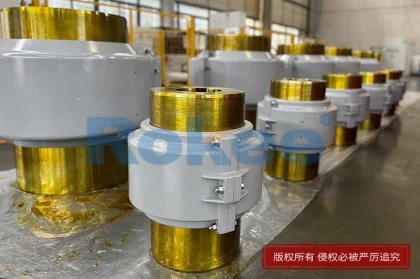
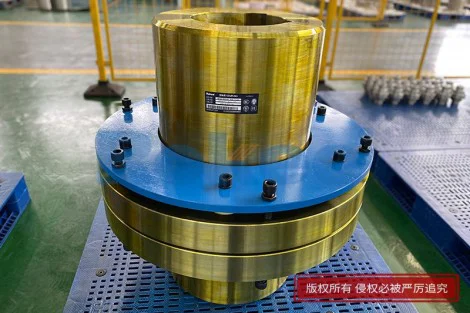
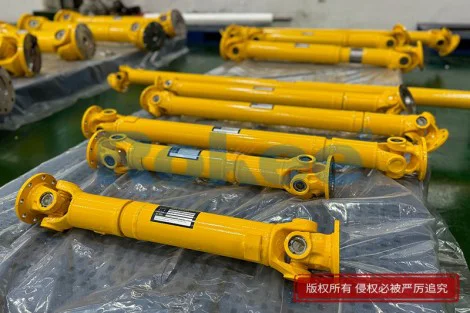
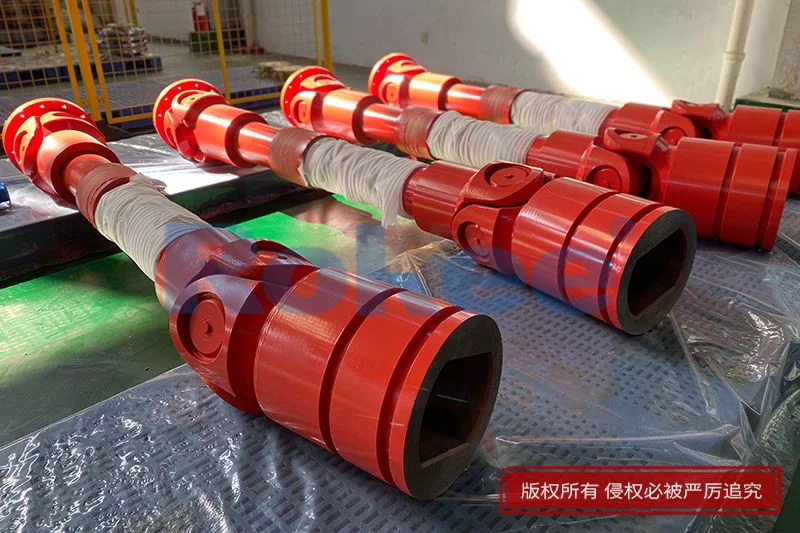
On the basis of clarifying the working condition characteristics of PUR sandwich panel manufacturing equipment and the root causes of coupling performance attenuation, the first key link of the performance optimization plan is to carry out targeted structural design optimization for the universal coupling, focusing on improving misalignment compensation accuracy, rotational operation stability and impact load resistance, and solving the core problems of large internal clearance, insufficient structural rigidity and poor vibration damping effect of traditional couplings in long-term operation. In terms of the overall structural layout optimization of the coupling, according to the actual shaft connection distance and dynamic misalignment variation range of each drive node of the PUR sandwich panel production line, the adaptive optimization of the double cross shaft linkage structure is adopted to replace the traditional single universal joint structure. The double cross shaft structural design can effectively balance the speed fluctuation and torque unevenness problem existing in the single universal joint transmission process, realize the synchronous and consistent rotation speed of the input end and output end of the coupling under the condition of angular misalignment, avoid the periodic torsional vibration and impact caused by speed difference in the transmission process, and effectively improve the smoothness of power transmission in the continuous production process. For the telescopic shaft part of the coupling that bears axial displacement compensation, the structural precision of the telescopic matching part is upgraded, and the integrated forging forming process is used to process the telescopic sleeve and the telescopic shaft core, so as to reduce the assembly gap of the matching surface to the minimum reasonable range on the premise of ensuring flexible axial telescopic movement. This optimization can effectively avoid the excessive radial runout and rotational vibration caused by too large matching clearance during high-speed rotation, and maintain stable axial displacement compensation capacity for a long time, adapting to the axial position deviation caused by thermal expansion and cold contraction of equipment components and slight foundation deformation. In terms of the structural reinforcement of the stress concentration parts of the coupling, the finite element stress simulation analysis technology is used to accurately identify the local high-stress areas of the yoke, the connecting flange and the cross shaft journal during torque transmission and impact load bearing. The fillet transition reinforcement design is carried out for all sharp corner mutation positions of the stress concentration parts, and the wall thickness of the key bearing parts is appropriately increased in a reasonable range without increasing the overall equipment installation space. This structural improvement can effectively disperse local concentrated stress, reduce the risk of structural deformation and fatigue crack initiation under long-term alternating load and instantaneous impact torque, and significantly improve the overall structural rigidity and fatigue resistance of the coupling. At the same time, a simple and efficient integrated vibration damping and buffering structure is added to the connecting part between the coupling flange and the equipment shaft. The vibration damping components made of high-elasticity and aging-resistant polymer materials are used to absorb and dissipate the mechanical vibration and instantaneous impact energy generated in the transmission process, reduce the vibration transmission between the coupling and the equipment drive shaft, protect the bearings and other precision parts of the drive system, and further reduce the operating noise and vibration amplitude of the entire transmission system.
Material performance optimization is another core part of the universal coupling performance optimization plan for PUR sandwich panel manufacturing equipment. The structural strength, wear resistance, fatigue resistance and environmental adaptability of the coupling are fundamentally determined by the raw material properties and subsequent heat treatment process of the core components. The traditional universal coupling mostly adopts ordinary carbon structural steel for processing and production. The material has low hardness, poor wear resistance and weak fatigue resistance. It is difficult to adapt to the long-term continuous operation and alternating impact load working conditions of the sandwich panel production line, and it is prone to rapid wear and fatigue aging of core parts. In the material optimization and upgrading scheme, high-strength alloy structural steel with excellent comprehensive mechanical properties is selected as the base material for processing the core main components of the coupling, including the cross shaft, coupling yoke, telescopic shaft and connecting flange. This type of alloy steel has high tensile strength, good toughness and excellent fatigue resistance and hardenability, which can maintain stable structural dimensional accuracy and mechanical properties under long-term cyclic load and instantaneous peak torque, and will not produce permanent deformation or rapid performance attenuation. For the small moving friction parts such as the coupling bearing inner and outer rings and roller bodies, high-hardness wear-resistant alloy steel materials are selected to effectively improve the surface wear resistance of the friction pairs, reduce the abrasive wear loss caused by dust impurity pollution and long-term relative friction, and prolong the service life of the vulnerable moving parts. On the basis of optimizing the selection of base materials, the overall heat treatment process of coupling components is further optimized and upgraded. The integrated quenching and tempering heat treatment process is adopted for the main bearing components to ensure that the parts have uniform internal microstructure, stable overall mechanical properties, good structural toughness and impact resistance, and avoid brittle fracture under sudden impact load. The surface high-frequency quenching strengthening treatment is carried out for the journal surface of the cross shaft and the inner wall of the telescopic matching surface which are in long-term friction contact. While maintaining the good toughness of the core matrix of the parts, the surface hardness and wear resistance are significantly improved, reducing the friction and wear rate in the operation process. In view of the slight temperature fluctuation and humid and dusty working environment of the PUR sandwich panel production workshop, the surface anti-corrosion and anti-rust treatment process is added for all external surfaces of the coupling. The optimized protective coating can effectively isolate the erosion of humid air and fine dust particles, prevent the surface of the coupling from rusting and corrosion, avoid the performance degradation and structural damage caused by corrosion, and ensure that the coupling can maintain stable working performance in the actual production environment for a long time.
Lubrication system optimization and dynamic balance calibration optimization are important auxiliary optimization measures to ensure the long-term stable performance of the optimized universal coupling and give full play to the structural and material optimization effects. Good lubrication is the key to reducing the friction and wear of the internal moving parts of the universal coupling, reducing transmission power loss and extending the service life of components. The original coupling adopts a simple regular grease filling lubrication mode, which has single lubricant type, poor lubricant thermal stability and anti-aging performance, and lacks targeted sealing protection design. The lubricant is easy to deteriorate and fail under the condition of long-term continuous operation and ambient temperature change, and dust and impurities are easy to invade the lubrication parts, resulting in poor lubrication effect and accelerated wear. In the lubrication system optimization plan, special high-temperature resistant, wear-resistant and long-life composite lubricating grease is selected according to the continuous operation working temperature and friction characteristics of the coupling of the PUR sandwich panel production line. This lubricating grease has good thermal stability, oxidation resistance and adhesion, can maintain stable lubricating performance for a long time under long-term high-load continuous operation, is not easy to deteriorate and volatilize, and can form a stable protective lubricating film on the surface of the friction pairs to reduce friction resistance and wear loss. At the same time, the sealing structure of the coupling lubrication parts is optimized, and the multi-layer combined sealing design is adopted for the bearing installation position and the telescopic shaft matching gap to effectively block the intrusion of external dust, foam debris and humid air, prevent the lubricating grease from being polluted and deteriorated, and maintain the long-term stability of the internal lubrication environment. In addition, the original regular manual lubrication maintenance mode is optimized, and a standardized periodic lubrication maintenance cycle is formulated according to the actual operating intensity of the production line, so as to ensure timely supplement and replacement of lubricating grease and avoid lubrication failure caused by long-term lack of oil. Dynamic balance calibration optimization is mainly aimed at the vibration and unbalanced rotation problem caused by machining errors, assembly deviation and material density difference of the coupling after processing and assembly. Any slight dynamic imbalance of the universal coupling in high-speed continuous rotation will produce continuous centrifugal vibration, which will aggravate the load of the transmission system, accelerate component wear and affect the stability of the entire production line transmission. After the completion of the coupling processing, assembly and heat treatment, high-precision dynamic balance calibration equipment is used to carry out full-scale dynamic balance detection and correction for each assembled universal coupling. By removing the unbalanced weight of the coupling rotor and adjusting the assembly symmetry, the unbalanced vibration amplitude of the coupling in the rated operating speed range is controlled within the minimum standard range, ensuring that the coupling runs smoothly and stably without obvious centrifugal vibration and additional dynamic load in the long-term continuous rotating process.
Daily operation maintenance management optimization and regular performance inspection and debugging mechanism construction are the important guarantee measures to maintain the long-term optimal performance of the universal coupling, avoid performance regression after optimization, and realize the whole life cycle efficient operation of the coupling. After completing the structural optimization, material upgrading, lubrication improvement and dynamic balance calibration of the universal coupling, scientific and standardized daily use and maintenance management must be matched to avoid the attenuation of optimization effect caused by irregular operation and neglected maintenance. In the daily production and operation management, the equipment operation and maintenance personnel need to regularly observe the operating state of the universal coupling in the production line operation process, focusing on checking whether there is abnormal vibration, abnormal noise, local heating and shaft rotation jitter in the coupling operation process. Once abnormal operation signs are found, timely minor inspection and debugging shall be carried out to eliminate potential hidden dangers of small faults in the initial stage and avoid minor faults expanding into major equipment failures leading to production line shutdown. It is necessary to standardize the daily operation and start-stop operation specifications of the equipment, avoid frequent sudden start-up and emergency shutdown of the PUR sandwich panel production line, reduce the instantaneous impact torque and alternating load borne by the universal coupling, and reduce the fatigue damage and impact wear of the coupling components. In terms of regular performance inspection and maintenance, a targeted regular inspection cycle is formulated according to the actual production operation intensity and working environment conditions. Regularly disassemble and inspect the internal wear degree of the coupling core moving parts, check the clearance change of the telescopic matching part and the wear state of the vibration damping buffer components, timely replace the severely worn vulnerable parts and failed lubricating grease, and readjust the installation alignment accuracy of the coupling connecting shaft to ensure that the misalignment is always within the optimal compensation range of the coupling. At the same time, establish a complete operation and maintenance record file for each optimized universal coupling, record the operation time, inspection status, maintenance content and parts replacement situation in detail, track the performance change rule of the coupling in the whole life cycle, timely adjust the maintenance cycle and optimization details according to the actual operation condition, and ensure that the universal coupling always maintains the optimal transmission performance and stable operation state in the long-term production process.
Through the systematic implementation of the above multi-dimensional performance optimization measures including working condition adaptive structural optimization, high-performance material upgrading, lubrication and sealing system improvement, high-precision dynamic balance calibration and whole life cycle operation and maintenance management, the universal coupling for PUR sandwich panel manufacturing equipment can comprehensively solve various performance bottlenecks and failure problems existing in traditional couplings in long-term continuous production operation. The optimized universal coupling has more reasonable structural stress distribution, stronger misalignment compensation ability and impact load resistance, lower friction and wear rate and higher power transmission efficiency, and can effectively adapt to the long-term continuous operation, alternating load impact and complex working environment of the PUR sandwich panel production line. In the actual production and application process, the optimized coupling can significantly reduce the vibration and noise of the equipment transmission system, maintain the stable and consistent operating speed of each functional module of the production line, effectively ensure the stable composite quality and dimensional accuracy of PUR sandwich panel products, reduce the unqualified product rate caused by transmission system instability. At the same time, the optimization measures can greatly reduce the failure rate and wear attenuation speed of the universal coupling, extend the overall service life of the coupling and supporting transmission components, reduce the frequency of unplanned shutdown maintenance of the production line, effectively improve the continuous production efficiency of the enterprise, reduce the comprehensive equipment operation and maintenance cost, and realize the dual improvement of production stability and economic benefit of PUR sandwich panel manufacturing equipment. With the continuous development of the PUR sandwich panel manufacturing industry towards high-efficiency continuous production and high-precision product manufacturing, the performance stability and reliability of core transmission components represented by universal couplings will become more and more important. The implemented performance optimization plan can also provide effective reference and practical basis for the performance upgrading and transformation of transmission components of similar continuous production building material manufacturing equipment, and promote the overall stable and high-quality development of the entire production and manufacturing link.