Teeth Coupling Improves Stability Of Polyurethane Sandwich Panel Production Line And Reduces Loss
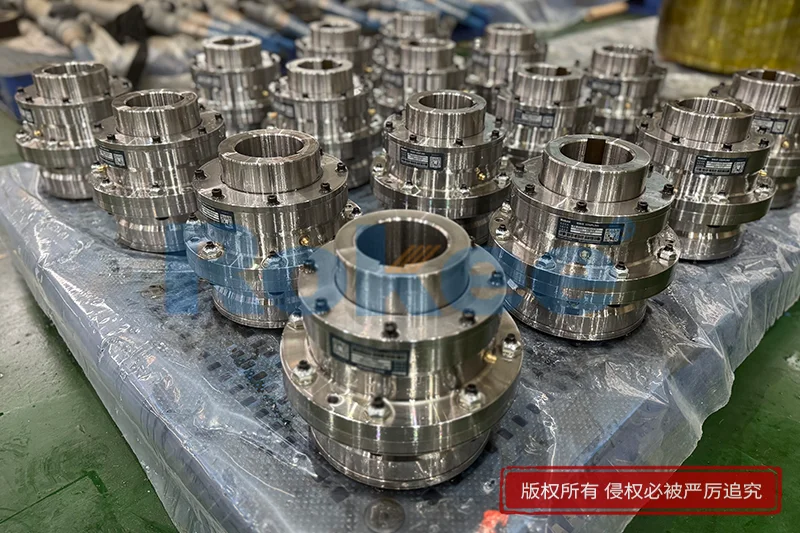
The continuous upgrading of modern building material manufacturing technology has raised higher standards for the operational stability and production efficiency of automated production lines, among which polyurethane sandwich panel production lines, as core equipment for energy-saving building material processing, require extremely precise and stable power transmission performance in long-term continuous operation. In the actual production process of polyurethane sandwich panels, the traditional power transmission connection structure often faces problems such as unstable torque transmission, shaft deviation vibration, and easy wear of connecting parts, which not only cause fluctuations in product processing accuracy but also lead to increased material waste, equipment maintenance costs and production downtime losses. As a high-efficiency and high-stability power transmission component, teeth coupling relies on its unique gear meshing transmission structure and adaptive deviation compensation performance to effectively solve the common operational pain points of polyurethane sandwich panel production lines, significantly improve the overall operational stability of the production line, and achieve effective control of various production losses.
Polyurethane sandwich panel production is a continuous and integrated processing process, including unwinding of base materials, polyurethane foaming and filling, rolling lamination, fixed-size cutting, surface finishing and other multiple linkage processes. All process links rely on the synchronous operation of multiple sets of transmission equipment, and the coordination accuracy and operational stability between transmission shafts directly determine the continuity and consistency of the entire production process. In the traditional production line configuration, common connecting structures such as sleeve couplings and flat key couplings are mostly used for power transmission between driving and driven shafts. These structures have simple manufacturing processes and low matching thresholds, but their structural defects are gradually amplified in the long-term high-speed and continuous production of sandwich panels. Most traditional couplings adopt rigid connection or single friction transmission mode, which cannot effectively compensate for tiny radial, axial and angular deviations generated by equipment operation, installation errors and mechanical aging during long-term work. These subtle deviations will be converted into periodic vibration and torque fluctuation in the continuous transmission process, resulting in asynchronous operation of front and rear process equipment of the production line.
The asynchronous operation of transmission equipment will bring a series of adverse effects on polyurethane sandwich panel production. In the base material unwinding and lamination stage, unstable transmission speed will cause uneven tension of metal base plates and insulation core materials, leading to offset lamination and inconsistent plate thickness of semi-finished products. In the polyurethane foaming filling link, the fluctuation of production line operating speed will interfere with the uniform mixing and stable pouring of polyurethane materials, resulting in uneven foaming density, local hollowing and inconsistent core material filling degree of the sandwich panel. These defective products cannot enter the finished product inventory and can only be scrapped or reworked, which directly causes the waste of raw materials such as metal plates, polyurethane raw materials and protective coatings, and greatly improves the unit production loss of products. At the same time, the continuous vibration and impact caused by unstable transmission will accelerate the wear of transmission shafts, bearings and auxiliary equipment components, shorten the service life of mechanical parts, and increase the frequency of equipment failure and shutdown maintenance. Each unplanned shutdown will interrupt the continuous production rhythm, reduce the effective production time of the production line, and further increase the comprehensive production cost caused by capacity loss and labor idleness.
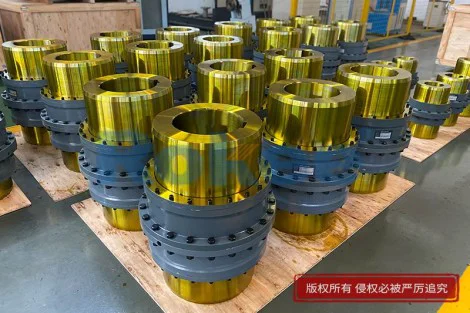
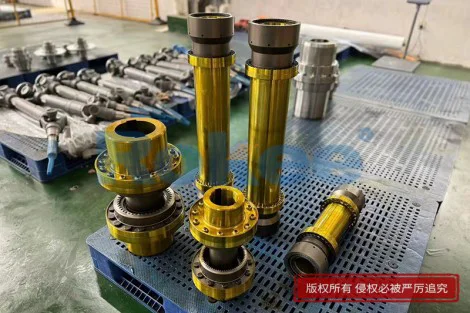
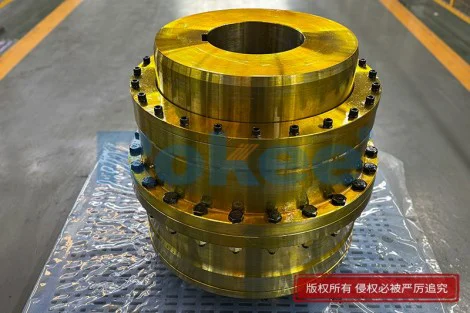
Teeth coupling completely changes the defects of traditional transmission connecting structures through its innovative internal and external gear meshing transmission principle, and forms a highly stable and adaptive power transmission system suitable for continuous industrial production. Different from the friction transmission mode of traditional couplings, teeth coupling adopts positive gear meshing transmission, which realizes zero-slip torque transmission through the precise meshing fit between external teeth and internal gear rings. This structural design can stably and continuously transmit power and torque in the full-speed operation range of the polyurethane sandwich panel production line, completely avoid power loss and speed fluctuation caused by friction slip, and ensure the synchronous and consistent operating speed of each process section of the production line. The tooth profile of the teeth coupling is precisely processed with smooth transition and high matching precision, which can disperse the transmission load on the entire meshing tooth surface during operation, avoid local stress concentration, and greatly improve the bearing capacity and operational stability of the transmission structure.
In addition to efficient and stable power transmission, the excellent deviation compensation performance of teeth coupling is the core key to improving the operational stability of polyurethane sandwich panel production lines. After long-term operation of mechanical equipment, installation deviation, thermal expansion and contraction of parts, and slight mechanical deformation are unavoidable objective phenomena, which are the main causes of transmission vibration and equipment jitter. The special tooth gap and flexible meshing design of teeth coupling can automatically adapt and compensate for tiny radial displacement, axial deviation and angular deflection between the driving shaft and driven shaft. This adaptive adjustment function can eliminate periodic vibration and mechanical impact generated by shaft misalignment in the transmission process, make the entire transmission system operate more smoothly, and maintain the long-term running accuracy of the production line. For the polyurethane sandwich panel production line that requires high-precision matching of multi-process linkage, this stable adaptive compensation capability can effectively avoid product quality defects caused by transmission jitter, and ensure the consistency of product size, foaming density and lamination accuracy in batch production.
The application of teeth coupling in polyurethane sandwich panel production lines has achieved significant loss reduction effects in multiple dimensions, covering raw material loss, equipment maintenance loss and production efficiency loss. In terms of raw material loss control, the stable transmission realized by teeth coupling eliminates speed fluctuation and equipment jitter in the production process, ensuring the stable operation of base material unwinding, precise pouring of polyurethane materials and uniform pressure of rolling lamination. The stable production process greatly reduces the scrap rate of defective products such as offset plates, uneven thickness, hollow core materials and unqualified surface flatness, and maximizes the utilization rate of metal base plates, polyurethane foaming materials and auxiliary processing materials. In batch continuous production, the reduction of defective product rate can effectively cut down the invalid consumption of raw materials, avoid resource waste caused by reprocessing and scrapping, and significantly reduce the material loss cost per unit of finished product.
In terms of equipment operation and maintenance loss, the smooth transmission mode of teeth coupling avoids rigid impact and violent vibration of the transmission system, and greatly reduces the friction and wear degree of core mechanical components such as transmission shafts, bearings and gear sets. Traditional couplings are prone to local wear and failure due to unstable stress, requiring frequent replacement of parts and regular debugging and maintenance. In contrast, teeth coupling has uniform overall stress, good lubrication retention performance and strong wear resistance, which can maintain stable working performance in long-term continuous operation, effectively extend the service life of transmission components and supporting equipment, and reduce the frequency of equipment failure and shutdown maintenance. The reduction of maintenance times and parts replacement volume directly cuts down the equipment maintenance cost, and avoids the production loss caused by frequent shutdown and debugging, ensuring the continuity and stability of production line operation.
In terms of production efficiency loss optimization, the stable operation performance of teeth coupling fundamentally reduces unplanned shutdowns caused by transmission system failure and product quality abnormalities. The polyurethane sandwich panel production line is a typical continuous assembly line equipment, and any temporary shutdown will lead to the termination of material processing, residual material waste in the equipment, and repeated debugging preparation after restarting, which will seriously affect production efficiency. After adopting teeth coupling, the failure rate of the transmission system is significantly reduced, the effective operation time of the production line is fully guaranteed, and the production rhythm is more stable and efficient. At the same time, the stable product quality reduces the workload of product inspection and rework, simplifies the production management process, enables production personnel to focus more on standardized operation and process optimization, and further improves the overall production efficiency and output capacity of the production line.
In the actual industrial production scenario, the long-term operational advantages of teeth coupling are more prominent. With the extension of production time, the mechanical aging degree of the production line equipment gradually deepens, and the installation deviation and component wear of traditional transmission structures will continue to accumulate, leading to increasing production instability and loss year by year. However, teeth coupling relies on its flexible meshing and adaptive compensation performance, which can always maintain stable transmission accuracy in the whole life cycle of equipment operation, and will not cause obvious performance degradation due to the aging of equipment and tiny deviation accumulation. This long-term stable performance ensures that the polyurethane sandwich panel production line can maintain low loss and high-efficiency operation for a long time, avoiding the incremental loss caused by equipment aging, and bringing stable economic benefits for enterprise production and operation.
Moreover, the compact structural design of teeth coupling is more suitable for the intensive layout of modern polyurethane sandwich panel production lines. Its internal and external gear meshing structure has a smaller volume and more reasonable space occupation under the same torque transmission capacity, which is convenient for installation and debugging in the narrow transmission space of automated production lines. The closed structural form of teeth coupling can effectively isolate external dust, processing debris and humid air in the production workshop, prevent internal gear meshing parts from being polluted and corroded, and maintain the stability of internal lubrication environment. This excellent environmental adaptability enables the coupling to maintain stable working performance in the complex production environment of building material processing, further reducing the failure probability caused by environmental factors, and reducing the hidden loss caused by environmental equipment failure.
To sum up, teeth coupling, with its precise gear meshing transmission, excellent deviation compensation performance, stable long-term operation and strong environmental adaptability, solves the multiple operational pain points of traditional transmission structures in polyurethane sandwich panel production lines. It effectively improves the overall operational stability and processing accuracy of the production line, realizes systematic reduction of raw material waste, equipment maintenance loss and production efficiency loss. In the context of increasingly fierce market competition in the building material industry and increasingly strict production cost control, the application of teeth coupling provides a reliable technical guarantee for polyurethane sandwich panel production enterprises to achieve stable production, quality improvement and cost reduction. With the continuous development of automated and intelligent building material production technology, teeth coupling will become an indispensable core transmission component in high-efficiency and low-loss polyurethane sandwich panel production lines, and play a more important role in promoting the high-quality development of the building material manufacturing industry.