Crown Gear Coupling Is More Reliable of Preferred Transmission For PU Sandwich Panel Production Line
In the modern manufacturing industry, the production of PU sandwich panels has become an indispensable part of the construction and industrial fields due to their excellent thermal insulation, sound insulation, structural stability, and lightweight properties. These panels are widely used in buildings, cold storage, industrial workshops, and other scenarios, placing high demands on the efficiency, stability, and reliability of production lines. The transmission system, as the core component of the PU sandwich panel production line, is responsible for transmitting power between various equipment modules, ensuring the coordinated operation of each link from raw material uncoiling, forming, foaming, to composite cutting. Among numerous transmission components, the crown gear coupling stands out as the preferred choice for most PU sandwich panel production lines, thanks to its superior reliability, adaptability, and durability, which effectively solve the pain points of traditional transmission components in practical applications and provide a solid guarantee for the continuous and stable operation of the production line.
To understand why crown gear couplings are widely recognized in PU sandwich panel production lines, it is first necessary to clarify the working characteristics and transmission requirements of such production lines. A typical PU sandwich panel production line is a continuous operation system composed of multiple functional modules, including uncoiling system, forming system, foaming system, composite system, cutting system, and conveying system. Each module needs to maintain a high degree of speed synchronization and torque stability to ensure the consistency of product quality. For example, the uncoiling system needs to stably transmit power to the roller to ensure the uniform feeding of the surface material; the forming system requires precise torque control to shape the surface material into the required profile; the foaming system needs to coordinate with the conveying speed to ensure that the polyurethane foam is evenly filled between the two surface materials and fully foamed; the cutting system must maintain synchronous operation with the conveying system to ensure the accuracy of the panel length. Any failure or instability in the transmission link will lead to production interruptions, product defects, or even equipment damage, resulting in economic losses for the enterprise. Therefore, the transmission component must have strong torque transmission capacity, good misalignment compensation performance, high wear resistance, and long service life to adapt to the long-term continuous operation of the PU sandwich panel production line.
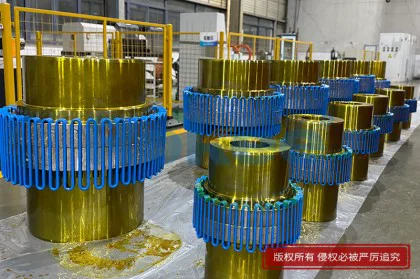
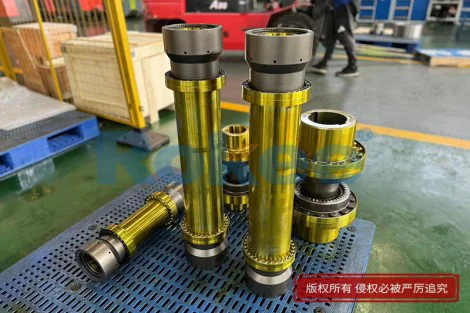
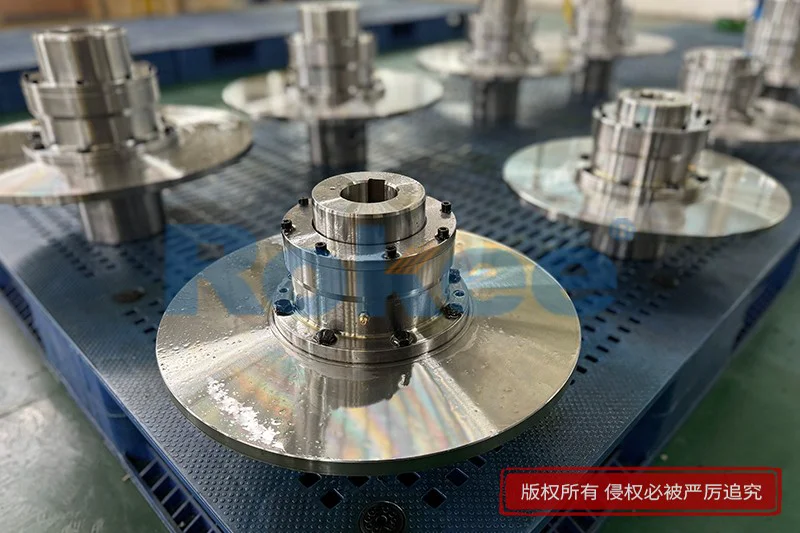
Crown gear couplings, as a type of high-performance mechanical transmission component, are designed with unique structural characteristics that perfectly match the transmission needs of PU sandwich panel production lines. Unlike traditional straight gear couplings, the crown gear coupling has a crown-shaped tooth profile on the hub, which is meshed with the straight gear teeth on the sleeve to form a flexible transmission structure. This special tooth profile design not only enhances the torque transmission capacity but also effectively compensates for the angular, radial, and axial misalignment that may occur between the shafts. In the actual operation of the PU sandwich panel production line, due to factors such as equipment installation errors, long-term operation wear, and temperature changes, the shafts of different modules are prone to slight misalignment. If traditional transmission components are used, such misalignment will cause excessive stress concentration, leading to rapid wear of the teeth, increased noise, and even coupling failure. However, the crown gear coupling can realize smooth rolling and sliding between the tooth pairs when the shaft is misaligned, effectively absorbing the displacement deviation, reducing stress concentration, and ensuring the stable transmission of power. This misalignment compensation performance is particularly important for the PU sandwich panel production line, which requires long-term continuous operation, as it can significantly reduce the wear of the coupling and related equipment, extending the service life of the entire transmission system.
Another key advantage of crown gear couplings that makes them suitable for PU sandwich panel production line is their excellent torque transmission capacity. The production process of PU sandwich panels involves multiple links that require high torque input, such as the forming of thick surface materials, the compression of composite panels, and the stable operation of large conveying rollers. The crown gear coupling adopts a multi-tooth meshing design, which distributes the load evenly among multiple pairs of teeth, ensuring that each tooth bears a reasonable load and avoiding excessive wear or damage caused by concentrated load on a single tooth. According to relevant mechanical analysis, the conjugate crown gear coupling adopts line contact meshing, and multiple pairs of teeth engage simultaneously during operation, while the non-conjugate type also has stable meshing performance, which significantly improves the torque transmission capacity compared with other types of couplings. In practical applications, crown gear couplings can transmit large torques under compact structural dimensions, which not only saves the installation space of the transmission system but also ensures that each module of the production line can obtain sufficient power support, avoiding production efficiency reduction caused by insufficient torque. For example, in the continuous PU sandwich panel production line, the double-belt conveyor system needs to bear the weight of the panel and the foaming material, and the crown gear coupling can stably transmit the torque from the motor to the conveyor roller, ensuring the uniform and stable operation of the conveyor belt, which is crucial for ensuring the flatness and thickness uniformity of the PU sandwich panel.
Reliability and durability are important indicators for evaluating transmission components in industrial production lines, and crown gear couplings perform exceptionally well in these aspects. The PU sandwich panel production line usually operates continuously for a long time, and the transmission components are in a state of high load and high-speed operation for a long time, which puts forward strict requirements on their wear resistance and fatigue resistance. Crown gear couplings are usually made of high-quality alloy steel, which is processed through precise heat treatment processes to improve the hardness, toughness, and wear resistance of the gear teeth. The surface of the gear teeth is often subjected to precision grinding and polishing treatment to reduce friction coefficient and improve meshing accuracy. In addition, the crown gear coupling is equipped with a reasonable lubrication system, which can form a stable lubricating oil film between the meshing teeth, reducing friction and wear during operation, preventing tooth surface pitting, scuffing, and other failures, and ensuring long-term stable operation. Compared with other flexible couplings, crown gear couplings have no easy-to-damage components such as rubber diaphragms or springs, which avoids the problem of frequent replacement of vulnerable parts, reduces maintenance costs and downtime, and improves the overall operation efficiency of the production line. In harsh working environments such as high temperature and dust in the foaming section of the PU sandwich panel production line, crown gear couplings can still maintain stable performance, showing strong environmental adaptability.
The adaptability of crown gear couplings to the working conditions of PU sandwich panel production lines is also reflected in their adjustable speed and good compatibility. With the continuous development of PU sandwich panel production technology, modern production lines often adopt frequency conversion speed regulation technology to adjust the production speed according to the needs of different products, which requires the transmission components to have good speed adaptability. Crown gear couplings can maintain stable torque transmission under a wide speed range, whether it is low-speed operation during equipment start-up or high-speed operation during normal production, they can perform well without obvious vibration or noise. At the same time, crown gear couplings have a compact structure and flexible installation methods, which can be easily matched with different types of motors, reducers, and other equipment, and can be customized according to the specific installation space and transmission requirements of the production line. For example, in the discontinuous PU sandwich panel production line, the crown gear coupling can be matched with the frequency conversion system to realize stepless speed regulation, ensuring the coordination between the cutting system and the conveying system, and improving the accuracy of product cutting. In addition, some crown gear coupling designs are equipped with axial buffers or brake devices, which can better adapt to the special needs of the production line, such as emergency braking or shock absorption, further improving the safety and reliability of the transmission system.
In practical application cases, the advantages of crown gear couplings in PU sandwich panel production lines have been fully verified. Many manufacturers have found that after replacing traditional transmission components with crown gear couplings, the downtime of the production line has been significantly reduced, the product qualification rate has been improved, and the maintenance cost has been effectively controlled. For example, in a large-scale PU sandwich panel production line, the traditional straight gear coupling often had tooth wear and misalignment problems after 6 months of operation, requiring frequent maintenance and replacement, which seriously affected the production progress. After replacing with crown gear couplings, the operation time of the transmission system was extended to more than 2 years without major failures, and the maintenance cycle was significantly prolonged, which not only reduced the labor intensity of maintenance personnel but also saved a lot of maintenance costs. In addition, the stable operation of the crown gear coupling also ensures the consistency of the product size and surface quality. The flatness and thickness uniformity of the PU sandwich panels produced are significantly improved, which enhances the market competitiveness of the products.
It is worth noting that although crown gear couplings have many advantages, their performance can only be fully exerted if they are correctly selected, installed, and maintained. In the selection process, it is necessary to comprehensively consider the torque, speed, shaft diameter, and misalignment range of the production line to ensure that the selected crown gear coupling matches the actual working conditions. If the coupling is undersized, it will lead to insufficient torque transmission and premature failure; if it is oversized, it will cause unnecessary cost waste and occupy more installation space. In the installation process, it is necessary to strictly control the installation accuracy, adjust the coaxiality of the shafts, and ensure that the meshing gap of the gear teeth meets the requirements to avoid excessive stress caused by incorrect installation. In terms of daily maintenance, it is necessary to regularly check the lubrication status of the coupling, add lubricating oil or grease in a timely manner, and clean the surface of the coupling to prevent dust and impurities from entering the meshing area and causing wear. At the same time, regular inspection of the gear tooth wear, shaft connection, and other parts is required, and potential faults are found and handled in a timely manner to ensure the long-term reliable operation of the crown gear coupling.
With the continuous improvement of the automation level and production efficiency of the PU sandwich panel production line, the requirements for transmission components are becoming higher and higher. Crown gear couplings, with their unique structural advantages, excellent torque transmission capacity, good misalignment compensation performance, and high reliability, have become the preferred transmission components for PU sandwich panel production lines. Compared with other types of couplings, crown gear couplings can better adapt to the long-term continuous operation, high load, and variable speed working conditions of the production line, effectively reducing production interruptions and maintenance costs, and improving production efficiency and product quality. In the future, with the continuous development of mechanical processing technology, the design and manufacturing level of crown gear couplings will be further improved, and their performance will be more excellent, which will provide more reliable support for the development of the PU sandwich panel production industry. Whether it is a continuous or discontinuous PU sandwich panel production line, crown gear couplings can play an important role in the transmission system, becoming a key factor to ensure the stable and efficient operation of the production line.
In conclusion, the reliability of crown gear couplings in the transmission system of PU sandwich panel production lines is irreplaceable. Their unique structural design and excellent performance characteristics perfectly match the working requirements of the production line, solving the problems of poor stability, easy wear, and frequent maintenance of traditional transmission components. By choosing crown gear couplings, enterprises can not only ensure the continuous and stable operation of the production line but also reduce production costs, improve product quality, and enhance market competitiveness. Therefore, crown gear coupling is undoubtedly the most reliable preferred transmission component for PU sandwich panel production lines, and will continue to play an important role in the development of the industry in the future.