Grid Coupling Supplier
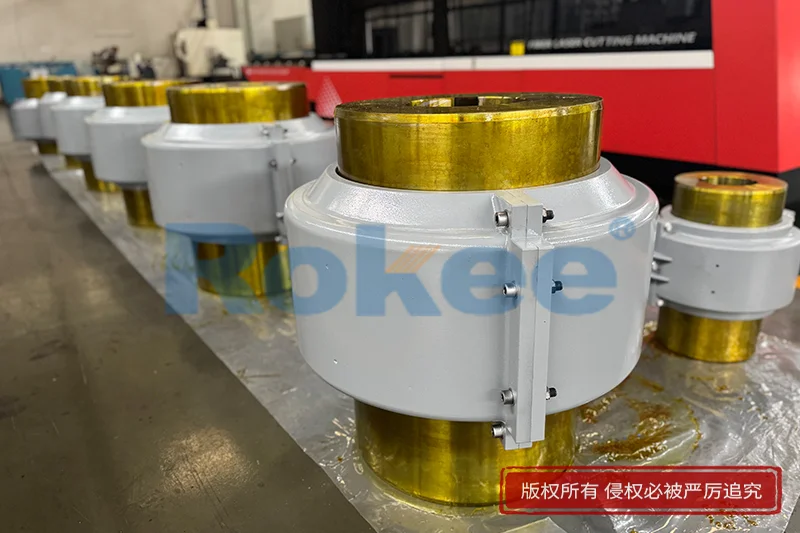
A grid coupling supplier occupies a critical position in the machinery and power transmission ecosystem, serving as the bridge between raw engineering expertise and the operational demands of countless industrial applications. At its core, a grid coupling is a mechanical device designed to connect two rotating shafts—the driving shaft and the driven shaft—while transmitting torque efficiently and accommodating various forms of misalignment. Unlike rigid couplings that demand near-perfect shaft alignment, or elastomeric couplings that rely on compressible polymers for flexibility, the grid coupling uses a metallic grid spring that slides between the teeth of two mating hubs. This distinctive construction allows it to absorb shock loads, dampen vibration, and compensate for angular, parallel, and axial misalignment simultaneously. A supplier that specializes in these components understands that every installation carries a unique combination of torque requirements, rotational speeds, environmental conditions, and space constraints. The supplier's role extends far beyond simply delivering a physical product; it encompasses deep technical consultation, application analysis, and a commitment to matching the right coupling configuration to the specific needs of each customer. Whether the coupling is destined for a heavy-duty conveyor in a mining operation, a pump set in a water treatment facility, a crusher in a mineral processing plant, or a fan system in a power generation station, the supplier must possess the knowledge to evaluate the load profile, identify potential stress points, and recommend a solution that balances performance, durability, and cost-effectiveness. The best suppliers in this field approach each engagement as an engineering partnership rather than a transaction, recognizing that a coupling failure can cascade into costly downtime, equipment damage, and safety hazards. They invest in understanding the customer's entire driveline, not just the coupling itself, because the coupling interacts with motors, gearboxes, bearings, and driven equipment in ways that demand holistic thinking. This integrative perspective distinguishes a competent supplier from a mere distributor, and it forms the foundation upon which long-term customer relationships are built.
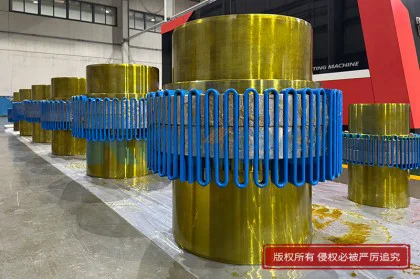
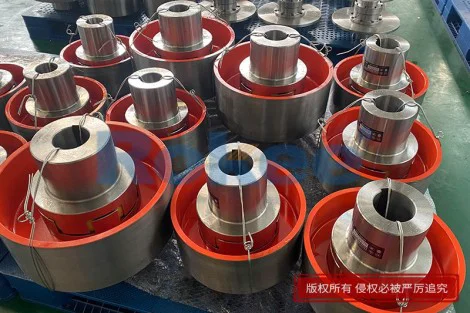
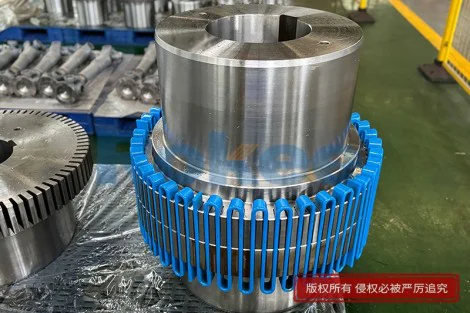
The materials and manufacturing methods employed by a grid coupling supplier directly determine the performance envelope, service life, and reliability of the final product. Hubs, which form the two halves of the coupling and mount directly onto the shafts, are typically forged or machined from high-strength alloy steels selected for their combination of toughness, fatigue resistance, and machinability. The teeth on the hubs must be precision-cut or gear-shaped to engage smoothly with the grid spring, and the surface finish and tooth profile critically influence both torque transmission efficiency and wear characteristics. The grid spring itself is the heart of the coupling—a flexible, serpentine metal strip that spans the gap between the two hub halves and transmits torque through frictional and mechanical contact. The material used for the grid spring must exhibit exceptional fatigue strength, resilience, and resistance to repeated flexing under load. Suppliers typically source premium spring steels and subject the grid to specialized heat treatment processes that optimize hardness while maintaining ductility, because the grid must flex thousands or millions of times without cracking or permanently deforming. The manufacturing process involves multiple stages: precision forging of hub blanks, CNC machining of bore diameters and keyways, gear cutting or hobbing of the hub teeth, rolling or stamping of the grid spring geometry, surface treatment and coating of all components, and final assembly and inspection. A reputable supplier maintains tight tolerances throughout each stage because even minor deviations in tooth spacing, grid thickness, or hub concentricity can translate into premature wear, vibration, and reduced service life. Many suppliers also offer custom bore machining to match exact customer shaft dimensions, including tapered bores, keyway configurations, and pilot diameters that eliminate the need for secondary machining at the customer's site. The manufacturing facility itself is a testament to the supplier's capabilities—equipped with modern CNC turning centers, gear hobbing machines, heat treatment furnaces, and metrology labs that verify dimensional accuracy and material properties. The supplier's commitment to manufacturing excellence is reflected not only in the precision of the finished product but also in the consistency from one batch to the next, ensuring that replacement couplings perform identically to the originals.
Design engineering is the intellectual core of any serious grid coupling supplier, and it is here that theoretical mechanics meets practical industrial reality. Engineers within the supplier organization perform torque calculations based on the driven equipment's operating profile, taking into account not just the nominal steady-state torque but also peak torques during startup, shock loads from reciprocating equipment, and torque reversals that can occur in certain process applications. Misalignment analysis is equally critical; the supplier must quantify the expected angular, parallel, and axial misalignment between the two shafts under real operating conditions, accounting for thermal expansion of shafts, foundation settlement, and dynamic movement of machinery during operation. The grid coupling's ability to accommodate misalignment is one of its primary advantages, but excessive misalignment accelerates wear and reduces the coupling's effective life, so the supplier must recommend a coupling size and grid configuration that can handle both the calculated torque and the expected misalignment simultaneously. Torsional vibration analysis represents another dimension of design engineering. Rotating machinery systems have natural frequencies, and if the operating speed or a harmonic excitation coincides with a system natural frequency, dangerous resonant vibrations can develop. A knowledgeable supplier can evaluate the torsional characteristics of the driveline and select a coupling that shifts the system's critical speeds away from the operating range, or one that provides sufficient damping to attenuate resonant vibrations. The metallic grid spring naturally provides some damping through internal friction in the flexing metal and through sliding friction between the grid and the hub teeth, and this damping effect is one of the reasons grid couplings are preferred over other coupling types in applications with significant vibration or shock loading. Environmental considerations also shape the design: couplings operating in corrosive atmospheres, at elevated temperatures, or in washdown environments require special coatings, materials, or sealing arrangements. The supplier's design team works closely with customers to understand these conditions and specify appropriate protection measures, whether through zinc plating, black oxide treatment, stainless steel components, or enclosed cover designs that retain lubricant and block contaminants. The supplier's engineering capability is ultimately a measure of its ability to translate complex mechanical requirements into a practical, off-the-shelf or custom coupling solution that performs reliably in the field.
Customization is a hallmark of an experienced grid coupling supplier, because industrial applications rarely fit neatly into standard catalog configurations. While many standard bore sizes and coupling frame sizes cover a broad range of common applications, real-world installations frequently demand modifications that require bespoke engineering. Special bore diameters, unusual keyway dimensions, tapered shafts, flanged mounting interfaces, and double-coupling arrangements for extended shaft separation distances are among the most common custom requests. The supplier's customization capability extends beyond simple dimensional changes; it may involve designing a modified hub geometry, altering the grid spring profile for a specific torque or misalignment requirement, or integrating additional features such as spotting disks, torque limiters, or brake drums onto the coupling assembly. For applications where space is severely constrained, the supplier may develop a compact coupling variant that maintains torque capacity while reducing the overall envelope dimensions, often through creative redesign of the hub and grid geometry. Conversely, for high-torque applications where standard coupling sizes fall short, the supplier can engineer a larger or reinforced coupling variant with heavier sections, upgraded materials, or specialized grid configurations. The customization process begins with a detailed application questionnaire or technical consultation where the supplier's engineers gather data on the driving and driven equipment, operating conditions, space limitations, and any unusual requirements. This data is then used to develop a design proposal, often accompanied by dimensional drawings that the customer can review and approve before production begins. Prototyping may be employed for particularly complex or high-stakes applications, allowing the customer to verify fit and function before committing to full production quantities. A supplier with strong customization capabilities maintains flexible manufacturing processes that can accommodate small-batch custom orders without excessive lead times or cost premiums. This agility is particularly valuable for original equipment manufacturers who require couplings tailored to their specific machinery designs, and for end users who need replacement couplings for legacy equipment where original drawings or specifications may be incomplete or unavailable. The supplier's ability to reverse-engineer an existing coupling from a sample or from dimensional measurements is another dimension of customization that saves customers significant time and effort, especially when the original equipment manufacturer is no longer in business or when replacement parts must be sourced independently.
Quality control and precision inspection form the backbone of a reputable grid coupling supplier's operations, because in power transmission components, the margin between reliable performance and catastrophic failure is measured in thousandths of an inch and in carefully controlled material properties. The quality assurance process begins with incoming material inspection, where raw steel billets and bar stock are verified against material specifications through spectral analysis, hardness testing, and dimensional checks. Every heat lot is documented so that traceability is maintained from raw material to finished product, a capability that becomes essential if a field failure requires root cause analysis. During manufacturing, in-process inspections at critical stations ensure that forging quality, machining tolerances, and gear tooth profiles meet the required standards. Coordinate measuring machines, gear-checking equipment, surface profilometers, and optical comparators are among the instruments used to verify component dimensions and geometry. The grid springs, being the most fatigue-sensitive component, receive particular attention during quality control. Their thickness, width, curvature, and surface condition are inspected to ensure consistency, and fatigue testing may be performed on sample grids to validate that they meet the expected endurance limits. Surface finish on the grid is especially important because any surface defect can act as a stress riser that initiates a fatigue crack, so suppliers implement polishing or shot-peening processes that introduce beneficial compressive residual stresses into the grid surface, significantly extending fatigue life. Assembly inspection verifies that the grid seats properly in the hub teeth, that the cover fits correctly, and that lubrication is properly applied. Many suppliers perform a run-out check on assembled couplings to confirm that the components are concentric within acceptable tolerances, because excessive runout introduces vibration and reduces bearing life in the connected equipment. Packaging and final inspection ensure that each coupling is protected during shipment, clearly identified with appropriate part numbers and configuration information, and accompanied by any necessary installation documentation. A supplier with a mature quality management culture treats every inspection result as feedback that drives continuous improvement, rather than as a gate that simply passes or rejects product. Defects are analyzed not just to fix the immediate part but to identify systemic issues in the manufacturing process that could affect future production runs. This proactive approach to quality is what allows a supplier to stand behind its products with confidence and to earn the trust of customers who operate in mission-critical environments where unplanned downtime is not an option.
Installation guidance, maintenance support, and after-sales service are dimensions of the grid coupling supplier relationship that directly impact the total cost of ownership and the customer's long-term satisfaction. Even a perfectly engineered and manufactured coupling will underperform or fail prematurely if it is installed incorrectly, so a responsible supplier provides clear installation instructions, dimensional drawings, and technical support to help the customer's maintenance team achieve proper shaft alignment and correct coupling assembly. Proper installation involves not only mounting the hubs on the shafts with appropriate fits and secure fastening but also achieving the correct initial alignment of the driving and driven equipment, because a coupling can only compensate for a limited amount of misalignment. The supplier's technical support team can advise on alignment procedures, recommend alignment tools, and help interpret alignment readings, recognizing that thermal growth during operation will change the alignment state and must be accounted for. Maintenance guidance typically includes recommended lubrication intervals, inspection procedures for grid wear, and criteria for when the grid or the entire coupling should be replaced. Grid couplings require periodic lubrication because the sliding contact between the grid and the hub teeth generates friction and wear; the supplier specifies the type of lubricant, the quantity, and the re-lubrication interval based on the coupling size and operating conditions. Proper lubrication not only reduces wear but also contributes to the coupling's damping performance and protects against corrosion. When maintenance issues arise in the field, the supplier's service team is available to troubleshoot problems, whether the issue is excessive vibration, unusual noise, rapid wear, or premature coupling failure. This troubleshooting often involves asking detailed questions about the operating conditions, the installation history, and the observed symptoms, and may lead to a recommendation for a different coupling size, a change in lubrication practice, or a correction to the shaft alignment. The supplier may also offer training sessions for customer maintenance personnel, covering coupling selection, installation, inspection, and replacement procedures. For customers operating in remote or hazardous locations, the supplier may maintain local inventory of commonly used coupling sizes and grid springs to minimize downtime when a replacement is needed. The availability of spare parts—particularly the grid spring, which is the component most likely to wear out—directly affects the customer's ability to return to service quickly. A supplier that stocks a comprehensive range of spare parts and can expedite shipments demonstrates a genuine commitment to customer uptime, recognizing that the relationship does not end when the coupling leaves the factory but continues throughout the coupling's entire service life.
The industries served by a grid coupling supplier are remarkably diverse, reflecting the fundamental role that power transmission plays in virtually every sector of modern industrial activity. In the mining and minerals processing industry, grid couplings connect motors to crushers, mills, conveyors, and vibrating screens, where they must endure extreme shock loads, dusty environments, and continuous heavy-duty operation. The ability of grid couplings to absorb the torque spikes that occur when a crusher encounters a large piece of ore makes them particularly well suited to these applications. In the oil and gas sector, couplings connect pumps, compressors, fans, and conveyors used in upstream production, midstream pipeline operations, and downstream refining. These applications often involve flammable atmospheres, corrosive process environments, and continuous-duty operation, demanding couplings with appropriate protection and reliability margins. The water and wastewater industry relies on grid couplings to connect motors to pumps, blowers, and agitators, where quiet operation, moderate misalignment capacity, and long maintenance intervals are valued. In power generation—whether from fossil fuels, hydroelectric sources, or renewable installations—grid couplings connect turbines, generators, cooling water pumps, and auxiliary systems, where high torque capacity and torsional vibration control are critical. The pulp and paper industry uses couplings throughout the production process, from woodyard conveyors to paper machine drive systems, where continuous operation and resistance to moist, fibrous environments are essential. Steel and metal processing plants employ couplings on rolling mills, coilers, fans, and transfer tables, where shock loading and high temperatures test the limits of coupling design. Food and beverage processing, pharmaceutical manufacturing, material handling, construction equipment, and marine propulsion are additional sectors where grid couplings find application, each with its own set of requirements and operating conditions. A supplier that serves this breadth of industries accumulates a deep repository of application knowledge, having encountered and solved coupling challenges in virtually every conceivable operating environment. This cross-industry experience informs the supplier's product development and technical consultation, because solutions that worked well in one sector can often be adapted to solve problems in another. The supplier's customer base includes original equipment manufacturers who specify couplings as standard components on their machinery, engineering and construction firms that procure couplings for new plant projects, and end users who source couplings for replacement, maintenance, and upgrade purposes. Each type of customer has distinct purchasing patterns, documentation requirements, and support expectations, and the supplier must be flexible enough to serve all three effectively.
Innovation and continuous improvement are essential for a grid coupling supplier that intends to remain competitive and relevant in a rapidly evolving industrial landscape. While the fundamental principle of the metallic grid coupling has existed for decades, there is always room for improvement in materials, manufacturing processes, geometry, and auxiliary features. Suppliers invest in research and development to explore new alloy compositions, advanced surface treatments, and optimized grid profiles that deliver higher torque density, longer fatigue life, or reduced lubrication requirements. Computational tools such as finite element analysis allow engineers to model stress distribution in the grid and hubs, identify stress concentrations, and refine designs before any physical prototypes are built. This simulation-driven approach accelerates product development and leads to more refined, weight-efficient designs that would be difficult to achieve through empirical testing alone. Additive manufacturing and advanced prototyping techniques enable suppliers to test new hub and cover geometries quickly and economically, and to offer low-volume custom parts without the tooling costs associated with traditional manufacturing. Digital connectivity and condition monitoring represent an emerging frontier; some suppliers are developing smart coupling solutions that incorporate sensors to monitor vibration, temperature, and misalignment in real time, transmitting data to predictive maintenance systems that can warn of impending coupling wear or developing misalignment before a failure occurs. While the core mechanical function of the grid coupling remains unchanged, these digital enhancements add value by enabling condition-based maintenance rather than scheduled replacement, reducing both maintenance costs and unplanned downtime. Sustainability and environmental considerations also influence product development, as customers increasingly seek couplings that require less lubricant, generate less waste during production, and are more recyclable at end of life. Suppliers may invest in cleaner manufacturing processes, water-based coatings that replace solvent-based treatments, and packaging materials that minimize environmental impact. The supplier's innovation efforts are not limited to the product itself; they extend to the customer experience as well. Online configuration tools that allow customers to select coupling sizes and configurations based on their application parameters, digital catalogs with dimensional models in multiple CAD formats, and e-commerce platforms that streamline ordering and reordering processes all contribute to a more efficient and satisfying customer experience. Suppliers that embrace these digital tools make it easier for customers to do business with them, reducing the time and effort required to identify, specify, and procure the right coupling for a given application. This combination of mechanical innovation and digital innovation positions the supplier not merely as a parts vendor but as a forward-thinking technical partner invested in the customer's operational success.
Supply chain management, logistics reliability, and customer partnership strategies define how a grid coupling supplier translates its engineering and manufacturing capabilities into tangible value for the marketplace. A supplier's ability to deliver the right coupling on time, in the right configuration, and in the right condition depends on a well-orchestrated supply chain that sources raw materials reliably, manages production schedules efficiently, and coordinates logistics partners for timely delivery. For standard catalog items, the supplier typically maintains finished goods inventory in common frame sizes and bore ranges, allowing for same-day or next-day shipment to customers who need replacement parts urgently. For custom or made-to-order couplings, the supplier balances lead time against inventory carrying cost, offering expedited production options for customers facing emergency situations while maintaining competitive standard lead times for planned orders. The supplier's logistics network may include regional warehouses that stock fast-moving items closer to major industrial centers, reducing shipping distances and delivery times. International customers benefit from distributors or representatives in their regions who can provide local language support, handle customs documentation, and maintain regional stock. The supplier's order management system tracks each order from inquiry through delivery, providing customers with visibility into order status and estimated delivery dates. Beyond logistics, the customer partnership dimension encompasses collaborative planning, where the supplier works with key customers to forecast demand, align production schedules, and develop supply agreements that ensure availability during peak demand periods. For original equipment manufacturers, the supplier may establish just-in-time delivery arrangements or vendor-managed inventory systems that reduce the customer's administrative burden and inventory carrying costs. Technical collaboration on new product development is another facet of the partnership; a supplier may work alongside an OEM during the design phase of a new machine, recommending coupling configurations that optimize performance, fit within the machine's envelope, and align with the OEM's cost targets. This early engagement ensures that the coupling is designed into the system from the beginning rather than specified as an afterthought, and it often leads to a better overall driveline solution. The supplier's sales and engineering personnel cultivate these relationships through regular site visits, industry trade show participation, technical seminars, and responsive communication. They understand that trust is built over time through consistent performance—on-time delivery, quality products, responsive service, and honest technical advice—rather than through promotional messaging alone. A supplier that treats its customers as long-term partners, investing in understanding their businesses and anticipating their needs, creates a competitive advantage that is difficult for competitors to replicate.
Looking ahead, the grid coupling supplier landscape is shaped by several converging trends that will influence how these suppliers operate, innovate, and serve their customers in the coming years. The ongoing digital transformation of manufacturing—often referred to as the fourth industrial revolution—is changing both the products and the business models of power transmission component suppliers. Smart factory environments demand components that contribute to overall equipment effectiveness data streams, and couplings that can report their own condition will become increasingly valued over traditional couplings that provide no operational feedback. At the same time, the growing emphasis on energy efficiency across all industries is driving demand for driveline solutions that minimize parasitic losses, and while grid couplings are inherently efficient, suppliers are exploring ways to further reduce lubrication drag and friction losses through optimized grid geometry and low-friction coatings. The trend toward electrification in transportation, mining, and industrial equipment creates new applications for power transmission components, often with higher rotational speeds and different torque profiles than traditional drivetrains, and suppliers that can adapt their coupling designs to these new operating envelopes will find growing market opportunities. Global supply chain realignment, driven by geopolitical shifts and resilience considerations, is encouraging some customers to source from suppliers with more regional manufacturing and distribution footprints, rather than relying on long-distance supply chains that are vulnerable to disruption. Suppliers with regional production and stocking capabilities are well positioned to benefit from this trend, as customers seek shorter lead times and more reliable delivery. Environmental regulations and sustainability expectations are also tightening, pushing suppliers to reduce the environmental footprint of their manufacturing operations, minimize hazardous materials in their products, and offer take-back or recycling programs for worn couplings. Customers are increasingly asking for environmental product declarations and lifecycle analysis data, and suppliers that can provide this information transparently will have an advantage in competitive bidding situations. Despite these changes, the fundamental value proposition of a grid coupling supplier remains unchanged: to deliver a mechanically reliable, well-engineered coupling that protects connected equipment, absorbs misalignment and shock loads, and operates with a long service life and minimal maintenance. The suppliers that thrive in this evolving environment will be those that combine deep mechanical engineering expertise with agility in manufacturing, digital fluency in customer interaction, and a genuine commitment to partnership. They will continue to serve as essential enablers of industrial motion, quietly ensuring that rotating machinery in thousands of plants, factories, and facilities around the world transmits power smoothly and reliably, day after day, year after year.